Career Overview
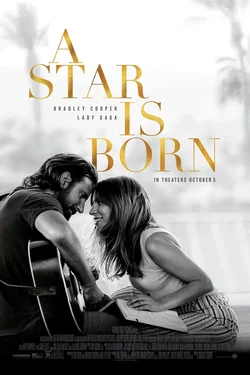
Bradley Cooper represents a fascinating evolution in contemporary American cinema, transitioning from a highly recognizable leading man to a formidable auteur with a distinct, confident voice. His directorial debut with A Star Is Born announced the arrival of a filmmaker deeply invested in the mechanics of classical Hollywood storytelling, yet equally committed to a modern, grounded emotional realism. This pivot from acting to directing was not merely a vanity project but a rigorous cinematic undertaking. Cooper demonstrated a sophisticated understanding of narrative structure and character development, proving his capability to orchestrate complex cinematic machinery.
The historical context of his directorial emergence is significant, as he chose to tackle a narrative lineage that stretches back decades. By stepping into a directorial role with a property that carries the heavy historical weight of multiple previous iterations, Cooper took on the challenge of proving his creative legitimacy. His background as an actor profoundly informs his directorial approach, prioritizing performance and authentic relationship chemistry above empty spectacle. He creates an environment where actors can explore the depths of their characters, resulting in performances that are both raw and meticulously crafted.
Within the landscape of modern cinema history, Cooper has positioned himself as a bridge between the golden age of studio filmmaking and the indie realism of the twenty-first century. He revitalizes traditional melodrama by stripping away its artifice, replacing it with a visceral immediacy. His work indicates a profound respect for cinematic tradition while simultaneously demanding a high level of psychological authenticity from his subjects, solidifying his status as a classicist working with contemporary tools.
Thematic Preoccupations
A central preoccupation in the directorial work of Bradley Cooper is the intertwined nature of love and ambition. He consistently explores how the pursuit of greatness complicates, and often compromises, personal relationships. His characters are frequently caught in a love and ambition journey, where the demands of public success directly conflict with the need for private, genuine connection. This thematic focus allows him to dissect the challenges of artistic integrity, questioning what is lost when raw talent is refined and packaged for mass consumption. The artistic collaboration exploration within his narrative framework serves as a microcosm for the broader tensions between commerce and pure expression.
Equally prominent in his thematic repertoire is the struggle of overcoming personal demons. Cooper does not shy away from the darker aspects of the creative mind, often depicting characters battling addiction, insecurity, and the suffocating weight of their own legacies. He examines resilience in the face of adversity, but he does so without guaranteeing absolute victory. The external pressures of navigating music industry challenges act as a catalyst that exacerbates internal frailties. This results in poignant character arcs where self-destruction and artistic genius are inextricably linked, asking the audience to consider the human cost of legendary status.
Furthermore, Cooper is deeply invested in complex character dynamics that hinge on shifting power balances. As one character ascends in their career, the other often descends, creating a tragic imbalance that tests the limits of their devotion. He observes these shifts with a compassionate yet unflinching eye, focusing on how individuals navigate the sudden changes in their respective orbits. The authentic relationship chemistry he fosters highlights the profound tragedy of two people who love each other deeply but are ultimately torn apart by the very artistic vision and ambition that initially brought them together.
Stylistic Signatures
The visual language of Bradley Cooper is defined by its intense intimacy and its commitment to anchoring spectacle in human emotion. He frequently employs tight close ups and shallow depth of field to isolate his characters within chaotic environments, ensuring that the emotional storytelling always takes precedence over mere visual scale. When capturing performance, particularly in a live concert setting, his camera rarely observes from the objective distance of a traditional audience member. Instead, it places the viewer directly on the stage, moving fluidly among the musicians to create an engaging, kinetic experience that mirrors the subjective reality of the performers.
Sound and music are not merely decorative elements in his directorial approach, they are the very foundation of his narrative architecture. Cooper relies heavily on musical storytelling elements to communicate subtext and advance character development. He constructs his cinematic world around the belief in the power of a song to connect with its listener, utilizing diegetic music as a direct channel to the internal lives of his protagonists. The musical performances act as visceral emotional climaxes, replacing traditional dialogue with raw, heartfelt vocal expression that strips bare the psychological states of the characters.
His pacing and editing rhythms further support this pursuit of authentic emotional engagement. Cooper favors lingering takes during intimate moments, allowing the natural chemistry and unspoken tensions between characters to breathe and evolve organically. He avoids the rapid, fragmented cutting often associated with modern musical dramas, opting instead for a sustained focus that demands a high level of vulnerability from his actors. This stylistic restraint ensures that the heartfelt emotional engagement remains grounded, allowing the tragedy of the narrative to unfold with a devastating, inescapable momentum.
Recurring Collaborators
While the available data for Bradley Cooper highlights a focused directorial filmography without an extensive list of recurring cast members across multiple projects, his approach to creative partnership is foundational to his cinematic success. His methodology relies heavily on building deep, immersive collaborations with his actors and crew, forging an environment where profound artistic risks can be taken. The absence of a sprawling repertory company in this specific dataset does not diminish the intensity of the collaborative bonds he forms on individual productions, as he demands a level of commitment that often blurs the line between performer and character.
The most prominent example of this collaborative alchemy is his partnership with Lady Gaga in A Star Is Born. Under his direction, her performance achieved a remarkable duality, functioning at the highest level by being part ordinary person and part extraterrestrial celebrity empress. Cooper worked closely with her to strip away her established pop persona, revealing a raw, unvarnished vulnerability that anchored the entire film. This partnership exemplifies his ability to guide actors into uncharted emotional territory, resulting in a dynamic that feels entirely fresh and new to the audience.
Beyond the onscreen talent, his artistic collaboration exploration extends to the musicians, cinematographers, and sound designers who help construct his immersive worlds. By insisting on capturing live, diegetic musical performances rather than relying on standard playback, he forces his entire technical crew to operate with the spontaneity of a documentary team. This collective effort ensures that the authentic relationship chemistry is supported by an equally authentic sensory environment, proving that his directorial vision is fundamentally rooted in the power of unified, rigorous teamwork.
Critical Standing
The critical reception of Bradley Cooper as a director was remarkably enthusiastic from the outset. With the release of A Star Is Born, he immediately established himself as a filmmaker capable of meeting high expectations, with critics declaring the work poised to become the movie of the moment. Reviewers were particularly impressed by his ability to take a frequently adapted, deeply familiar narrative and inject it with an undeniable vitality. Critics frequently noted that he and his collaborators found a way to make the material feel completely fresh and new, bypassing the pitfalls of cynical Hollywood recycling to deliver a work of genuine emotional substance.
Within critical discourse, his directorial efforts are often contextualized alongside other ambitious modern films that engage with the history of show business and the performing arts. Reviewers frequently note the profound influence of What Price Hollywood? on his narrative structures, while also drawing stylistic and thematic comparisons to contemporary hits, specifically citing the influence of La La Land and the influence of The Artist. However, where those films often lean into pastiche or formal homage, critics praise Cooper for grounding his cinematic tributes in gritty realism and raw emotional storytelling. He is recognized for balancing the grand scale of a Hollywood production with the intimate, heartbreaking nuances of an independent character study.
Today, his critical reputation rests on his profound capacity for heartfelt emotional engagement and his rigorous commitment to character driven cinema. He is widely respected as a director who genuinely believes in the power of a song to connect with its listener, utilizing every cinematic tool at his disposal to forge that connection. By consistently prioritizing authentic emotional truths over superficial gloss, Cooper has cemented his standing not just as a successful actor who stepped behind the camera, but as a dedicated, visionary filmmaker with a lasting place in modern cinematic critical evaluation.