Career Overview
Damián Szifron has firmly established himself as a vital architect of contemporary Argentine cinema. His trajectory demonstrates a profound understanding of narrative mechanics, blending accessible genre tropes with rigorous social commentary. Emerging from a background in television and early feature filmmaking, Szifron developed a distinctly acerbic voice that captures the anxieties of modern society. His breakthrough on the global stage arrived when he synthesized these localized neuroses into a universal cinematic language, creating works that resonate far beyond South America.
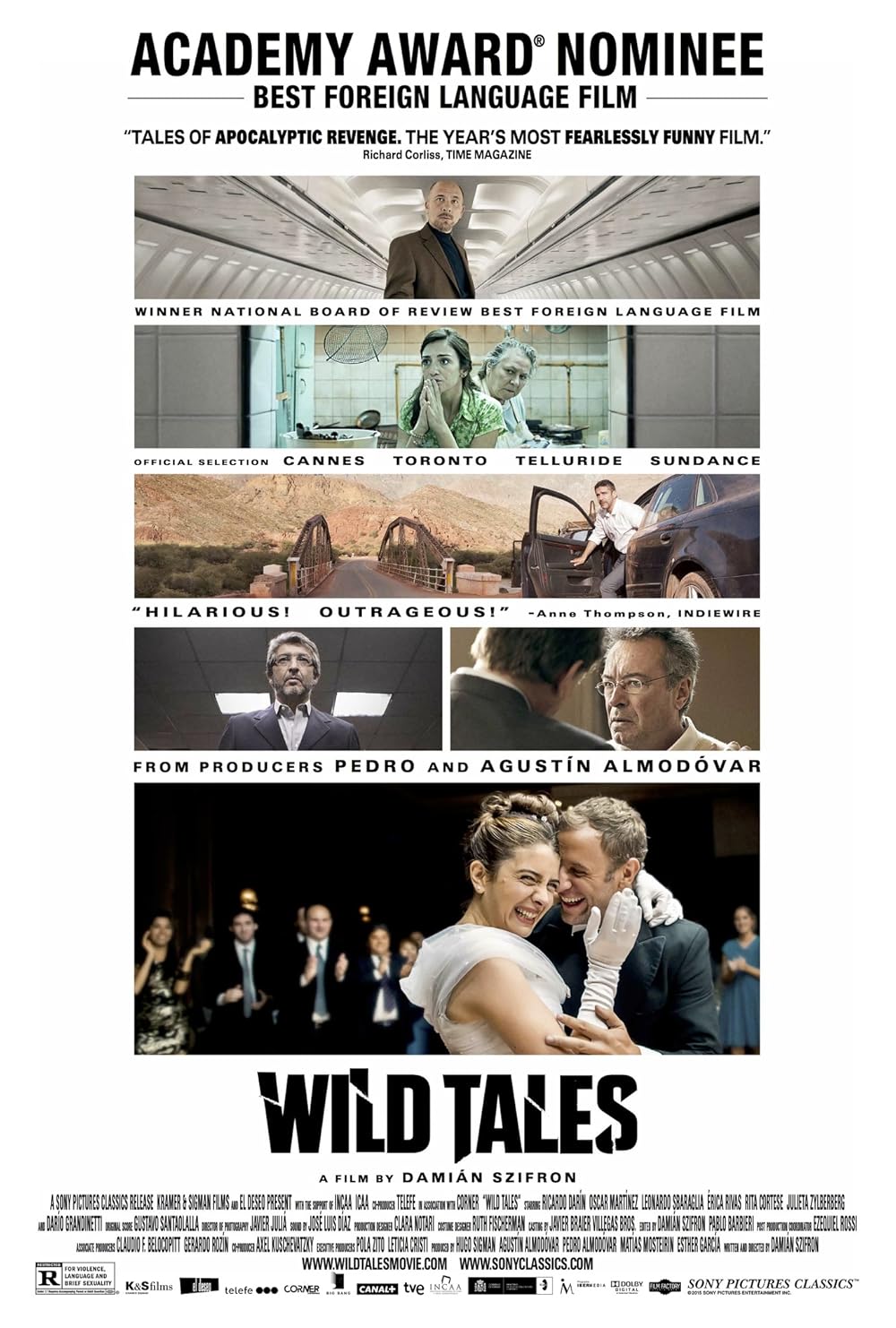
The cornerstone of his international reputation is Wild Tales, an anthology film that catapulted him into the highest echelons of critical discourse. This project solidified his position as a director capable of managing gleeful chaos with meticulous control. By channeling the frustrations of ordinary citizens into explosive vignettes, Szifron proved himself to be a filmmaker of remarkable ambition and technical proficiency. His background equipped him with the storytelling prowess necessary to juggle multiple discrete narratives without sacrificing thematic cohesion.
Within the broader context of cinema history, Szifron occupies a fascinating intersection between commercial entertainment and arthouse provocation. Critics frequently place his sensibilities in conversation with European auteurs, noting how his calculated provocations elevate what could be standard thriller material into high art. He represents a generation of Latin American directors who use extreme behavior and darkly comic tones to dissect institutional failures, ensuring his place as a definitive voice in twenty-first-century satirical cinema.
Thematic Preoccupations
At the core of Damián Szifron's filmography is a relentless investigation of the revenge narrative. He does not treat vengeance merely as a mechanism for genre thrills, but rather as a profound symptom of societal decay. His characters are frequently ordinary individuals pushed past their breaking points by bureaucratic indifference or systemic inequality. When they snap, the resulting anarchic elements serve as a brutal critique of the fragile social contract that governs modern life. Vengeance, in his cinematic universe, is a desperate attempt to reclaim agency in an absurd world.
A pervasive sense of mass dehumanization underpins his most celebrated work. Critics have astutely noted how Szifron exposes the methods of calculated dehumanization that remain barely hidden beneath the daily practices of social institutions. Whether dealing with corrupt officials, infuriating traffic laws, or class warfare, his narratives highlight how modern structures systematically strip individuals of their dignity. This dreary atmosphere of inevitable compromise forces his protagonists into corners where violent, irrational outbursts appear to be the only logical response.
To balance this profound pessimism, Szifron employs a consistent undercurrent of gleeful chaos and mordant black humor. The thematic weight of his social commentary is made digestible through a darkly comic tone. He forces the audience to laugh at the horrible, scary, and scabrous realities of human nature. By leaning into the absurdity of extreme human behavior, he asks uncomfortable philosophical questions about what separates civilized society from primal savagery, suggesting that the barrier is terrifyingly thin.
Stylistic Signatures
Damián Szifron is celebrated for a visual and narrative style defined by sharp writing and delightfully inventive execution. His directorial hand is exceptionally assured, guiding the audience through rapidly escalating scenarios with precision. While some detractors have noted moments that resemble high-end student filmmaking due to their raw kinetic energy and overt provocation, this aesthetic choice often serves to heighten the visceral impact of his stories. His framing and camera movements are meticulously storyboarded, ensuring that every visual punchline lands with maximum effect.
Tonal modulation is perhaps his most defining stylistic signature. Szifron operates in a realm of mordant black humor, seamlessly transitioning from dreary atmosphere to thrilling engagement within a single sequence. His pacing is aggressive yet calculated, relying on a rhythmic editing style that builds tension until it boils over into gleeful anarchy. The sound design and musical cues often ironically counterpoint the on-screen violence, amplifying the darkly comic tone that pervades his work.
His approach to the anthology format further highlights his stylistic dexterity. Rather than allowing the standalone nature of the vignettes to fracture the viewing experience, Szifron uses recurring visual motifs and a consistent color palette to bind the disparate stories together. The execution is terrific, maintaining a relentless momentum that leaves the viewer thoroughly enthralled. This structural inventiveness showcases a filmmaker who understands how to manipulate cinematic time and space to maximize both suspense and satire.
Recurring Collaborators
Because his most globally recognized work takes the form of an anthology, Damián Szifron often relies on expansive, diverse ensembles rather than a single recurring muse. The database notes a lack of actors appearing across multiple films, which speaks to his specific approach to casting. He selects performers who can instantly inhabit highly specific, pressurized roles, requiring them to deliver a complete character arc within a compressed timeframe. This strategy necessitates a vast rotation of talent tailored to the unique demands of each narrative vignette.
Despite the absence of recurring stars, a defining hallmark of his collaborative process is the extraction of uniformly strong performances from his casts. Szifron demands a very particular register of acting, one that balances grounded realism with heightened, almost hysterical emotional peaks. His actors must navigate his sharp wit and demanding emotional shifts without tipping into pure caricature. The critical consensus confirms that his directorial guidance yields extraordinary results across his entire ensemble.
Behind the camera, his creative identity is frequently linked with major international figures, most notably Pedro Almodóvar. While often cited as a stylistic comparison, the alignment with Almodóvar highlights a shared sensibility regarding elevated melodrama and scabrous content. These implicit partnerships and philosophical alignments shape the production value and tone of his work. By surrounding himself with top-tier craftspeople, Szifron ensures his ambitious, anarchic visions are realized with absolute technical proficiency.
Critical Standing
Damián Szifron enjoys a robust and enthusiastic critical standing, celebrated as a storyteller of remarkable skill and audacious vision. The reception of Wild Tales marked a watershed moment in his career, with major outlets like RogerEbert.com hailing it as perhaps the best multi-story feature ever made. Reviewers frequently praise his sharp direction and the thoroughly enthralling nature of his films. His ability to fuse high-stakes thriller mechanics with a darkly comic delight has made him a favorite among critics who champion inventive, genre-bending cinema.
His critical reputation is often contextualized through flattering comparisons to established international auteurs. Critics frequently draw parallels between his anarchic energy and the work of Emir Kusturica, while his biting social critiques evoke the moral complexities seen in Paolo Virzi's Human Capital and Nuri Bilge Ceylan's Three Monkeys. The frequent references to Pedro Almodóvar underscore his mastery of tone and his willingness to explore the extreme boundaries of human behavior. These comparisons firmly situate Szifron within a prestigious lineage of global filmmakers who dissect societal neuroses.
However, his reception is not entirely without friction, which only adds texture to his critical standing. Some voices have described his work as a dreary, calculated exercise, occasionally equating his brazen formal techniques to high-end student filmmaking. Yet, even these critiques acknowledge the sheer visceral power of his scabrous content. Ultimately, Szifron is recognized as a formidable talent whose gleeful chaos and mordant black humor have left an indelible mark on modern film discourse, cementing his status as a master of cinematic provocation.