Career Overview
Florian Henckel von Donnersmarck emerged on the international cinematic landscape with a startlingly mature debut that immediately cemented his place in modern European cinema. Born into an aristocratic family, his early academic pursuits in Russian and political science heavily informed his cinematic preoccupations. His entry into filmmaking was marked by an acute awareness of historical trauma and the mechanisms of state control, establishing him as a director uniquely equipped to handle complex historical narratives.
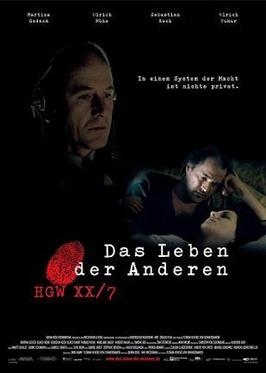
His breakthrough came with The Lives of Others, a film that redefined the historical thriller for the twenty-first century. Rather than relying on established tropes of Cold War espionage, von Donnersmarck approached the era with a forensic, almost sociological eye. This debut positioned him as a director capable of navigating the treacherous waters of recent political history while maintaining an intense focus on human vulnerability and intimate character studies.
The immediate and overwhelming international resonance of his debut placed him in a unique position within world cinema. He became widely recognized as a filmmaker who could bridge the gap between rigorous arthouse sensibilities and accessible narrative suspense. His trajectory highlights a deliberate, painstaking approach to storytelling, where historical authenticity serves as a canvas for timeless explorations of morality, ideology, and individual agency.
Thematic Preoccupations
At the core of von Donnersmarck's cinematic philosophy is the profound conflict between the individual and the totalitarian surveillance state. His work meticulously interrogates how institutional power permeates the most intimate spheres of human existence. By examining the mechanics of the Stasi and the broader East German apparatus, he isolates the precise moments where political ideology collides with personal integrity and human empathy.
Moral complexity serves as the central engine of his narratives. He resists presenting a binary world of absolute heroes and villains, instead focusing on the agonizing choices forced upon individuals existing within oppressive regimes. The transformative experience of engaging with art and humanity is frequently positioned as the only viable counterforce to state control, a theme that lends his work a uniquely humanist resonance despite its bleak historical contexts.
His thematic preoccupations consistently draw comparisons to dystopian literature, echoing Orwellian paranoia and Kafkaesque bureaucracy. However, von Donnersmarck grounds these anxieties in meticulously researched historical reality rather than pure science fiction. The surveillance state is depicted not as an abstract metaphor, but as a banal, bureaucratic reality that systematically suffocates dissent and enforces ideological conformity.
The pervasive atmosphere of observation underscores his exploration of guilt and redemption. Characters are frequently trapped in situations where mere survival requires moral compromise. Through these intensely pressured environments, von Donnersmarck asks fundamental questions about complicity, the limits of human endurance, and the dormant capacity for ethical awakening in even the most vindictive or compromised individuals.
Stylistic Signatures
Von Donnersmarck's visual language is characterized by a deliberate, almost clinical precision that mirrors the surveillance apparatus he often depicts. His mise-en-scene is typically claustrophobic and meticulously controlled, utilizing drab, desaturated color palettes to convey the suffocating atmosphere of totalitarian regimes. The camera work frequently adopts the objective, detached perspective of an observer, placing the audience in the uncomfortable position of the surveillant.
Despite this visual austerity, his work is punctuated by moments of intense, symbolic visual poetry. The juxtaposition of stark, brutalist architecture with fragile elements of human expression creates a powerful visual dissonance. This approach ensures that when moments of aesthetic or emotional beauty occur, they strike with amplified force, serving as a visual representation of the political thawing experienced by his characters.
His editing rhythms prioritize slow, mounting suspense over rapid kinetic action. By allowing scenes to breathe and focusing on the subtle reactions of his actors, he generates an atmosphere of pervasive dread and tension. This methodical pacing is crucial for translating complex moral and political quandaries into compelling, moving storytelling that operates effectively as a gripping thriller.
The soundscape in von Donnersmarck's cinema is equally strategic, often functioning as a narrative device in itself. Because his narratives frequently hinge on wiretaps and audio surveillance, the act of listening becomes a central cinematic motif. The interplay between oppressive silence, the mechanical sounds of recording equipment, and the transcendent intrusion of classical music highlights the dichotomy between the sterile state and the vibrant human soul.
Recurring Collaborators
While von Donnersmarck's filmography is marked by deliberate pacing between projects, his rigorous approach extends to his creative partnerships. He demonstrates a preference for working with highly disciplined, classically trained European actors capable of internalizing profound psychological conflict. The performances he elicits are consistently praised for their restraint, relying on nuanced physical acting rather than melodramatic exposition.
In front of the camera, the director demands actors who can convey decades of suppressed emotion through minimal dialogue. His collaboration with the late Ulrich Muhe in The Lives of Others stands as a defining exemplar of this approach. The performance is widely regarded as a masterclass in internalized acting, effectively anchoring the director's complex political commentary in a deeply personal, relatable human vessel.
Behind the camera, von Donnersmarck surrounds himself with technicians who share his commitment to historical authenticity and tonal consistency. His cinematographers are tasked with creating lighting schemes that reflect the bleak reality of his settings while still capturing the subtle emotional shifts of the characters. This synergy between director and crew ensures that every technical element, from production design to the meticulous use of symbolic props, serves the overarching thematic purpose.
The musical collaborations in his work are particularly vital, given the central role that art plays in his narratives. The scores often balance mournful, oppressive undertones with soaring, redemptive melodies, mirroring the internal journeys of his protagonists. These sonic partnerships are essential in translating the abstract concepts of ideological awakening and moral salvation into an immediate, visceral audience experience.
Critical Standing
Von Donnersmarck occupies a complex and occasionally polarizing position within the landscape of contemporary film criticism. Upon his debut, he was almost universally heralded as a visionary new voice in European cinema. Critics celebrated his ability to synthesize rigorous historical inquiry with the pacing of a suspenseful thriller, often comparing his work to paranoid classics like The Conversation and dystopian touchstones such as Fahrenheit 451, THX-1138, and Brazil.
The critical establishment frequently praises his sophisticated handling of moral ambiguity and his resistance to didactic storytelling. Reviewers have highlighted how he convincingly demonstrates that ethical and political dilemmas can form the basis of intensely dramatic narratives. His portrayal of East German totalitarianism is widely considered a potent narrative achievement, recognized for its moving and enlightening qualities that resonate far beyond its specific historical context.
However, his standing is not without its detractors. Some segments of the critical community have accused his work of being overly calculated or emotionally sanitized. Dissenting voices have labeled his historical reconstructions as occasionally bloodless or tepid, suggesting that the precise, calibrated nature of his filmmaking can sometimes border on a reductive simplification of complex historical tragedies, serving as catnip for audiences unfamiliar with more radical political cinema like The Lost Honor of Katharina Blum.
Despite these divergent viewpoints, von Donnersmarck remains a subject of serious critical analysis. His work is frequently taught and debated for its structural elegance and its ambitious engagement with major historical themes. He continues to be viewed as a filmmaker of significant intellectual weight, whose explorations of surveillance, state power, and human resilience remain highly relevant in modern cinematic discourse.