Career Overview
Gavin O'Connor has established himself as a premier architect of the contemporary sports drama, carving out a specific niche that examines the spiritual and physical exhaustion of the American working class. His cinema is one of sweat, blood, and fractured domestic spaces. By filtering profound familial resentments through the lens of athletic competition, he elevates the genre beyond mere physical triumph. His films operate as populist epics that remain deeply rooted in the gritty realities of blue collar existence.
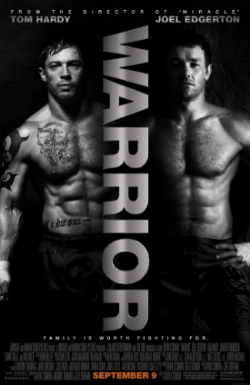
The critical and cultural impact of his work, most notably crystallized in Warrior, cemented his reputation as a filmmaker who understands the visceral language of the body. Reviewers and scholars have frequently pointed to his deft knack for melding interpersonal drama with athletic competition. Slant Magazine went so far as to label him the finest sports drama director working today, noting his ability to transcend the inherent cliches of the genre through genuine empathy for his characters. This trajectory represents a focused, deliberate career arc dedicated to mastering a specific narrative framework.
Within the broader context of cinema history, O'Connor functions as a direct descendant of the mid century social realist filmmakers. His explorations of marginalized, mumbling pugilists evoke the ghosts of On the Waterfront and Rocky, updating those classic archetypes for the brutal world of modern mixed martial arts. He does not reinvent the structural wheel of the sports film, but rather strips it down to its most raw and elemental components. By doing so, he ensures that the genre remains a vital vessel for exploring masculine vulnerability and economic desperation.
Thematic Preoccupations
At the very core of the cinematic universe crafted by Gavin O'Connor lies a profound obsession with brotherhood and family dynamics. His narratives are fundamentally built upon the ruins of the domestic sphere, where estranged relatives are forced into collision. The familial conflict in his work is never merely a backdrop. It is the central, animating force of the narrative. Characters carry the weight of generational trauma, using the arena of combat as a desperate mechanism to communicate the grievances they are otherwise unable to articulate.
Redemption is another recurring critical preoccupation, though O'Connor approaches it not as a clean, triumphant resolution, but as a punishing ordeal. The sports competition in films like Warrior is presented as a brutal crucible. The characters seek a physical purging of their emotional sins. It is a cinematic worldview where forgiveness can only be achieved after enduring immense physical punishment. The rings and cages in his films serve as metaphorical altars where deeply flawed individuals offer up their bodies in exchange for spiritual grace.
Furthermore, his thematic landscape is deeply intertwined with the economic and social realities of the working class. Critics have observed that his films function as an incoherent cry of pain from marginalized communities. By focusing on personal struggle within economically depressed environments, O'Connor touches upon a broader, systemic sense of disenfranchisement. The athletic victories in his films are rarely about wealth or fame. They are about basic survival and the restoration of dignity in a world that has systemically stripped it away.
Stylistic Signatures
The visual language deployed by Gavin O'Connor is characterized by an intense, gripping immediacy that seeks to physically implicate the spectator. He favors an immersive, kinetic cinematographic approach that places the audience directly inside the chain link cage alongside the fighters. The camerawork during combat sequences is often chaotic yet highly legible, capturing the visceral impact of every strike while maintaining a clear spatial awareness of the arena. This strategy results in a crude, populist epic aesthetic that makes viewers feel they are taking a beating themselves.
In terms of pacing and structural rhythm, O'Connor demonstrates a masterful ability to balance brutal in ring action with patient, fractured melodrama. His editing rhythms deliberately contrast the hyperkinetic violence of the sports sequences with the quiet, suffocating tension of interpersonal domestic scenes. This duality is a defining stylistic signature. The quiet moments of character study inform the stakes of the physical combat, ensuring that every punch thrown carries the full weight of the preceding narrative development. The athletic sequences are merely extensions of the dialogue.
Sound design and musical scoring in his films are similarly engineered to overwhelm and envelop the audience. Critics have noted that his films hit hard both literally and metaphorically, and this is largely achieved through a soundscape that amplifies the brutality of the fights and the emotional resonance of the musical cues. While some detractors argue this approach can leave the audience feeling pummeled by the time the credits roll, it is undeniably effective in its melodramatic manipulation. O'Connor embraces a heavy handed sensory experience to guarantee a profound empathetic reaction.
Recurring Collaborators
While the database does not identify a rigid troupe of recurring cast members across multiple films, Gavin O'Connor has established a distinct pattern in his casting philosophy. He consistently seeks out actors capable of delivering highly transformative, physically demanding performances. His directorial approach requires performers who can inhabit both the extreme athletic rigor of a professional fighter and the quiet, internalized grief of a broken family member. The physical transformation is never treated as a mere gimmick, but rather as an essential component of the character psychology.
This reliance on dedicated, physically imposing actors is best exemplified by the dual casting of Joel Edgerton and Tom Hardy in Warrior. O'Connor demands a level of commitment from his performers that blurs the line between acting and actual athletic endurance. By placing classy performers in the roles of beefy, mumbling contenders, he elevates the standard sports movie archetype into something resembling classical tragedy. The actors are required to convey volumes of unhealed trauma through their physical posture and fighting styles alone.
Ultimately, the core collaboration in an O'Connor film is between the director and the deeply committed performer who is willing to undergo this crucible. His ability to coax out these powerful, gripping performances is central to his critical success. Even when the broader narrative beats are criticized as predictable or unoriginal, the acting is universally praised as well acted and emotionally resonant. His actors provide the necessary anchor of authenticity that prevents the inherent melodrama from tipping into pure artifice.
Critical Standing
The critical standing of Gavin O'Connor is marked by a fascinating duality, as his films often polarize reviewers on the basis of their genre adherence. On one hand, he receives bafflingly high praise in many quarters for his ability to craft powerful, deeply moving sports dramas. Influential voices like Roger Ebert championed his work, noting that Warrior is a rare fight movie in which the audience does not want to see either competitor lose. This ability to generate profound empathetic engagement is widely celebrated as his greatest directorial asset.
Conversely, a vocal contingent of critics frequently highlights the predictable and unoriginal nature of his narratives. Publications such as the Los Angeles Times have argued that his work can sometimes be too much of a good thing, overwhelming the viewer with an exhausting barrage of emotional and physical violence. Detractors occasionally dismiss elements of his films as unconvincing or unremarkable, pointing to a reliance on familiar sports tropes. Yet, even among these criticisms, there is a widespread acknowledgment of the sheer visceral impact of his filmmaking.
Within the broader critical discourse, O'Connor is perpetually situated alongside the titans of the boxing and wrestling film canon. Reviewers compulsively draw comparisons between his work and classics like The Fighter, The Wrestler, and Rocky. Ultimately, his reputation has coalesced around the idea that he is a master of a very specific, traditional form. He may lean into established melodramatic manipulations, but he earns those emotional peaks through undeniable craftsmanship. He stands today as a populist auteur whose raw, bleeding heart cinema commands undeniable critical respect.