Career Overview
Jean-Marc Vallee emerged as a vital voice in contemporary cinema by blending the intimate textures of independent filmmaking with the expansive emotional canvases required of major Hollywood narratives. His trajectory reflects a filmmaker deeply interested in the raw edges of human survival. Though his early French-Canadian work established his foundational reputation, his crossover into the American film industry cemented his status as a director capable of handling deeply American stories with an outsider's objective precision.
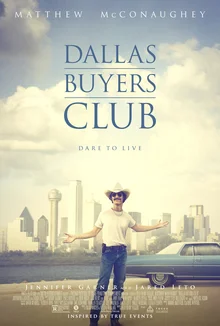
Vallee found his greatest mainstream success by anchoring his projects in real-world struggles, particularly those involving institutional failure and personal rebellion. His breakout within the American critical establishment is best exemplified by Dallas Buyers Club, a work that distills his fascination with outcasts navigating hostile environments. The film signaled his transition into a premier architect of the modern biographical drama, relying on true-life events to explore profound existential questions.
His position in cinema history is increasingly defined by this ability to elevate conventional narratives into gripping, deeply felt character studies. Rather than relying on grandiose visual flourishes, Vallee built his career on the steadfast foundation of performance and gritty realism. His legacy is that of a humanist director who prioritized emotional authenticity over stylized artifice, creating an indelible mark on the landscape of twenty-first-century biographical cinema.
Thematic Preoccupations
The thematic core of Vallee's cinematic universe revolves around personal transformation in the face of insurmountable odds. He is continually drawn to protagonists who are pushed to the absolute margins of society and forced to rebuild their identities from the ground up. In Dallas Buyers Club, this preoccupation takes the form of medical activism and the AIDS crisis, exploring how a profound existential threat can catalyze a radical, paradigm-altering shift in a character's worldview.
Vallee consistently interrogates the friction between the individual and corrupt or failing institutions. His protagonists often find themselves in direct conflict with a systemic status quo that views them as expendable or irrelevant. This dynamic transforms a standard biographical narrative into a triumphant tale of human resilience. The medical establishment becomes an antagonist, forcing the central character to reject passive victimhood and forge an illicit path to survival, thereby claiming ownership over their own mortality.
Furthermore, Vallee tempers his exploration of profound suffering with humanistic elements and a persistent undercurrent of sardonic humor. He questions what it means to retain dignity when the physical body itself is failing. By highlighting the visceral reality of terminal illness alongside the fierce desire to live, his work investigates the sheer, unvarnished tenacity of the human spirit. He actively avoids the sanctimonious pitfalls of the traditional disease narrative, focusing instead on the flawed, messy humanity of his subjects.
Stylistic Signatures
Visually and rhythmically, Vallee relies on a gritty realism that strips away the polished veneer typical of Hollywood biopics. He favors an authentic portrayal of his subjects, often utilizing natural lighting and unobtrusive camera setups to create an immersive, documentary-like immediacy. This approach grounds the narrative in the physical reality of the characters, ensuring that the visual language serves the emotional depth of the story rather than distracting from it with unnecessary cinematic artifice.
A defining stylistic choice in Vallee's work is his reliance on grizzly imagery and unvarnished physical transformations. He does not shy away from the brutal toll of illness or addiction, presenting bodies in states of decay with unflinching honesty. Yet, he balances this harshness with a conventional narrative structure that remains highly accessible to audiences. His masterful control over tone ensures that the film never descends into misery porn, maintaining a delicate equilibrium between despair and sardonic wit.
Editorially, Vallee constructs his films around convincing character arcs, allowing the rhythm of the scenes to be dictated by the performers rather than strict formalist constraints. He explicitly eschews traditional button-pushing and tear-jerking techniques, preferring a more understated approach that lets the poignant moments land with organic, unforced impact. His directorial signature is ultimately one of disciplined restraint, carefully guiding the audience through a gripping story without manipulating their emotions through overt directorial trickery.
Recurring Collaborators
While Vallee does not possess a sprawling repertoire of recurring cast members across the specific films logged in this database, his most crucial collaborative dynamic is his profound synergy with his lead actors. He operates fundamentally as an actor's director, fostering environments where performers can undertake radical physical and psychological transformations. This approach necessitates a remarkable level of trust that routinely elevates standard performances into career-defining achievements.
His collaboration with Matthew McConaughey in Dallas Buyers Club serves as the definitive example of this creative partnership. Vallee provided the necessary space for McConaughey to channel the spirit of a revolutionary, resulting in a gutsy performance that subverted the traditional victim narrative. The director's ability to help shape such a raw, aggressive persona into a triumphant, indomitable figure underscores his exceptional skill in actor management.
Similarly, Vallee's work with supporting actors demonstrates an impressive control over complex ensemble dynamics. His collaboration with Jared Leto in the same film was hailed by critics as a revelation, showcasing Vallee's talent for guiding performers through delicate, emotionally demanding territory. The director's primary creative partnership is therefore not bound to a specific individual, but rather to the craft of acting itself, relying on deeply committed performances to anchor his entire cinematic aesthetic.
Critical Standing
Critical reception to Jean-Marc Vallee has largely celebrated his ability to navigate treacherous thematic waters without succumbing to melodrama. Reviewers frequently note his talent for sidestepping the various pitfalls associated with terminal illness narratives, praising his films for being conventional in structure but never sanctimonious in execution. His work is often characterized by critics as a delicate balancing act, one that successfully blends familiar recovery angles with a healthy measure of sardonic wit.
The critical establishment particularly champions Vallee for his refusal to indulge in cheap emotional manipulation. Critics admire how a film like Dallas Buyers Club eschews easy sentimentality, opting instead for a thin, grizzly triumph that feels hard-won and entirely authentic. His reputation rests heavily on this artistic integrity, with writers highlighting his unwavering commitment to portraying the never-say-die indomitability of his subjects without resorting to cinematic cliches.
Over time, Vallee's standing within critical discourse has solidified around his status as a premier facilitator of transformative acting. While a minority of critics occasionally express concern that the extreme physical commitments of his leads might risk tipping the cinematic experience into overkill, the overarching consensus remains overwhelmingly positive. He is recognized as a masterful filmmaker who brings gripping storytelling and profound emotional depth to the screen, leaving behind a legacy of authentic, humanistic cinema.