Career Overview
Joe Dante emerged as a distinctive voice in American cinema by bridging the exploitation aesthetics of his early training with the massive scale of mainstream Hollywood blockbusters. His career arc reflects a steady transition from scrappy independent genre exercises to massive studio spectacles. Dante carved a unique niche during the 1980s by fundamentally subverting traditional family entertainment. By infusing studio pictures with chaotic storytelling and sophisticated wit, he positioned himself as an anarchic auteur within the commercial studio system.
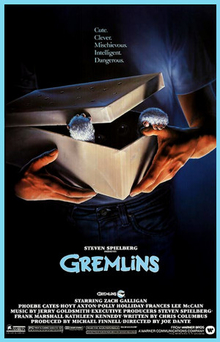
The release of Gremlins marked a significant turning point in his cinematic trajectory, cementing his reputation as a director capable of balancing mass entertainment with subversive satire. He proved that popcorn cinema could house deep skepticism toward American institutions. This approach allowed him to operate as a populist filmmaker who never underestimated the intelligence of his audience. His work became synonymous with a specific era of Hollywood where genre films were allowed to exhibit a remarkable degree of ideological friction.
Today, Dante holds a secure position in cinema history as a masterful manipulator of audience expectations. He is widely recognized by film scholars as a director who utilized the cinematic apparatus to deconstruct the very nature of media consumption. His legacy is that of a cinematic trickster, a filmmaker who smuggled radical ideas into multiplexes under the guise of charming, special effects-driven spectacles.
Thematic Preoccupations
Dante frequently interrogates the dark underbelly of American consumerism and the fragile facade of idyllic suburban life. In Gremlins, he stages a literal confrontation between a Norman Rockwell vision of Christmas and chaotic, destructive forces. This dichotomy serves as a rigorous consumerism critique, effectively flinging traditional holiday sentimentality into the belly of the mass consumer beast. He uses the horror-comedy framework to explore how easily the superficiality of Americana crumbles when introduced to foreign or unruly elements.
Additionally, Dante possesses a profound obsession with cinema itself, turning his narratives into reflexive exercises. His films are steeped in film references, classic character references, and an overarching homage to classic monster movies. By constantly alluding to other films, Dante creates a dialogue between his audience and the history of cinema. This relentless self-awareness prevents his work from becoming mere pastiche, elevating it to the realm of a sophisticated satirical spectacle. The slippery narratives he employs often mock the very movie cliches they utilize.
A recurring philosophical concern in his filmography is the tension between manufactured innocence and inherent chaos. Dante questions the sanitized narratives fed to the public by mass media and corporate entities. The wacky humor in his films often masks a deep cynicism about authority and commercialism. Ultimately, his thematic preoccupations reveal a director deeply skeptical of the American dream, using infernally funny moments to expose the artificiality of societal norms.
Stylistic Signatures
The visual language of Dante is heavily characterized by chaotic storytelling and the meticulous integration of top-notch special effects. He masterfully blends practical creature effects with manic action, crafting sequences that oscillate wildly between infernally funny moments and genuine horror. His mise-en-scene is often aggressively cluttered with pop culture artifacts and background gags, reflecting his thematic preoccupation with media saturation. This visual density rewards multiple viewings and reinforces his complex relationship with mass entertainment.
The editing rhythms in his films frequently mimic the anarchic energy of classic animated shorts, seamlessly translated into live-action cinema. This frenetic approach disrupts the expected flow of mainstream narratives, introducing a sense of unpredictability and chaos in narrative execution. Dante frames his subjects with a kinetic camera that enhances the sense of a riotous spectacle unfolding on screen. He weaponizes traditional framing techniques to amplify the chaos, making the audience complicit in the destruction of the cinematic environment.
Furthermore, Dante uses sound and music to violently subvert audience expectations. He often pairs horrific on-screen events with cheerful, nostalgic audio cues or sweeping orchestral scores. The resulting tonal dissonance is a definitive hallmark of his style, perfectly encapsulating his unique brand of charming yet destructive cinema. This audiovisual juxtaposition highlights the absurdity of the situations, cementing his status as a master of the horror-comedy hybrid.
Recurring Collaborators
While the specific critical database highlights a limited scope of recurring on-screen personnel for Dante, the distinct texture of his films relies heavily on crucial behind-the-scenes creative partnerships. His ability to execute such demanding satirical spectacles stems from aligning with producers and technicians who understand his subversive inclinations. In the case of Gremlins, the synergy with executive producer Steven Spielberg provided the necessary commercial packaging for Dante to smuggle his chaotic vision into theaters. This dynamic allowed Dante to play with an E.T. homage while simultaneously destroying the very concept of the cuddly alien companion.
The special effects teams and creature designers also serve as fundamental collaborators in the Dante filmography. The realization of his physical comedy and creature-driven chaos requires technicians who can blend horror elements with expressive, comedic character designs. These practical effects artists are essential to executing the slippery narratives and classic character references that define his work. By prioritizing tangible, top-notch effects, Dante ensures his monsters possess a tactile reality that grounds the wacky humor.
Additionally, his collaborations with composers and editors are vital to achieving the precise tonal balance of his films. The musical scores provide the necessary emotional grounding that Dante subsequently subverts through visual chaos. The editors he works with must possess a deep understanding of comedic timing and horror pacing, allowing the films to pivot seamlessly from delightful family moments to infernally funny mass destruction. These partnerships are the bedrock upon which his chaotic storytelling is constructed.
Critical Standing
Historically, critical reception of Joe Dante has evolved from viewing him as a capable purveyor of genre thrills to recognizing him as a major satirical auteur. Upon its initial release, Gremlins was frequently praised for its delightfully chaotic energy, with critics noting its seamless blend of horror and comedy. Reviewers highlighted the film as a sly series of send-ups, successfully weaponizing movie scenes so basic they reside permanently in the cultural subconscious. Early criticism often focused heavily on the top-notch special effects and the sheer entertainment value of his work.
Over time, film scholars have significantly deepened their appreciation for Dante, focusing on his sophisticated wit and rigorous critique of consumerism. While some contemporary critics initially dismissed his work as mere mass entertainment, modern reappraisals celebrate his ability to embed radical social commentary within the framework of a popcorn movie. His films are now routinely analyzed in academic circles for their deconstruction of Hollywood cliches and their relentless satirical spectacle.
His standing in critical discourse is now that of a cinematic subversive, a director who utilized the studio system to critique its very foundations. Dante remains a vital figure for cinephiles and art critics who value filmmakers capable of bridging the gap between lowbrow monster movie homages and highbrow structural critiques. He is celebrated as a visionary who anticipated the media-saturated landscape of modern culture, using delightful chaos to deliver profound societal warnings.