Career Overview
John Crowley emerged as a defining voice in contemporary dramatic cinema by mastering the complex contours of the human heart. Rooted in a profound understanding of character and text, his directorial trajectory reveals an artist deeply committed to exploring the nuances of human experience. He built a reputation on translating intricate emotional landscapes into compelling visual narratives, securing his position as a classical storyteller operating within a modern framework.
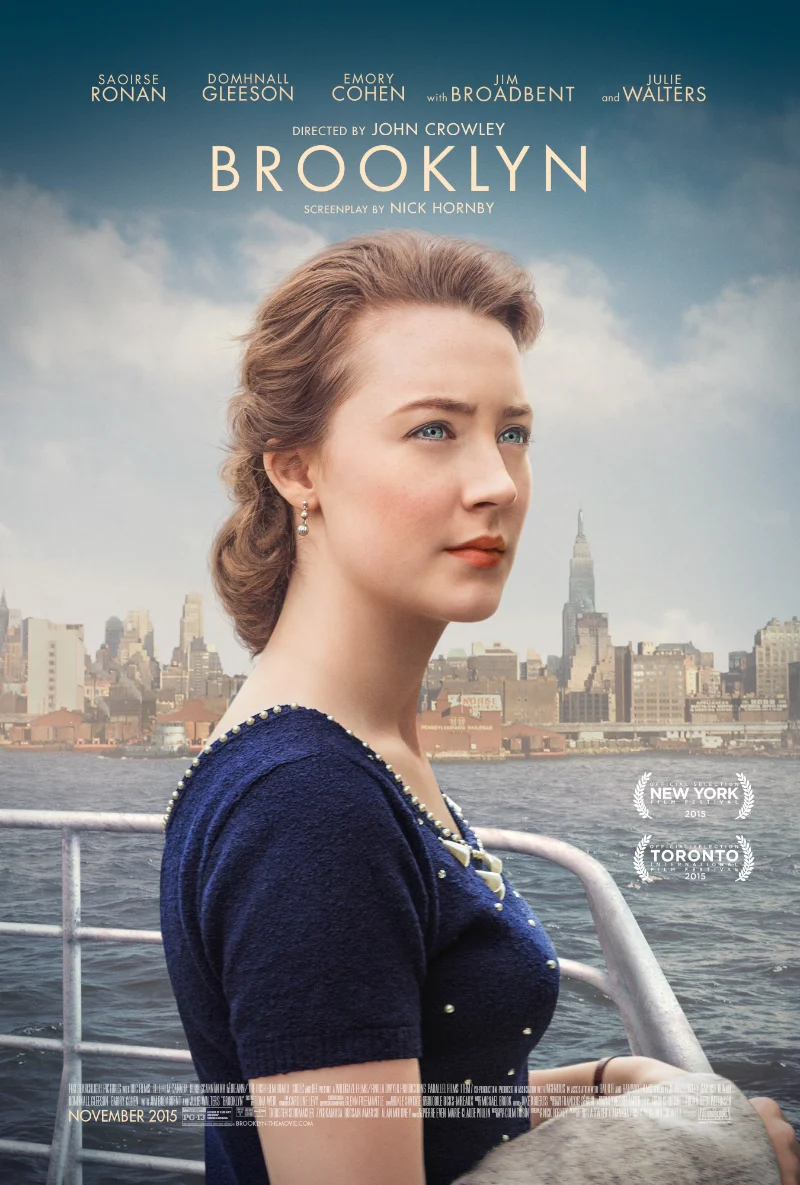
His critical breakthrough and defining achievement in our database is Brooklyn, a film that crystallized his ability to handle sensitive historical and emotional material. Crowley demonstrated a rare capacity to craft life-sized portraits of relatively unexceptional people, elevating their personal struggles to the level of epic cinematic poetry. By steering clear of gratuitous spectacle, he allowed the quiet dignity of his protagonists to drive the narrative forward.
In the broader context of cinema history, Crowley occupies a space akin to the great midcentury studio directors who prioritized character psychology over flashy technique. Critics frequently note how his intelligent and restrained approach yields works that feel simultaneously timely and timeless. He continues to be regarded as a filmmaker of impeccable taste, capable of synthesizing profound themes of diaspora and romantic longing into beautifully mounted, deeply absorbing cinematic experiences.
Thematic Preoccupations
The thematic nucleus of the director's work relies heavily on the intertwined concepts of immigration, identity, and cultural contrast. Crowley consistently investigates what happens when a life is shifted off its axis due to geographic displacement. Through the lens of his protagonists, he explores the profound homesickness and cultural alienation that accompany leaving one homeland for the promise of another. This exploration of the diaspora is never purely sociological. It is deeply personal, rooted in the internal friction between the heritage one leaves behind and the uncharted future one must embrace.
Interwoven with the theme of immigration is a rigorous study of love and heartache. Crowley charts the romantic evolutions of his characters as essential components of their maturation. The intimate relationships forged in his narratives serve as both a refuge from loneliness and a catalyst for profound personal conflict. By mapping the complex emotional landscape of young adulthood, he captures the delicate balance between newfound independence and the persistent pull of familial obligations.
Furthermore, his films interrogate the concept of home not merely as a physical location but as a psychological state. The heart-stopping emotional moments in his work frequently arise from a character realizing that they can never truly return to the world they once knew. This thematic preoccupation yields a rich tapestry of intimacy and longing, framing the immigrant experience as a universal story of loss, reinvention, and the quiet resilience required to forge a new identity.
Stylistic Signatures
The visual language of John Crowley is characterized by an impeccable attention to detail and a luminous cinematography that evokes a strong sense of old-fashioned charm. He favors a classical approach to mise-en-scène, relying on beautiful and timeless visuals to establish mood and historical context. His frames are often meticulously composed, prioritizing symmetry and clarity to draw the viewer directly into the emotional reality of the characters without the distraction of overt stylization.
Color theory plays a crucial role in his storytelling arsenal. In Brooklyn, Crowley uses color to vividly illustrate the cultural contrast between different worlds. He juxtaposes the sternly jacketed, drab environments of the protagonist's homeland with the vibrant, chromatic explosion of her new life, featuring red shoes, yellow dresses, and brightly painted cars. This visual dichotomy serves as an external manifestation of the character's internal awakening and her gradual assimilation into a new cultural identity.
Performance direction is another hallmark of his stylistic signature. Crowley consistently elicits quiet yet impactful performances, often relying on close-ups to convey complex emotional transitions. He encourages his actors to maintain a watchful, reserved demeanor, allowing their faces to communicate innocent youth, disillusionment, and profound heartache simultaneously. This technique results in a miraculous still center within his films, generating life-sized emotional resonance through subtlety rather than melodrama.
Recurring Collaborators
While the current database does not identify a sprawling ensemble of recurring actors across multiple projects, John Crowley is renowned for his precise and fruitful collaborations with central performers. His ability to guide actors to career-defining work is a cornerstone of his directorial method. By fostering an environment of trust and intimacy, he empowers his leads to carry the heavy emotional weight of his sentiment-rich narratives.
The most pivotal creative partnership highlighted in his filmography is his work with lead actress Saoirse Ronan in Brooklyn. Critics overwhelmingly cite her luminous performance as the absolute heart and focal point of the film. Under his direction, Ronan provided a miraculous still center, utilizing subtle facial expressions in sustained close-ups to convey a profound blend of youth, wariness, and sorrow. This dynamic illustrates his exceptional skill in tailoring his cinematic vision to the strengths of his principal cast.
Beyond the actors, Crowley's success relies heavily on his alliances with gifted screenwriters and novelists. His collaboration with writer Nick Hornby to adapt Colm Tóibín's acclaimed novel demonstrates his affinity for preserving the literary richness of the source material while translating it into a purely cinematic language. These behind-the-camera partnerships are instrumental in maintaining the intelligent, heartfelt, and complex storytelling that defines his overarching body of work.
Critical Standing
The critical standing of John Crowley is anchored by widespread admiration for his masterful storytelling and his capacity to generate profound emotional impact. Reviewers consistently praise his focus on the human heart, frequently asserting that navigating such complex emotional contours is far more difficult than executing grand special effects. His work is celebrated as a timely reminder of the human cost of displacement, earning him a reputation as an intelligent and profoundly empathetic filmmaker.
Critics often situate his films within a lineage of classic cinema, drawing comparisons to the midcentury melodramas featuring Bette Davis and Joan Crawford, as well as the socially grounded realism of Ken Loach's historical dramas. This dual comparison highlights his unique ability to bridge the gap between grand romantic tragedy and intimate, working-class portraiture. By evoking the spirit of such classics, reviewers suggest that his films possess an enduring, timeless quality rarely found in contemporary releases.
As his career has evolved, Crowley has been consistently lauded for creating fresh and absorbing experiences out of seemingly traditional narratives. While Brooklyn was initially perceived by some as a beautiful, old-fashioned adaptation, critics quickly recognized the rigorous discipline and sophisticated sentiment-rich approach underlying its execution. He avoids the pitfalls of cloying sentimentality, choosing instead to present resolutely life-sized portraits that resonate deeply with modern audiences.
Ultimately, his place in critical discourse is that of a quiet master of the dramatic form. He is respected by art critics and cinephiles alike for his impeccable craftsmanship, luminous visual aesthetics, and deeply humane worldview. In an era often dominated by cynicism and spectacle, his commitment to telling heartfelt, emotionally resonant stories secures his lasting legacy as a vital voice in modern cinema.