Career Overview
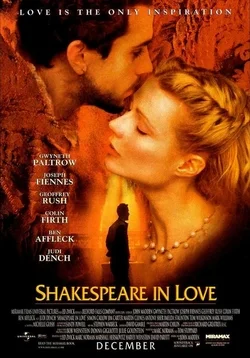
John Madden emerged as a defining voice in British prestige cinema during the late 1990s, transitioning from a robust background in theater and television to international cinematic prominence. His trajectory reveals a filmmaker uniquely equipped to navigate the intersection of classical literature and commercial filmmaking. The critical and commercial triumph of Shakespeare in Love cemented his status, acting as a spiritual and thematic follow up to his earlier period success with Mrs. Brown. By tackling the love life of Britain's most celebrated playwright, Madden demonstrated a rare capacity to dismantle the stiffness often associated with historical dramas.
His position in cinema history is largely defined by this ability to bridge the gap between highbrow literary tradition and accessible, engaging storytelling. He proved that rigorous historical fiction could simultaneously operate as a broadly appealing romantic comedy, influencing a wave of playful period pieces that followed at the turn of the millennium. Madden's background in the theater heavily informed his cinematic approach, allowing him to direct sprawling ensemble casts with the precision of a seasoned stage manager.
Throughout his career arc, Madden has remained a reliable purveyor of classy, literate cinema. His willingness to embrace both the profound and the broadly comical has made his work highly studyable for film students and endlessly rewatchable for casual cinephiles. He stands as a director who respects the intelligence of his audience while never forgetting the fundamental cinematic imperative to entertain.
Thematic Preoccupations
At the core of Madden's filmography is a profound fascination with the creative process and the genesis of art. He frequently utilizes the theater as a microcosm for society, exploring how lived experiences feed directly into artistic output. In Shakespeare in Love, the act of writing is inextricably linked to the unpredictable nature of romantic love, positioning the artist's personal turmoil as the necessary fuel for the creation of a masterpiece. This intertwining of love and creativity remains a central philosophical concern in his narrative explorations.
Madden also consistently interrogates the boundaries of historical fiction by embracing playfulness in storytelling. Rather than adhering strictly to recorded events, he manipulates historical facts to serve a deeper, more resonant emotional truth. This approach allows him to examine the concept of love not merely as a hopelessly romantic ideal, but as a chaotic, transformative force that defies societal expectations and class boundaries. His films ask how historical memory can be bent to better understand the universal human condition.
Furthermore, his work is heavily populated by a plethora of characters engaged in complex webs of deception and mistaken identity. This thematic reliance on theatricality suggests a philosophical view that human interactions are inherently performative. His characters are frequently required to adopt various roles in order to navigate the strictures of their historical environments, reflecting a world where the stage and reality are constantly bleeding into one another.
Stylistic Signatures
Madden's visual language is defined by a dynamic integration of theatrical elements into cinematic space. He avoids the static tableaux traditionally associated with costume dramas, opting instead for a restless, fluid camera that captures the frantic energy of the stage and rehearsal rooms. His beautiful cinematography emphasizes the lush textures of period settings while maintaining a thoroughly modern kinetic rhythm. His mise-en-scene is carefully orchestrated to blur the lines between performance and reality, often framing backstage chaos with the same reverence as the finished theatrical product.
The editing rhythms in his films are crucial to his tonal balancing act, effortlessly fusing slyly clever humor with broadly comical moments. This requires a precise pace that allows Shakespearean references and witty allusions to land without disrupting the overarching romantic narrative. Madden's framing isolates intimate romantic connections amidst a bustling, crowded world, creating a visual juxtaposition between the private lives of his protagonists and their public obligations.
His use of sound and score amplifies the hopelessly romantic underpinnings of his narratives, providing a sweeping emotional counterweight to the jocular, rapid fire dialogue delivered by his extensive ensemble casts. The meticulous attention to auditory detail ensures that the clatter of a lively tavern or the echo of a wooden stage feels completely immersive, grounding his playful stylistic flourishes in a believable historical reality.
Recurring Collaborators
While Madden has worked with various ensembles, his cinematic voice thrives on strong partnerships with screenwriters who share his literate, gamesome sensibilities. The intricate, reference heavy script of Shakespeare in Love, crafted by Marc Norman and Tom Stoppard, perfectly aligns with Madden's directorial penchant for witty dialogue and metatextual storytelling. Stoppard's familiar gamesmanship finds an ideal interpreter in Madden, who visually translates complex literary jokes into accessible, engaging cinema.
On screen, Madden demonstrates a distinct talent for assembling sprawling ensembles and drawing out Oscar winning performances. Actors such as Gwyneth Paltrow and Geoffrey Rush serve as vital anchor points in his work, balancing effortless charm with sharp, theatrical comedic timing. These performers are adept at handling the dual demands of period authenticity and contemporary emotional accessibility, allowing Madden's stylized worlds to feel grounded and human.
The synergy between Madden, his writers, and his cast creates a cohesive world where a plethora of characters never feels overwhelming. Every supporting player is given the space to contribute a specific comedic or dramatic note, resulting in a rich, multilayered cinematic environment. This collaborative spirit mimics the very theatrical troupes depicted in his films, resulting in a delightfully executed group effort.
Critical Standing
Madden's critical reputation achieved its zenith during the late 1990s, when his work attained a rare synthesis of massive commercial success and overwhelming awards recognition. Critics frequently highlight his entertaining reimagining of historical figures, noting his singular ability to make distant eras feel fresh, urgent, and immediately relevant. Even the most severe students of history often find themselves won over by the clever blend of historical facts and fictionalized romance that characterizes his most celebrated work.
Within contemporary film discourse, Madden is primarily evaluated as a master of tonal modulation. Reviewers consistently praise the effortless charm and delightful experience of his films, acknowledging his skill in weaving broadly comical diversions into hopelessly romantic narratives. His willingness to prioritize emotional resonance and playful wit over academic accuracy has earned him fervent admirers in the critical establishment, positioning him as a vital architect of the modern romantic comedy.
Ultimately, his enduring standing is evidenced by the lasting scholarly and cinephile interest in his meticulous approach to the period piece. The regular reissuing of his works, complete with extensive collector edition features and commentary tracks from cast and crew, speaks to a sustained appreciation for his unique blend of high art and crowd pleasing cinematic craft. He remains highly regarded for bringing a sophisticated, joyful energy to historical cinema.