Career Overview
John Sturges began his career in the editing room, a foundational experience that profoundly shaped his approach to narrative pacing and spatial coherence. Working through the studio system during the postwar era, he developed a reputation for efficiency and a keen understanding of masculine psychology. His early work established a reliable craftsmanship, but it was his evolution into large scale action and adventure cinema that solidified his auteur status among genre enthusiasts.
By the late 1950s and early 1960s, Sturges had honed a distinctive approach to the ensemble piece. He became inextricably linked to the Western and the war film, genres he elevated through meticulous structural design rather than thematic pretension. His trajectory mirrors the shifting landscape of Hollywood itself, moving from tightly controlled studio pictures to sprawling, internationally shot epics that demanded rigorous logistical mastery.
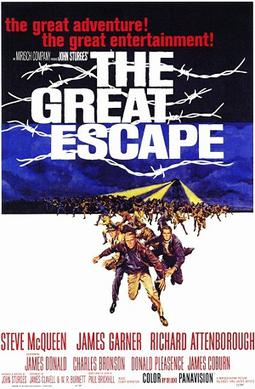
His peak critical and commercial period is perhaps best represented by The Great Escape, a film that perfectly encapsulates his mature phase. Here, Sturges demonstrated his ability to marshal vast resources while maintaining a sharp focus on individual character arcs. His position in cinema history rests on this exact synthesis. He remains a crucial figure in the development of the modern action blockbuster, providing a template for balancing spectacle with coherent, character driven storytelling.
Thematic Preoccupations
A central preoccupation of John Sturges is the dynamics of teamwork and the intricate mechanics of collective endeavor. Whether depicting soldiers or prisoners of war, his narratives consistently orbit around groups of disparate, often cynical men united by a singular, monumental task. The thematic weight rests not just on the completion of the objective, but on the shifting alliances, professional respect, and self exploration that emerge when men are placed under extreme duress.
In films like The Great Escape, the theme of confinement versus freedom takes on a distinctly existential dimension. The prisoner escape narrative becomes a canvas for examining resilience, ingenuity, and defiance against authoritarian control. Sturges is less interested in jingoistic patriotism than in the personal codes of honor that drive individuals to resist. The act of escape is portrayed as both a physical necessity and a moral imperative, highlighting a distinctly American individualism working within a necessary collective framework.
Furthermore, Sturges continually interrogates the concept of duty, particularly how it intersects with personal sacrifice. His protagonists often grapple with the cost of leadership and the burdens of their own competence. This exploration of duty is rarely romanticized. Instead, it is depicted as a heavy, sometimes fatal responsibility. Through these explorations, Sturges constructs a cinema of pragmatic stoicism, where heroism is defined by quiet professionalism rather than grand, performative gestures.
Stylistic Signatures
The stylistic hallmark of John Sturges is his unparalleled command of spatial geometry and widescreen framing. Working frequently in the Panavision and CinemaScope formats, he utilized the expansive frame to articulate relationships between characters and their environments. His blocking is notoriously precise, often arranging ensemble casts in deep focus to emphasize their collective unity or underlying tensions without relying on excessive cutting. This spatial coherence ensures that even the most complex action sequences remain completely legible to the viewer.
Sturges brought an editor's discipline to his directorial efforts, resulting in a pacing that is consistently described by critics as top notch and taut. He possessed a rare ability to build suspense through duration rather than frantic montage. In The Great Escape, the methodical documentation of the escape preparation is given as much rhythmic importance as the exhilarating breakout itself. This procedural approach grounds the action in reality, amplifying the eventual release of kinetic energy.
The visual language of a Sturges film is also defined by its utilitarian elegance. He avoids ostentatious camera movements, preferring a classical, objective distance that allows the performances and the inherent danger of the situations to take center stage. Additionally, his cinematic architecture relies heavily on robust sound design and orchestration that serve as counterpoints to the stoic silence of his protagonists. The synthesis of crisp, unadorned cinematography and anthemic scoring creates an aesthetic that is both monumental and deeply grounded.
Recurring Collaborators
Because the current database index focuses predominantly on The Great Escape, a comprehensive mapping of his recurring cast members is restricted. However, Sturges was undeniably an architect of screen stardom, possessing a distinct talent for recognizing and harnessing the raw charisma of his performers. His approach to casting was as structural as his visual compositions, relying on actors who could communicate volumes through physicality and stillness rather than extensive dialogue.
The performances of Steve McQueen and James Garner perfectly illustrate the director's method of character building. Sturges provided McQueen with the space to cultivate his rebel persona, famously integrating the actor's own passion for motorcycles into the narrative fabric. This collaboration resulted in highly memorable cinematic moments, transforming McQueen into an enduring onscreen legend. Garner, similarly, was utilized for his effortless charm and pragmatic intelligence, anchoring the complex procedural elements of the narrative.
Beyond his acting ensembles, Sturges relied on a cadre of dedicated artisans to realize his expansive visions. His films frequently required immense logistical coordination, necessitating strong partnerships with cinematographers and editors who understood his demand for clarity and momentum. His reliance on memorable musical scores also defined his era of filmmaking, creating majestic backdrops that perfectly complemented the large scale heroics. The synergy between director, cast, and crew in a Sturges production is always evident in the highly polished final product.
Critical Standing
The critical standing of John Sturges has undergone a fascinating evolution since the peak of his career. During his most active years, he was frequently categorized as a highly competent journeyman, a reliable studio hand who delivered thrilling adventures and robust box office returns. Contemporary reviews often praised his films as exhilarating war pictures with high entertainment value, noting the commendable pacing and direction. However, this focus on his commercial success often overshadowed the immense technical sophistication required to execute his vision.
In retrospective analysis, particularly among formalist critics and contemporary filmmakers, Sturges has been elevated to the status of a master craftsman of the American action idiom. Critics frequently cite The Great Escape as a quintessential classic, praising its complex narrative architecture and its ability to balance a sprawling ensemble cast. While anomalous archival metadata sometimes draws surreal parallels between his work and the introspective European art cinema of Federico Fellini, serious critical discourse situates Sturges firmly alongside traditional American auteurs. He is celebrated as an artist who expressed his worldview entirely through genre mechanics and physical action.
Today, Sturges is widely recognized as a foundational figure in the evolution of the modern blockbuster. His films are studied in film schools for their spatial coherence, their rigorous editing, and their immaculate pacing. The frequent critical comparisons between his various ensemble epics underscore a recognized auteurial signature, an undeniable mastery of the widescreen format, and a profound understanding of cinematic momentum. His legacy is that of a consummate filmmaker whose entertaining narratives conceal a timeless, masterpiece quality.