Career Overview
Jon Favreau has transitioned from independent cinema beginnings to become a central architect of the contemporary franchise blockbuster landscape. His career trajectory reflects a broader industry shift toward serialized storytelling and the management of legacy intellectual property. By navigating complex studio ecosystems, he has established himself as a highly reliable custodian of massive cinematic universes, prioritizing audience engagement and structural consistency over idiosyncratic auteurism.
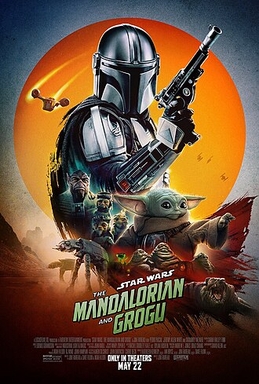
His recent work, particularly The Mandalorian and Grogu, represents a culmination of his efforts to bridge television and theatrical formats. Favreau acts as both a traditional director and a brand manager, synthesizing serialized narrative structures with the scale expected of theatrical releases. This dual role has positioned him uniquely in modern cinema history, effectively redefining how continuous storylines are translated across different media platforms.
Despite his immense commercial success, his position in critical circles remains complex. He is often recognized more for his logistical triumphs and technological integration than for distinct personal vision. Yet, his ability to orchestrate multi-tiered franchise revivals while maintaining a baseline of populist charm ensures his enduring relevance in an era defined by blockbuster interconnectivity.
Thematic Preoccupations
A central preoccupation in the recent work of Jon Favreau is the tension between expanding universe narratives and the inescapable gravity of nostalgia. In The Mandalorian and Grogu, he wrestles with semi-canonical storylines that attempt to broaden the scope of established mythologies while simultaneously tethering themselves to legacy elements like the Skywalker connection. This creates a thematic loop where characters are perpetually seeking new frontiers but are inevitably pulled back into the familiarity of established lore.
Favreau also demonstrates a recurring obsession with the simple pleasures of good versus evil narratives. He strips down complex intergalactic conflicts into digestible adventure themes, often centering on classical archetypes like the stoic bounty hunter. By focusing on these fundamental dichotomies, he seeks to ground the massive scale of his cinematic universes in relatable, accessible moral frameworks, prioritizing clear emotional stakes over profound philosophical ambiguity.
Perhaps most fascinating is his thematic exploration of artificiality versus soulful human expression. Critics have noted a distinct pivot away from traditional human expressiveness in his narratives, favoring precision-engineered creature adorability. This shift raises compelling questions about the nature of empathy in contemporary blockbusters, with some analysts identifying sinister undertones in how digital and non-human entities are designed to trigger emotional responses that human characters often fail to elicit.
Stylistic Signatures
The visual language of Jon Favreau is characterized by highly polished aesthetics that heavily rely on advanced digital environments. His integration of new rendering technologies often results in a distinct, sometimes video-game-looking presentation. While this approach allows for boundless world-building, critics have pointed out that it occasionally yields murky night scenes and a noticeable lack of visual depth, suggesting a prioritization of controlled production over organic cinematography.
In terms of pacing and scale, Favreau juxtaposes brisk storytelling with the requisite hugeness of the IMAX format. He constructs his narratives through propulsive, action-oriented rhythms that propel the audience forward, ensuring high entertainment value. However, this briskness is frequently counterbalanced by moments of quiet intimacy between his central figures, embedding intimate character dynamics within a spectacular space opera canvas.
A defining stylistic signature is his emphasis on creature design creativity. Drawing comparisons to the legacy of Ray Harryhausen and the imaginative output of Guillermo del Toro, Favreau uses non-human characters to anchor the emotional core of his films. This visual focus on charming creature aesthetics is further amplified by his use of sound and music, blending traditional symphonic swells with modern, club-inflected beats to modernize familiar franchise tropes.
Recurring Collaborators
While Favreau does not rely on a traditional repertory company of recurring on-screen actors, his true recurring collaborators are the behind-the-scenes artisans and the corporate architects of the studios he works with. He operates functionally as a master showrunner within the Disney and Lucasfilm machinery, partnering closely with franchise executives to ensure his narratives seamlessly integrate into broader expanding universes. This institutional collaboration is the bedrock of his creative process.
On a technical level, his partnership with composer Ludwig Göransson has proven crucial to his recent output. Göransson provides the auditory heartbeat to Favreau's visually driven worlds, delivering a signature space-opera score that elevates the material. This musical collaboration injects a vital layer of emotional resonance and contemporary energy into the films, often compensating for areas where the narrative or character development feels thin.
Furthermore, his reliance on specialized visual effects teams and creature designers represents a vital ongoing partnership. These technical wizards are responsible for executing the precision-engineered adorability and engaging creature designs that define his modern aesthetic. Their ability to consistently produce charming visuals ensures that Favreau can deliver the nostalgic and entertaining experiences his massive audiences have come to expect.
Critical Standing
The critical reputation of Jon Favreau is highly polarized, primarily viewed through the contemporary lens of franchise fatigue and corporate synergy. While reviewers consistently acknowledge his ability to provide a good time and robust entertainment value, there is an ongoing debate regarding the artistic depth of his brand revivals. Many critics view his work as a barometer for the current state of blockbuster filmmaking, where familiar narrative tropes often overshadow daring original concepts.
A significant point of critical contention involves his methodology of translating television frameworks to theatrical releases. Analyzing The Mandalorian and Grogu, reviewers have drawn parallels to The X-Files, arguing that the resulting film often feels weirdly televisual and formulaic rather than a grand cinematic event. Detractors frequently complain of thin character development and a murky narrative, suggesting that his films sometimes resemble a sequence of streaming episodes rather than cohesive standalone features.
Despite these robust critiques, Favreau maintains a standing as a highly effective populist filmmaker. Critics concede that his films are undeniably charming, brisk, and visually polished. Even when acknowledging the opaque motivations of his characters or the semi-canonical nature of his storylines, the critical consensus often lands on a reluctant admiration for his ability to craft solid additions to ever-expanding universes. His legacy is thus cemented as a master of precision-engineered audience satisfaction, for better or worse in the eyes of cinema purists.