Career Overview
Joseph L. Mankiewicz stands as a towering figure in the classical Hollywood studio system. He is celebrated primarily for his unprecedented success as a writer and director. Operating during the golden age of American cinema, he brought a deeply literary sensibility to the medium. His career trajectory highlights a meticulous evolution from a highly sought screenwriter to a dominant auteur capable of orchestrating complex psychological dramas.
The defining peak of his career arguably remains his consecutive Academy Award victories for both writing and directing. As noted by the Los Angeles Times, no other filmmaker has duplicated this remarkable feat. This dual recognition cemented his status as a cinematic polymath who bridged the gap between theatrical dialogue and visual storytelling. His transition into the director chair allowed him to protect the integrity of his intricate scripts.
Mankiewicz secured his legacy through a commitment to literate storytelling and thought-provoking themes. He carved out a unique space within the industry by focusing on adult, sophisticated narratives that challenged the conventions of the era. His work serves as a vital bridge between classical studio entertainment and the more cynical, psychologically acute cinema that would follow in subsequent decades.
Thematic Preoccupations
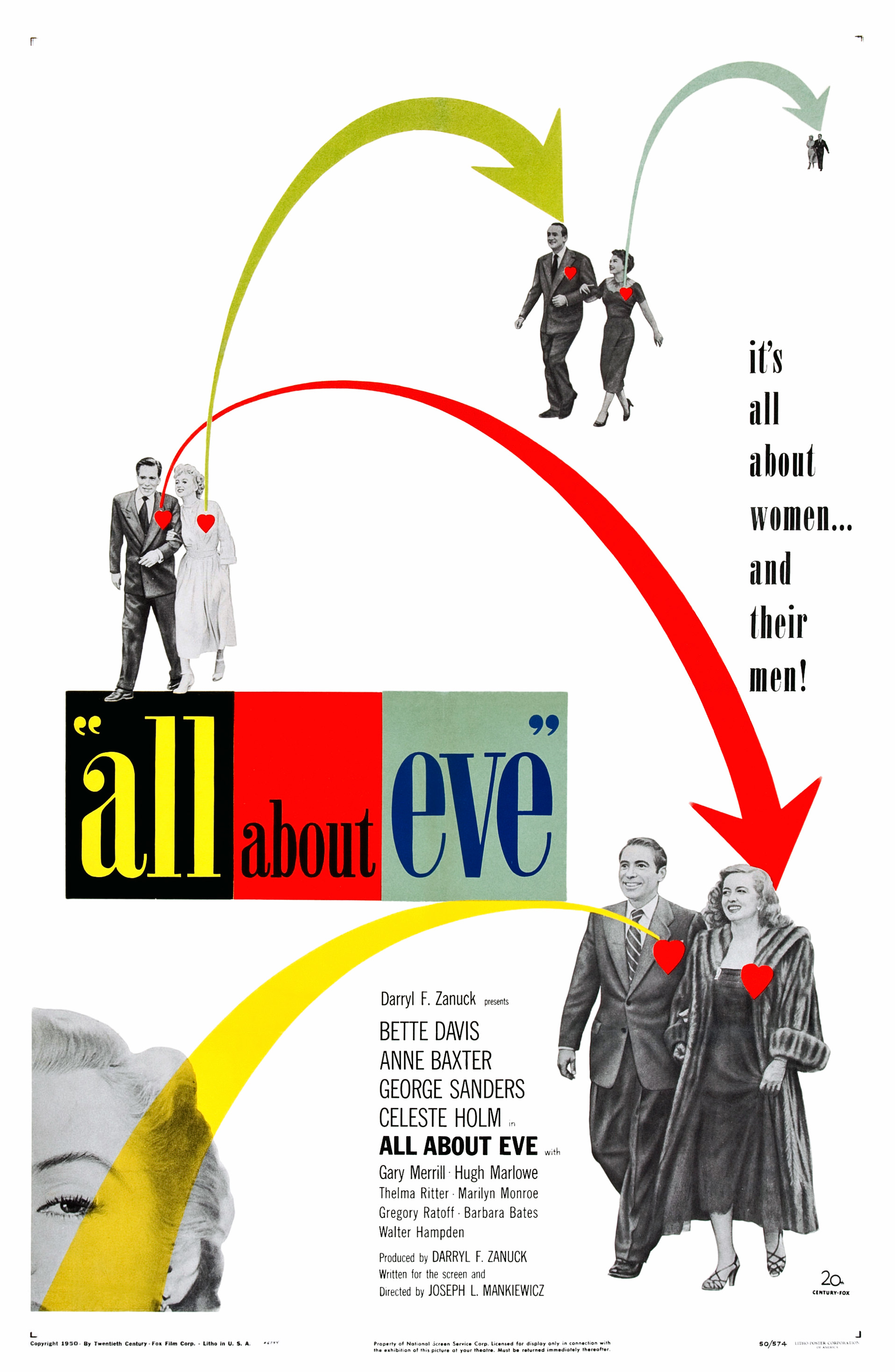
At the core of the Mankiewicz oeuvre is an obsessive examination of age and ambition. He frequently explores the psychological toll of aging within environments that demand perpetual youth and relevance. In All About Eve, this thematic preoccupation reaches its zenith through the portrayal of Margo Channing. The narrative dissects the insecurities that plague established figures when confronted by calculating, youthful usurpers.
The intersection of betrayal and rivalry serves as another foundational pillar of his thematic architecture. Mankiewicz views human relationships through a distinctly Machiavellian lens, particularly within the insular world of the theater and show business. His protagonists often navigate treacherous social landscapes where mentors are routinely cannibalized by their proteges. This cynical perspective transforms the glamorous facade of the entertainment industry into a ruthless arena of survival.
Furthermore, Mankiewicz utilizes show business satire to deliver broader sociological critiques. The theatrical life in his films operates as a microcosm of society at large, reflecting universal anxieties regarding status and legacy. By intertwining sharp wit with touching emotional narratives, he forces audiences to confront the performative nature of their own lives. His characters are constantly acting, both on the stage and in their private chambers, blurring the boundaries between authentic emotion and calculated artifice.
Stylistic Signatures
The stylistic signature of Joseph L. Mankiewicz is inextricably linked to his mastery of literate storytelling. Rather than relying on overt visual pyrotechnics, his directorial approach privileges the written word and the delivery of stinging dialogue. His frames are meticulously constructed to capture the subtle facial reactions and vocal cadences of his actors. This sophisticated narrative style demands active intellectual engagement from the viewer, as the primary action often unfolds within the linguistic sparring between characters.
His mise-en-scene frequently reflects the claustrophobic and highly scrutinized nature of his subjects. Interiors dominate his visual landscape, particularly dressing rooms, luxurious apartments, and backstage corridors. These spaces operate as psychological pressure cookers where power dynamics constantly shift. Mankiewicz often employs deep focus and carefully choreographed blocking to maintain multiple characters in the frame, emphasizing their inescapable proximity and simmering tensions.
Sound and editing in a Mankiewicz production are similarly tailored to enhance the rhythm of his dialogue. The pacing is dictated by the rapid exchange of his famous bon mots, creating a musicality derived from human speech rather than a traditional score. This approach creates a distinctly theatrical cinematic experience, yet it remains fundamentally cinematic through his precise use of reaction shots. The director builds immense tension not just through what his characters say, but through the devastating impact those words have on their listeners.
Recurring Collaborators
While the provided database does not highlight an extensive roster of recurring performers across multiple films, Mankiewicz is universally recognized as a supreme director of actors. His sets were environments where performers could achieve the defining work of their careers. His meticulous scripts provided actors with a rare caliber of material, demanding immense technical skill and emotional intelligence. He cultivated an atmosphere where sophisticated, immaculately acted ensembles could thrive.
His collaboration with Bette Davis in All About Eve remains one of the most celebrated actor and director partnerships in cinema history. Mankiewicz harnessed the formidable screen presence of Davis and channeled it into a deeply vulnerable, touching performance. The Guardian notes that this became the role of her career. By guiding Davis away from pure melodrama and into nuanced psychological realism, Mankiewicz facilitated a performance that is consistently compared favorably against the work of Gloria Swanson in Sunset Boulevard.
Furthermore, Mankiewicz demonstrated a profound ability to cast and shape emerging talent. His decision to feature Marilyn Monroe in one of her first major breakthrough roles highlights his sharp eye for screen presence. Even in supporting roles, he demanded and received fully realized characterizations. His collaborative philosophy was rooted in a mutual respect for the text, requiring his actors to deliver his handcrafted dialogue with both precision and an illusion of spontaneity.
Critical Standing
The critical standing of Joseph L. Mankiewicz has remained extraordinarily high since the mid-twentieth century. Contemporary critics and modern scholars alike revere him as a master of classic cinema. During his peak, he was heavily lauded by the establishment, resulting in significant awards recognition that validated his dual role as writer and director. Reviews from publications like Variety consistently praised his work as both highly entertaining and intellectually rigorous, a balance few filmmakers successfully achieve.
In the realm of critical discourse, his films are frequently analyzed alongside other cynical masterpieces of the era. Critics routinely draw performance and thematic comparisons between All About Eve and Billy Wilder films like Sunset Boulevard. However, critics like Roger Ebert have argued that Mankiewicz often achieved a more touching narrative, grounding his show business satires in deeply human insecurities rather than descending into pure grotesque tragedy. This nuanced emotional register secures his reputation as a filmmaker of profound psychological insight.
Today, his cinematic legacy continues to influence modern auteurs. His exploration of female relationships, vanity, and betrayal echoes through contemporary works, as evidenced by critical comparisons to films like Pedro Almodovar and his acclaimed All About My Mother. Mankiewicz is firmly canonized as one of the most sophisticated voices in Hollywood. His reputation rests securely on his brilliant storytelling and his unyielding commitment to adult, literate cinema in an industry often dominated by spectacle.