Career Overview
Lana Wachowski occupies a singular position in modern cinema history as a visionary architect of high concept science fiction. Emerging in the late 1990s alongside her sibling, she quickly established a reputation for crafting narratives that are as intellectually stimulating as they are visually captivating. Her career trajectory demonstrates a profound commitment to pushing the boundaries of blockbuster entertainment, blending dense philosophical inquiry with accessible genre tropes.
Before redefining global cinema, Wachowski honed her craft through screenwriting endeavors like Assassins and the critically acclaimed directorial debut Bound in 1996. This early neo-noir thriller signaled a distinct formal rigor and an innovative approach to cinematic storytelling. The success of this initial feature provided the necessary leverage to execute scripts that had spent years in development, setting the stage for projects of unprecedented scale.
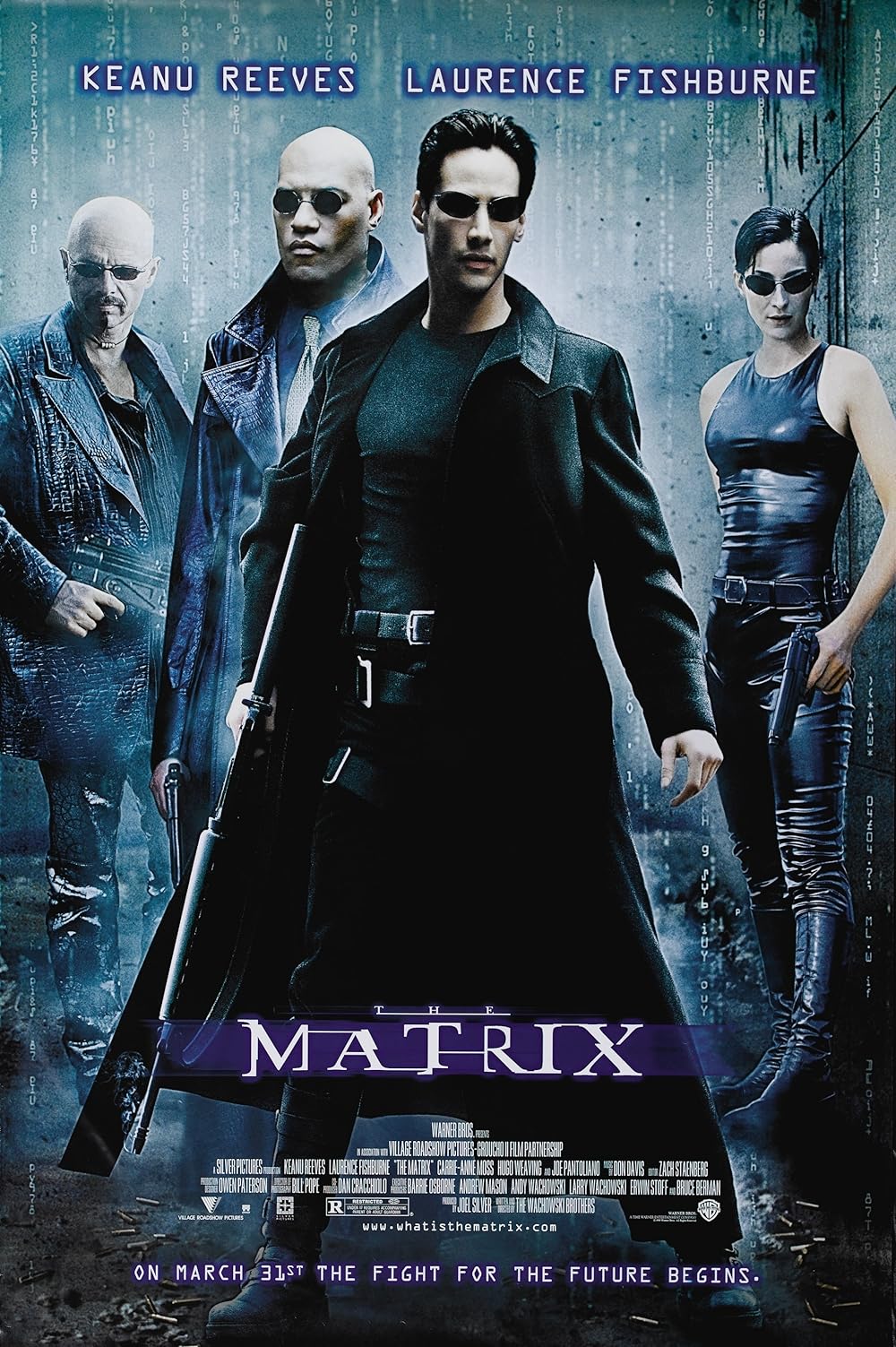
The release of The Matrix in 1999 marked a watershed moment in the director's career and the broader landscape of Hollywood. Rebooting the flagging box office, the film proved that ambitious, portentous dystopian frameworks could achieve staggering commercial viability. It solidified Wachowski as a pioneering force capable of challenging industry standards while delivering exhilarating theatrical experiences.
Today, her historical standing is that of an auteur who bridged the gap between esoteric cyberculture and mainstream multiplexes. By utilizing groundbreaking special effects to serve a compelling narrative, Wachowski permanently altered the visual vocabulary of the science fiction and action genres. Her holistic filmography continues to be studied for its seamless integration of kinetic excitement and complex layered storytelling.
Thematic Preoccupations
At the core of Lana Wachowski's filmography is a relentless philosophical interrogation of the perception of reality. Her narratives frequently hinge on the tension between reality and illusion, challenging the audience to question the fundamental nature of their existence. By presenting simulated worlds and false consciousness, she transforms esoteric epistemological debates into visceral cinematic conflicts.
This overarching preoccupation with reality is inextricably linked to the theme of freedom versus control. Wachowski consistently explores dystopian frameworks where humanity struggles against systemic oppression, often facilitated by advanced technology. The conflict of humanity versus technology serves as a broader metaphor for systemic subjugation, highlighting the arduous journey required to achieve genuine autonomy and self-actualization.
To make these profound existential questions accessible, Wachowski effectively employs the classical structure of the hero's journey within a modern cyberpunk aesthetic. The trajectory of a seemingly ordinary individual awakening to a larger hidden truth is a recurring motif. This narrative framework allows for deep philosophical exploration without sacrificing the thrilling momentum expected of the action genre.
Ultimately, her work synthesizes these conceptual threads into a unified vision of resistance and enlightenment. The recurring obsessions with virtual reality and simulated existence function as modern parables about human agency. By consistently returning to these questions, Wachowski demands that her viewers actively engage with the material, fostering a cinematic experience that is deeply thought-provoking and intellectually stimulating.
Stylistic Signatures
Lana Wachowski's stylistic approach is defined by a dazzlingly inventive visual language that merges diverse aesthetic influences into a cohesive whole. Her mise-en-scène frequently draws upon cyberpunk, steampunk, and even elements of Cronenbergian body horror to construct worlds that are simultaneously familiar and distinctly alien. This visually stunning production design serves as the foundation for her complex, layered narratives.
Perhaps her most recognizable signature is the revolutionary approach to action cinematography and cutting-edge special effects. The popularization of bullet-time techniques allowed her to manipulate spatial and temporal realities, creating stunning slow-motion sequences that have become a hallmark of modern action cinema. This innovative use of technology directly supports her thematic focus on characters bending the rules of their physical environments.
The editing rhythms in her work expertly balance the kinetic excitement of martial arts choreography with moments of portentous exposition. Frequent and entertainingly ingenious switches between different realities require a precise editorial hand, ensuring that the audience remains oriented despite the complex narrative structures. This rhythmic oscillation creates a distinctly thrilling momentum that drives the plot forward.
Furthermore, the tone of her films relies heavily on the juxtaposition of highly stylized, dynamic action with grounded, serious performances. The camera work is often deliberate and visionary, framing subjects to emphasize their isolation or their eventual empowerment. This synthesis of groundbreaking visual effects and rigorous formal composition results in an exhilarating and wholly original cinematic experience.
Recurring Collaborators
The most vital and defining creative partnership in Lana Wachowski's career is the co-directing and co-writing dynamic shared with her sibling. This primary collaboration forms the bedrock of her filmography, allowing for a unified visionary approach to complex material. Together, they have crafted a shared cinematic voice that effortlessly balances dense philosophical concepts with groundbreaking visual execution.
In the realm of action and physical performance, the collaboration with legendary choreographer Yuen Woo-ping has been instrumental. His masterful martial arts choreography provided the kinetic foundation that defined her most acclaimed action sequences. By integrating traditional martial arts disciplines into a science fiction context, this partnership elevated the physical stakes and ensured the action scenes remained gripping and timeless.
On screen, the casting of key performers like Keanu Reeves has been crucial in translating conceptual weight into compelling human drama. Reeves, particularly in his role as Thomas Anderson and Neo, anchors the ambitious narratives with a solid, grounded performance. His ability to navigate both the demanding physical choreography and the nuanced philosophical dialogue makes him an essential interpreter of the director's vision.
Collectively, these partnerships demonstrate Wachowski's capacity to orchestrate large-scale, highly specialized teams to achieve her unique cinematic goals. By working with innovators in choreography, visual effects, and performance, she ensures that every element of the production serves the overarching narrative. These collaborations are the necessary mechanism through which her complex layered scripts are brought to visually dazzling life.
Critical Standing
The critical reputation of Lana Wachowski is firmly rooted in her status as a groundbreaking auteur who redefined the possibilities of the modern blockbuster. Upon the release of her pivotal early work, critics immediately recognized a visionary talent capable of blending innovative storytelling with cutting-edge special effects. Reviews frequently highlighted the unique cinematic experience she offered, praising the work as a cinematic masterpiece that revitalized the science fiction genre.
Within critical discourse, her films are regularly situated alongside ambitious dystopian fantasies like Blade Runner and eXistenZ. Reviewers have consistently lauded the intellectually stimulating nature of her scripts, noting the complex and layered narratives that offer multiple interpretations. While some early critiques pointed to occasional narrative clumsiness or a reliance on formula, the overarching consensus celebrated the dazzlingly inventive direction.
Over the decades, Wachowski's standing has only grown more robust, bolstered by retrospective evaluations and anniversary rereleases. Modern critics continually note how tremendously well her production design and visual effects hold up against contemporary standards. The industry-wide adoption of the techniques she pioneered serves as a testament to her enduring influence on cinematic form.
Ultimately, Lana Wachowski occupies a revered place in film criticism as a provocateur who successfully embedded radical philosophy into popular entertainment. She is celebrated for demanding intellectual engagement from her audience while simultaneously delivering exhilarating action. Her legacy remains that of an ambitious, thought-provoking filmmaker who set a new standard in the industry and permanently altered the perception of what mainstream cinema could achieve.