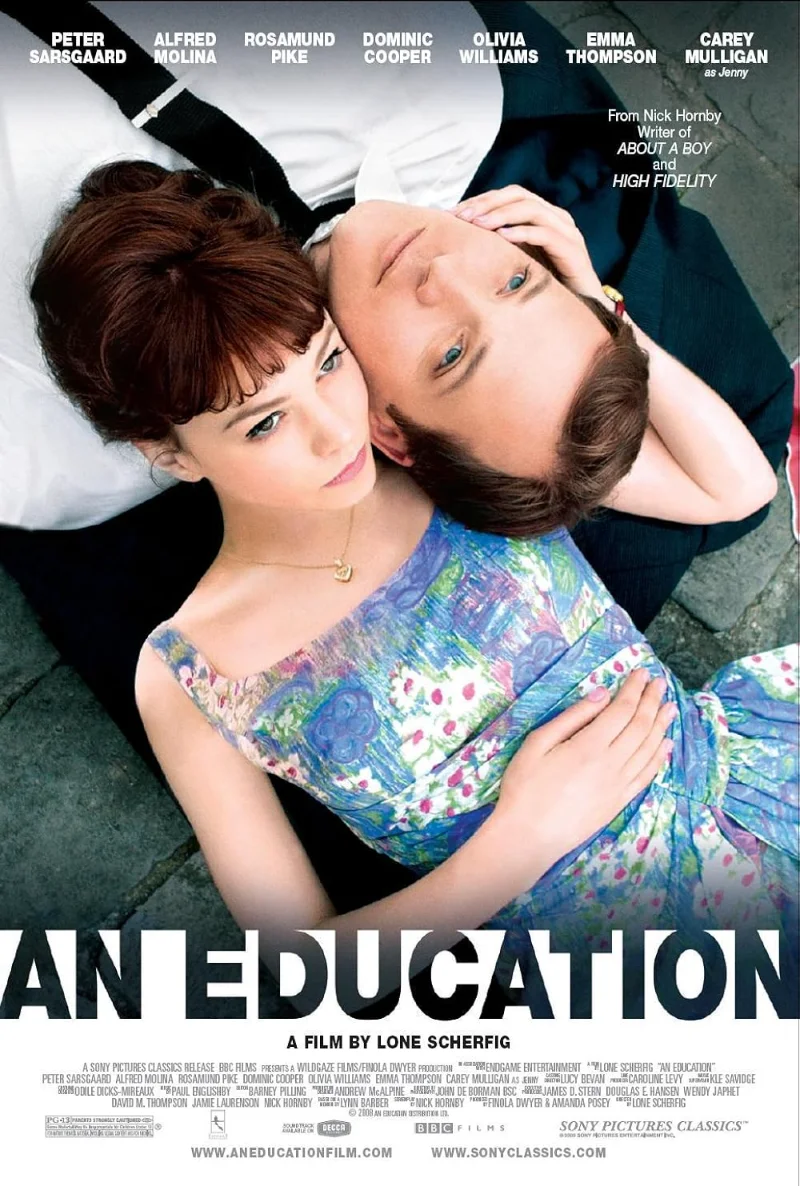
Career Overview
Danish director Lone Scherfig occupies a distinct position in contemporary cinema, bridging European arthouse sensibilities with accessible Anglo-American narrative traditions. Her background in the Danish film industry provided a foundation for an empathetic, character-focused approach to storytelling. As she transitioned into international prominence, she brought a uniquely observant eye to the intricacies of human connection, favoring intimate psychological realism over grandiose spectacle.
Her breakthrough into wider critical consciousness was anchored by defining works like An Education. This film firmly established her career arc as a movement toward sophisticated, period-specific dramas that examine the collision between innocence and experience. Scherfig quickly became known as a filmmaker who could navigate the delicate social mores of midcentury Europe without succumbing to nostalgic sentimentality or historical revisionism.
Within the broader scope of cinema history, Scherfig is celebrated as a director who balances charming, engaging narratives with profound emotional undercurrents. She approaches the coming-of-age genre by injecting it with an easy touch regarding complex human relationships, successfully sidestepping the pitfalls of traditional melodrama. Her holistic filmography stands as a testament to nuanced, boldly elemental storytelling that prioritizes emotional truth.
Thematic Preoccupations
Scherfig returns frequently to the themes of self-discovery and the perilous, often deceptive nature of romantic relationships. In An Education, this preoccupation is manifested through a young protagonist whose emotional maturity is severely tested by an older man. Her work blends the intoxicating excitement of youthful awakening with the harsh, grounding reality of adult deception, framing romance as both a catalyst for growth and a mechanism of profound vulnerability.
The coming-of-age narrative in the director's oeuvre is rarely straightforward and avoids the didacticism common to the genre. Instead, it is imbued with what critics call a refreshing absurdity. She explores the inherent tension between sheltered adolescence and the seductive, often dangerous adult world. This exploration forces her protagonists to navigate a very good, very bad emotional landscape, reflecting the severe moral ambiguity of their choices.
Furthermore, Scherfig investigates the intersection of formal education and lived experience. Her characters often find themselves caught between strict institutional expectations and the allure of real-world sophistication. This thematic focus allows her to dissect the social fabric of specific eras, such as 1960s suburban London, while maintaining an unwavering commitment to intimate, character-driven development and personal evolution.
Stylistic Signatures
Visually and rhythmically, Scherfig employs what critics have termed boldly elemental storytelling. Her directorial style is characterized by a deceptively easy touch, allowing complex narratives to unfurl with a gentle, engaging rhythm rather than forcing artificial dramatic peaks. This careful pacing yields films that bubble with an easy charm while maintaining a rigorous, unsentimental emotional core.
The overarching tone of her work frequently balances gentle humor with profound personal realizations. Scherfig has a distinct penchant for eliciting luminous performances from her leads, crafting an atmosphere that feels both romantic and wonderful yet entirely grounded in historical reality. Her mise-en-scène often reflects the internal state of the protagonist, transitioning from the restrictive, drab environments of suburban life to the glamorous, bewitching spaces of the adult world.
Scherfig's tonal control remains her most prominent stylistic signature. She manages to seamlessly synthesize the absurd with the charming, treating potentially dark or uncomfortable subject matter with a vivacious cinematic energy. This delicate balancing act prevents her films from descending into pure tragedy, instead elevating them into engaging, entertaining experiences that echo the British cinematic traditions of A Taste of Honey and Billy Liar.
Recurring Collaborators
While the provided critical framework isolates a specific juncture in her filmography without establishing an ensemble troupe across multiple projects, Scherfig's collaborative ethos remains a vital component of her success. Her directorial process relies heavily on forging deep, trusting partnerships with her leading actors. She consistently transforms these performers into the undisputed emotional anchors of her narratives, tailoring the visual language to their specific rhythms.
The most prominent example of this collaborative alchemy is her work with Carey Mulligan in An Education. Critics widely noted that Scherfig helped mold a performance that drew immediate comparisons to a young Audrey Hepburn. By fostering a supportive and precise directorial environment, Scherfig allowed her lead actress to glow on screen, turning a potentially sad or awkward role into something completely bewitching and luminous.
Beyond her cast, Scherfig demonstrates a strong affinity for writers who can expertly balance wit with emotional gravity. Her collaboration with screenwriter Nick Hornby exemplifies this remarkable synergy. Together, they navigated the stranger-than-fiction absurdity of the source material, crafting a film that operates as extremely funny misery-lit while retaining a profound, unshakeable sense of humanity.
Critical Standing
The critical reception of Lone Scherfig has largely celebrated her ability to craft emotionally resonant, highly accessible cinema. Reviewers frequently praise her easy touch with complex relationships, noting that her films manage to be both gently engaging and intellectually stimulating. Her standing in critical discourse is firmly rooted in her capacity to elevate and complicate the traditional coming-of-age genre without resorting to cynicism.
Upon the release of An Education, Scherfig garnered widespread acclaim for revitalizing familiar cinematic tropes. Critics eagerly situated her work alongside classic British cinema, noting specific thematic and tonal nods to Billy Liar and A Taste of Honey. Her ability to draw out refreshing, star-making performances earned her an enduring reputation as an essential director of young, emerging talent who requires delicate handling.
Today, Scherfig is regarded as a filmmaker of bold, elemental storytelling. While some critics might initially mistake her gentle humor for lightness, deeper analysis consistently reveals a director capable of navigating profound emotional depths. Her legacy is that of a nuanced observer of human behavior, someone who captures the luminous and enchanting aspects of life alongside its inevitable, painful deceptions.