Career Overview
Makoto Shinkai has cemented his position in contemporary cinema as a leading auteur of Japanese animation, a director whose name is increasingly synonymous with culturally transcendent storytelling. While his early career was defined by independent, digitally crafted short films, his evolution into a global cinematic force culminated in works that bridge the gap between intimate adolescent drama and grand metaphysical spectacle. Shinkai represents a generational shift in the anime industry, moving beyond the classical cel animation era to pioneer a highly composited, digitally native aesthetic.
Critics frequently cite Shinkai as the heir apparent to the revered Hayao Miyazaki. This comparison, while common, often obscures the distinct, distinctly modern trajectory of his career. Where Miyazaki built an empire on ecological fables and traditional fantasy, Shinkai roots his narratives in the anxieties and digital textures of modern Japan. His breakthrough on the international stage marked a pivotal moment in the medium, demonstrating that anime could achieve staggering commercial and critical success without relying on existing multimedia franchises or studio legacy.
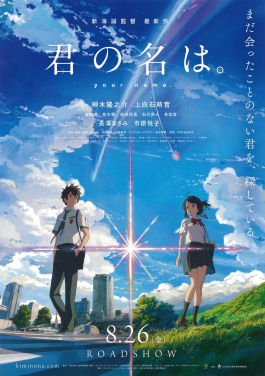
The release of Your Name. in 2016 crystallized his reputation as Japan's new animation king. The film established his signature narrative architecture, blending slice of life realism with high concept speculative fiction. By synthesizing the melancholy of modern teenage life with profound metaphysical inquiries, Shinkai has carved out a unique space in film history. He is a filmmaker who utilizes the boundless potential of animation to articulate the strangest-ever articulations of déjà vu and human connection, ensuring his place in the pantheon of global cinema.
Thematic Preoccupations
At the passionately romantic core of Makoto Shinkai's filmography is an enduring obsession with longing, separation, and the inescapable gravity of fate. His characters are frequently teenagers caught in the throes of profound isolation, yearning for connections that are thwarted by time, geography, or alternate dimensions. In Your Name., the director utilizes the body-swap romance trope not merely as a comedic device, but as a sophisticated mechanism to explore fluid identity and the porous boundaries of human empathy. By having high school students navigate each other's lives, Shinkai questions how environment and memory construct the self.
Shinkai intricately maps the tension between modern and traditional Japan. His narratives often position the hyper-connected, neon-lit sprawl of Tokyo against rural landscapes steeped in Shinto mysticism and ancient rituals. This geographical dichotomy mirrors the internal conflicts of his protagonists, who find themselves caught between the demands of contemporary teenage life and forces that transcend human comprehension. The encroachment of natural disasters into these narratives serves as a violent catalyst, interrupting mundane adolescence with sublime, apocalyptic stakes. Destiny in a Shinkai film is a physical force, one that binds individuals across impossible divides.
Reviewers have noted that his work operates as an outrageously bizarre yet deeply emotional tapestry. Comparisons to speculative films highlight his preoccupation with non-linear time and the paradoxical nature of memory. Shinkai elevates the concept of teenage love into a fatalistic imperative, crafting heartbreaking themes where beginnings and ends become indistinguishable. His protagonists are driven by a visceral sense of loss for something they have not yet experienced, making his exploration of fate and destiny both intensely personal and culturally transcendent.
Stylistic Signatures
The visual language of Makoto Shinkai is defined by its photorealistic animation and dazzling visuals. He employs a distinctive, hyper-detailed approach to background art that transforms everyday spaces into sites of profound beauty. Sunlit train cars, rain-slicked pavement, and cluttered adolescent bedrooms are rendered with an obsessive attention to lighting and atmosphere. Shinkai and his team possess both an eye for detail and a poetic vision, utilizing advanced digital compositing techniques to create an aesthetic that feels both tangibly real and emotionally heightened.
In his cinematic universe, lighting is a primary narrative tool. Shinkai frequently utilizes lens flares, shifting golden hour shadows, and the luminescent glow of smartphone screens to externalize the internal emotional states of his characters. This interplay of light and shadow, combined with sweeping virtual camera movements, gives his animation a remarkable momentum. Even as his films delve into outrageously bizarre conceptual territory, the grounding precision of his visual style ensures that the audience remains thoroughly engaged in the physical reality of the characters.
The structural rhythm of Shinkai's editing further reinforces his thematic preoccupations. He often relies on breathless, music-video-style montages to convey the passage of time and the dizzying disorientation of his central conceits, such as the body-swap mechanics in Your Name.. This kinetic energy is balanced by moments of intense, static stillness that emphasize longing and separation. By contrasting rapid cross-cutting with lingering shots of empty landscapes or vast skies, Shinkai visually articulates the ache of distance, making the intangible forces of time and space viscerally felt.
Recurring Collaborators
Unlike live action auteurs who frequently build a repertory company of actors, Makoto Shinkai operates within the specialized ecosystem of Japanese animation, where his recurring collaborations are primarily structural and technical. The voice casts of his films often feature a mix of established voice actors and live action stars chosen for specific thematic resonances rather than an ongoing troupe. Consequently, there are no distinctly identified recurring cast members across his broader critical catalog in the traditional sense, allowing each narrative to exist as a singular, self-contained emotional universe.
Instead, Shinkai's most vital partnerships exist behind the scenes with his animation teams and studio personnel. His early days as a nearly solitary creator have given way to large scale productions where he directs teams of highly specialized background artists and character designers. These artisans are crucial in executing his signature photorealistic bows and ribbons, translating his precise storyboards into the dazzling visuals that define his brand. The synthesis of his singular poetic vision with a dedicated team of digital animators is what enables his films to achieve their monumental scale.
Furthermore, the auditory landscape of a Shinkai film is just as critical as its visual fidelity. The integration of contemporary rock and pop music into the fabric of his narratives serves to heighten the intensely emotional, occasionally emo, atmosphere of his work. While specific musical collaborators vary, the function of music in his films remains constant. It acts as a driving narrative force, propelling the remarkable storytelling and ensuring that his culturally transcendent themes resonate with a fiercely passionate romantic core.
Critical Standing
Makoto Shinkai's critical standing has evolved from that of a niche cult favorite to a globally recognized master of the animated form. Early in his career, he was celebrated for his technical prowess and emotional sincerity, though sometimes critiqued for a perceived reliance on sentimental tropes. However, the unprecedented success of Your Name. prompted a massive critical reevaluation. Critics now routinely place him in the upper echelons of contemporary cinema, praising his ability to wed high concept science fiction with deeply resonant human drama.
Within critical discourse, Shinkai is unavoidably analyzed in relation to Hayao Miyazaki. Reviewers frequently label him the heir apparent to the revered master, noting that his name is on track to become as synonymous with culturally transcendent Japanese animation as Miyazaki is today. Yet, discerning critics recognize that Shinkai operates in a completely different tonal and thematic register. While comparisons to Spirited Away highlight the monumental cultural impact of his work, comparisons to speculative classics like Donnie Darko and La jetée, alongside body-swap comedies like Freaky Friday, The Hot Chick, and It's a Boy Girl Thing, underscore his unique synthesis of disparate genre elements. The thematic resonance of his work has even drawn structural parallels to Romeo + Juliet and Tenkōsei, proving his broad intertextual footprint.
His cinematic achievements are often characterized by their remarkable narrative momentum and passionate emotional cores. Critics at publications like Slant Magazine and The Guardian have lauded his work for taking outrageously bizarre concepts and grounding them in universally relatable adolescent anxieties. His films are celebrated for being thoroughly engaging, rewarding audiences with an emotional, powerful ending that spirals elegantly towards profound philosophical truths.
Today, Shinkai is firmly established as Japan's new animation king. His place in film history is secured by his pioneering use of digital animation techniques and his unparalleled ability to capture the zeitgeist of modern Japanese youth. Critics acknowledge that he has redefined the commercial and artistic possibilities of anime, crafting beautiful, captivating pieces of work that will be studied for their poetic vision and staggering visual ambition for decades to come.