Career Overview
British-Irish writer and director Martin McDonagh established himself as a dominant voice in contemporary cinema through a unique synthesis of theatrical dialogue and stark cinematic realism. Moving from the stage to the screen, his career trajectory reveals a filmmaker increasingly interested in the intersection of dark comedy and profound human suffering. Early cinematic efforts such as In Bruges and Seven Psychopaths showcased his penchant for stylized violence and twisted narratives, but his subsequent work demonstrated a remarkable maturation in scope and emotional resonance.
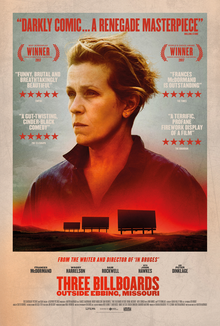
With Three Billboards Outside Ebbing, Missouri, McDonagh cemented his position as a premier chronicler of American angst, despite his European origins. This transition from European settings to small-town America allowed him to interrogate the cultural reflections and dangerous undertones of rural life. He maps his distinct sensibility onto the landscape of the American Midwest, creating a localized world that feels simultaneously hyper-real and allegorical.
Within cinema history, McDonagh occupies a space adjacent to the Coen Brothers and Quentin Tarantino, yet his voice remains singularly his own. Critics often align his tone with classic cinematic references like Fargo or Bad Day at Black Rock, highlighting his ability to meld tragicomic elements with incendiary themes. His work is recognized for pushing the boundaries of the dark farce, proving that savage storytelling can coexist with moments of deep moral sincerity.
Thematic Preoccupations
The thematic nucleus of McDonagh's filmography is the symbiotic relationship between grief and vengeance. In Three Billboards Outside Ebbing, Missouri, the raw energy of loss acts as the catalyst for the entire narrative architecture. His characters are propelled by an all-consuming anger and a desire for justice that traditional civic institutions fail to provide. This exploration of grief and loss does not offer easy catharsis, instead plunging the audience into the very fire of the protagonists' pain.
Crucially, McDonagh rejects moral absolutism in favor of intense moral complexity. His narratives are populated by deeply flawed individuals who defy conventional categorization as simple heroes or villains. The search for justice in his films often requires transgressing ethical boundaries, resulting in twisted plots where the line between righteous fury and chaotic destruction blurs. This ambiguity challenges the viewer to empathize with characters who operate outside traditional moral frameworks.
Furthermore, the dynamics of small-town America serve as a critical thematic playground for the director. By isolating his characters in insular communities, McDonagh magnifies their interpersonal conflicts and cultural reflections. The tight-knit nature of these towns breeds dangerous undertones and explosive confrontations. Critics frequently draw comparisons to the Southern Gothic literature of Flannery O'Connor, as McDonagh similarly uses the microcosm of a rural town to explore grand spiritual themes of damnation, redemption, and the elusive nature of grace.
Stylistic Signatures
The most prominent stylistic signature of McDonagh's cinema is his explosive narrative rhythm driven by ornately crafted dialogue. His writing boasts a Chaucerian ear for obscenity, deploying foul-mouthed humor to cut through suffocating tension. This reliance on the blackest humor acts as both a defense mechanism for his characters and a tool for tonal manipulation. He orchestrates scenes that provoke gasps and guffaws in wildly inappropriate circumstances, demonstrating a masterful control over cinematic pacing.
Visually and atmospherically, McDonagh juxtaposes his theatrical dialogue with a decidedly bleak atmosphere. The stunning visuals of his films often emphasize the isolation and decay of their settings, providing a grounded reality that offsets the heightened nature of his scripts. He approaches violence and confrontation like a firecracker tossed into the frame, allowing scenes to promptly explode in splashes of blood and sudden tonal shifts. This offbeat style ensures that the viewer remains perpetually off-balance.
Despite the savage storytelling, McDonagh embeds surprisingly tender moments within his chaotic cinematic worlds. The juxtaposition of uproarious delight with devastating emotional sincerity creates a tragicomic tone that defines his aesthetic. He relies heavily on the internal language of his subjects, capturing the quiet, agonizing moments of introspection that occur between outbursts of rage. This delicate balance of extremes is the hallmark of his directorial approach, weaving hilarious moments seamlessly into tapestries of profound suffering.
Recurring Collaborators
While casting overlaps may not be formally codified across the entirety of the database records, McDonagh's methodology relies intrinsically on powerhouse performances to elevate his complex screenplays. His dialogue demands actors who can navigate lightning-fast tonal shifts, moving from blistering insults to vulnerable confessions without missing a beat. The success of his cinematic vision is inextricably linked to the performers who can translate his highly specific, twisted scripts into lived-in, authentic human experiences.
Frances McDormand stands as the quintessential collaborator for his most acclaimed work. Her brilliant performance in Three Billboards Outside Ebbing, Missouri provides the perfect vessel for his incendiary themes. McDormand excels at physicalizing the internal language of McDonagh's characters, revealing the deep reservoirs of pain underneath an exterior of impenetrable rage. Her ability to deliver his ornate obscenities with total conviction anchors the film's wilder tragicomic swings.
The synergy between McDonagh's writing and his actors results in an ensemble dynamic where no role is superfluous. Even in adversarial character relationships, the cast must operate with complete mutual trust to execute his unrelenting farces. This collaborative environment ensures that the moral complexity of the text is fully realized on screen, transforming a beautifully written script into a savage and deeply resonant cinematic reality.
Critical Standing
McDonagh's critical reputation has evolved from an appreciation of his cheeky theatricality to a deep respect for his muscular cinematic storytelling. Early in his film career, some critics viewed his offbeat style, as seen in Seven Psychopaths, as slightly aimless despite its entertainment value. However, the release of Three Billboards Outside Ebbing, Missouri marked a critical turning point, establishing the finest balance yet of his bleak sense of humor and his moral sincerity. The film drew spontaneous applause at major venues like the Venice film festival, signaling his arrival as a major cinematic auteur.
Critics frequently praise his willingness to craft dangerous, uncompromising narratives. His work is often discussed alongside foundational American films like High Noon and Psycho, acknowledging his skill in subverting classic genres like the western and the psychological thriller. Reviewers highlight his ability to squat in the ugly pain of human existence, muddying preconceptions and challenging audiences to confront difficult cultural truths. This fearless approach has solidified his standing as one of the most provocative voices working in modern film.
Today, McDonagh is celebrated for his unparalleled ability to blend life and death, heaven and hell, in blisteringly funny yet deeply affecting packages. His screenplays are considered masterclasses in tragicomedy, earning accolades from top critics who recognize his rare talent for finding humor in the darkest corners of the human condition. As his filmography continues to be studied and debated, his reputation as a master of the modern dark farce remains secure within the pantheon of contemporary cinema.