Career Overview
Michel Gondry established his foundational artistic voice in the realm of short-form media before transitioning to feature films. The hallucinogenic quality of Gondry's music videos perfectly melds with what critics have described as his seemingly fleeting attention span. This frenetic, highly visual background allowed him to cultivate a unique aesthetic that rejected traditional cinematic boundaries. His early career positioned him as a formalist provocateur, blending analog practical effects with complex digital manipulations to create entirely new visual paradigms.
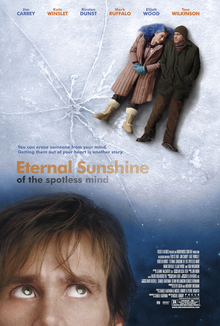
The director truly hit his stride with Eternal Sunshine of the Spotless Mind, a film that cemented his place in modern cinema. By applying his visually inventive techniques to a deeply philosophical premise, Gondry moved beyond mere aesthetic experimentation. He aligned himself with a wave of auteurs focused on innovative storytelling, utilizing technical sophistication to explore the inner workings of the human mind rather than simply showcasing special effects for their own sake.
Today, Gondry occupies a distinct position in film history as a pioneer of the experimental narrative. His work bridges the gap between the whimsical surrealism of early French cinema and the cerebral, postmodern inquiries of contemporary Hollywood. By transforming the medium into a literal and figurative labyrinth, he has left an indelible mark on filmmaking, proving that visually driven, avant garde sensibilities can achieve profound commercial and critical resonance.
Thematic Preoccupations
At the core of Gondry's filmography is a relentless investigation into the intertwined concepts of memory and identity. He frequently treats the human mind as a fragile, malleable space where personal history dictates present reality. By exploring what happens when memories are altered or erased, Gondry raises profound questions about the essence of the self. His work suggests that our identities are inextricably linked to our past experiences, and removing those experiences ultimately unravels the individual.
This philosophical inquiry naturally bleeds into his deeply affecting explorations of love and loss. Gondry eschews conventional romantic tropes, opting instead to present relationships as fractured, fleeting moments of profound connection and inevitable decay. Even within highly speculative frameworks, his narratives remain emotionally resonant. He uses science fiction conceits not as escapism, but as a magnifying glass to examine the painful, beautiful realities of human heartbreak and reconciliation.
Critics frequently note the prominent influence of Philip K. Dick in Gondry's thematic preoccupations. Like the iconic science fiction author, Gondry questions the objective nature of reality, suggesting that the world we perceive is largely a subjective projection of our desires and traumas. By filtering deeply grounded themes of romance and sorrow through these thought-provoking, reality bending premises, Gondry elevates standard dramatic conflicts into profound existential inquiries.
Stylistic Signatures
The visual language of Michel Gondry is characterized by a technically sophisticated, handcrafted aesthetic that frequently produces a profound hallucinogenic experience. He relies heavily on practical in-camera effects, forced perspective, and surreal production design to externalize the internal psychological states of his characters. This approach creates a distinctly tactile environment where the boundaries between dream and waking life blur, resulting in a cinematic world that is both disorienting and intimately physical.
His editing rhythms and mise-en-scene are often described as frenetic, reflecting a style that coils back upon itself. This radical approach aligns firmly with the concept of Maze Cinema, where non-linear storytelling transforms the narrative into a structural labyrinth. Gondry utilizes rapid cuts, overlapping dialogue, and sudden spatial shifts to mimic the erratic flow of human consciousness and the chaotic, fleeting moments of memory recall.
However, this relentless visual invention is not without its detractors. The same techniques that make his work technically ingenious can sometimes render the final product overcooked. Critics have pointed out that his reliance on constant visual tricks and gimmicks is repeated often enough to induce a diminishing return of novelty and effect. Despite these critiques, Gondry's stylistic signatures remain instantly recognizable, fusing technical bravado with an unmistakable, whimsical melancholy.
Recurring Collaborators
The most consequential creative partnership in Gondry's featured filmography is his collaboration with screenwriter Charlie Kaufman. This pairing represents a perfect symbiosis between writer and director, yielding an archetypal Kaufmanesque narrative experiment. Kaufman's labyrinthine, highly cerebral scripts provide the essential structural foundation that grounds Gondry's wild visual impulses. Together, they construct complex cinematic puzzles that are as intellectually rigorous as they are visually spectacular.
This collaboration invites frequent critical comparisons to Kaufman's other seminal works, most notably Being John Malkovich and Adaptation. Like those films, Gondry's partnership with the writer explores the porous borders between fiction, memory, and reality. However, Gondry brings a distinct visual warmth and tactile ingenuity that separates his directorial efforts from the colder, more cynical tones often found in other adaptations of Kaufman's writing.
While the provided database highlights a lack of recurring cast members across multiple films, the actors who populate Gondry's worlds play a vital role in his artistic success. His performers are consistently tasked with anchoring the director's surreal, overcooked visual flights of fancy in genuine human emotion. By casting actors capable of intense vulnerability, Gondry ensures that his technically sophisticated mazes remain deeply emotionally resonant rather than hollow formalist exercises.
Critical Standing
The critical reputation of Michel Gondry has evolved from initial curiosity to enduring respect. Early in his career, critics viewed him primarily as a visually gifted but narratively shallow music video director. However, as he transitioned into feature films and hit his stride, the critical establishment quickly recognized him as a formidable auteur. His integration of innovative storytelling with complex emotional landscapes earned him widespread acclaim from film scholars and cinephiles alike.
Despite his celebrated status, Gondry's place within critical discourse is occasionally polarizing. While many praise his work as technically ingenious and emotionally resonant, a vocal contingent of reviewers has expressed reservations about his maximalist tendencies. Some critics argue that his films can become overcooked and frenetic, suggesting that an overreliance on visual gimmicks occasionally leads to a diminishing return of novelty and effect. This tension between formal brilliance and narrative excess remains a central point of debate in retrospectives of his career.
Ultimately, Gondry is firmly canonized as a master of Maze Cinema and the experimental narrative. Eternal Sunshine of the Spotless Mind is widely regarded as a modern masterpiece, routinely cited in academic discussions of twenty-first-century filmmaking. His ability to fuse the philosophical depth of a Philip K. Dick narrative with highly original, non-linear storytelling ensures his enduring legacy as one of the most thought-provoking and imaginative filmmakers of his generation.