Career Overview
Morten Tyldum emerged from the Norwegian film industry to become a notable figure in international cinema, bridging the gap between European thriller sensibilities and Hollywood prestige filmmaking. His trajectory is marked by an ability to translate taut narrative mechanics into critically acclaimed historical dramas. Prior to his English language breakthrough, Tyldum cultivated a reputation for slick and witty genre exercises, as seen in his earlier work Headhunters, which signaled a robust directorial voice capable of balancing suspense with dark thematic undertones.
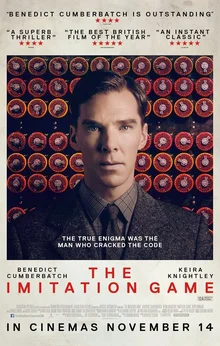
The pivot from Nordic thrillers to major British historical narratives represents a significant evolution in his career. With The Imitation Game, Tyldum proved his capacity to handle weighty biographical subjects while maintaining the pacing of a commercial thriller. This transition allowed him to occupy a specific space in contemporary cinema, where the demands of prestige biopics meet the accessible architecture of mainstream entertainment. Critics noted that his background in thrillers prepared him perfectly to tackle complex historical narratives without sacrificing narrative momentum.
Today, Tyldum is recognized as a filmmaker who can deftly navigate the machinery of the studio system while preserving a distinct sense of emotional gravity. His work occupies an interesting position in modern film history, functioning as a bridge between the taut European procedural and the sweeping Hollywood historical epic. By infusing the traditional biopic format with crackling suspense and psychological depth, he has carved out a niche that appeals equally to broad audiences and serious cinematic commentators.
Thematic Preoccupations
A central preoccupation of Morten Tyldum is the intersection of isolated genius and historical crisis. In The Imitation Game, he explores the immense burden placed upon exceptional individuals who operate outside the bounds of conventional society. His narratives frequently interrogate how brilliance is simultaneously weaponized by the state during times of existential threat and later punished when that same brilliance fails to conform to societal norms. This dichotomy creates a tragic framework where the savior of a nation is ultimately destroyed by the very institutions he helped preserve.
Tyldum consistently engages with themes of institutional persecution and systemic prejudice. He does not merely present historical atrocities as backdrop but actively examines how cultural bigotry, such as virulent homophobia, functions as a destructive force equal to any foreign adversary. By juxtaposing the monumental achievement of World War II codebreaking with the shameful domestic persecution of Alan Turing, Tyldum forces the viewer to confront the hypocrisy of a society that demands salvation from its outcasts while denying them basic humanity.
The struggle for human connection amidst profound isolation forms another critical pillar of his thematic architecture. Tyldum is fascinated by characters who are emotionally detached or socially alienated, yet desperately need interpersonal bonds to achieve their monumental tasks. The dynamic between solitary intellect and collaborative necessity is explored through complex character interactions, revealing the vulnerability hidden beneath a veneer of arrogance or detachment. This focus on the psychological toll of isolation ensures his historical narratives remain deeply intimate and intensely human.
Stylistic Signatures
Morten Tyldum employs a visual language that seamlessly merges the aesthetic polish of prestige historical cinema with the kinetic energy of a modern thriller. His direction in The Imitation Game is characterized by a crisp, handsomely mounted presentation that avoids the static, theatrical pitfalls common to British period pieces. Rather than relying on purely observational camerawork, Tyldum utilizes dynamic framing and strategic camera movement to externalize the internal mechanisms of his characters. The result is a cinematic texture that feels urgent and engrossing, even when the primary action consists of academics deciphering codes in a room.
His editorial rhythms are heavily influenced by his background in suspense filmmaking. Tyldum treats intellectual problem solving with the same editorial velocity as a physical chase sequence, cutting rapidly between complex mathematical postulations and the devastating real world consequences of the war. This approach transforms the cerebral act of codebreaking into a crackerjack cinematic presentation, building suspense through precise temporal manipulation. The pacing is carefully calibrated to ensure the narrative remains constantly involving, pushing the boundaries of how thrilling a traditional biopic can be.
The deployment of tone in Tyldum films relies heavily on contrasting emotional registers. He balances highly entertaining, almost witty dialogue sequences with an overarching atmosphere of poignant melancholy. This tonal duality is supported by a meticulous approach to visual staging, where the stuffy, claustrophobic interiors of Bletchley Park are contrasted with the violent, expansive reality of the global conflict outside. The craftsmanship is evident in how he weaves these elements together, resulting in a disturbing yet pure pleasure to experience, firmly anchoring the tragedy of the narrative in a compellingly watchable framework.
Recurring Collaborators
While Morten Tyldum has not yet established a lengthy roster of recurring on screen collaborators across multiple features in the database, his approach to casting and performance reveals a distinct preference for actors capable of articulating profound internal conflict. His directorial method relies heavily on central performances that can anchor complex biographical narratives, demanding a rigorous emotional intelligence from his leads. The success of his historical explorations is largely dependent on the alchemy between his precise direction and the nuanced interpretations provided by his actors.
In his most acclaimed English language work, The Imitation Game, Tyldum demonstrated a remarkable ability to harness the singular talents of his cast to elevate the material. The collaboration with Benedict Cumberbatch is a prime example of Tyldum directing actors to tap into a layered, often abrasive complexity. By encouraging a performance that was utterly convincing in its portrayal of both towering intellect and tragic vulnerability, Tyldum proved his skill as a formidable director of actors. This partnership was crucial in delivering the added complexity required for a fine account of a deeply misunderstood historical figure.
Beyond the central performances, Tyldum frequently works with ensemble casts to build a rich tapestry of interpersonal dynamics. His narratives require a delicate balance between the isolated protagonist and the surrounding supporting players. Although specific actors may not yet repeat across his entire filmography, the structural collaboration remains the same. He surrounds his difficult protagonists with deeply involved, highly capable supporting actors who provide the essential friction and eventual camaraderie needed to drive the emotional arc of the story.
Critical Standing
The critical reception of Morten Tyldum has been defined by his successful navigation from acclaimed European genre director to an architect of Oscar caliber prestige cinema. When transitioning to Hollywood, critics initially viewed him through the lens of his slick Nordic thrillers, expecting a competent but perhaps superficial execution of narrative mechanics. However, with the release of The Imitation Game, Tyldum fundamentally altered his critical standing. Reviewers praised his ability to transcend the often stifling conventions of the British period piece, likening his work to the narrative sharpness found in films like The Social Network or Tinker Tailor Soldier Spy rather than the expected Downton Abbey pastiche.
Contemporary criticism frequently highlights Tyldum as a filmmaker who masterfully crafts tales that resonate deeply for our time. His willingness to confront disturbing historical realities, such as institutional homophobia, within the framework of a highly entertaining cinematic package has earned him considerable respect. Critics admire how his films manage to be both unabashedly watchable and poignantly melancholic, a difficult tonal tightrope that he walks with evident craftsmanship. His work is often cited as a prime example of how to inject vital, urgent energy into the biographical genre.
While some purists may debate the historical liberties taken in his biographical films, the overarching critical consensus acknowledges Tyldum as a highly effective storyteller who prioritizes emotional truth and thematic resonance over dry procedural accuracy. His reputation rests on his capacity to deliver engrossing, complex narratives that satisfy both commercial expectations and critical demands for intellectual engagement. He has solidified his place as a director capable of elevating mainstream cinema, proving that prestige historical dramas can still thrill, challenge, and break the heart.