Career Overview
Olivier Nakache stands as a defining architect of the contemporary French mainstream, a filmmaker whose work reliably bridges the gap between sociological observation and massive commercial appeal. Operating in a cinematic landscape often divided between austere arthouse realism and vapid entertainment, Nakache has carved out a highly specific niche. He is celebrated as a premier purveyor of the modern social comedy, utilizing the accessible framework of popular cinema to diagnose the cultural shifts of twenty-first-century France.
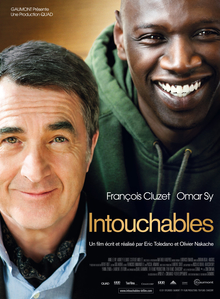
The chronological development of Nakache is characterized by a steady ascent toward unprecedented box office dominance. Culminating in the phenomenal success of The Intouchables, his career trajectory illustrates a deliberate honing of crowd-pleasing mechanics. This landmark film achieved spectacular success at the French box office, signaling a cultural phenomenon that resonated deeply with the public mood following the political shifts of 2007. His work transformed from localized comedies into international touchstones, securing a place in cinema history as artifacts of mass cultural catharsis.
Nakache occupies a unique position in the broader cinematic pantheon. He does not align with the radical auteurs of the French New Wave or the extreme formalists of contemporary European cinema. Instead, he operates within a populist tradition akin to the cultural impact of Bienvenue chez les Ch'tis. His historical importance lies in his uncanny ability to synthesize complex multicultural realities into universally digestible narratives, proving that commercial viability and resonant social commentary need not be mutually exclusive.
Thematic Preoccupations
The central philosophical preoccupation animating the cinema of Nakache is the exploration of class disparity and the friction of modern multiculturalism. In The Intouchables, he zeroes in on the stark social divides of contemporary society, framing systemic inequality not through the bleak lens of social realism, but through the uplifting prism of interpersonal connection. He continually returns to the question of whether individuals from radically different socioeconomic strata can forge meaningful bonds despite the rigid stratifications of wealth and privilege.
Unlikely friendship across social divides serves as the fundamental thematic engine of his narratives. Nakache asks audiences to witness the inspirational personal growth that occurs when diametrically opposed worlds collide. His characters frequently function as modern archetypes, described by critics as walking tangles of class signification. Through these figures, he examines how mutual vulnerability can dismantle deeply entrenched racial stereotypes and rigid class differences, offering a utopian vision of cross-cultural harmony.
Furthermore, Nakache demonstrates a thematic obsession with the tension between subversive storytelling and commercial formula. While his explorations of race and economic disenfranchisement touch upon sensitive cultural nerves, they are consistently wrapped in heartwarming, feel-good packaging. This dual approach allows him to highlight the realities of a multicultural society while ensuring the narrative remains enjoyable and uplifting. It is a calculated methodology, utilizing emotional manipulation techniques to render difficult societal truths palatable to a broad, international audience.
Stylistic Signatures
Visually, Nakache eschews dazzling mise-en-scène in favor of a functional, performance-driven aesthetic. His cinematic language prioritizes narrative clarity and emotional resonance over avant-garde formal experimentation. The camera acts primarily as an unobtrusive, empathetic observer, designed to capture the nuanced chemistry between lead actors rather than drawing attention to its own artistry. This transparent style ensures that the thematic weight of the social commentary remains front and center.
The editing rhythms in his films are meticulously calibrated to maximize both comedic timing and sentimental impact. His pacing is often brisk and engaging, known for opening with fresh, unpredictable sequences like midnight car chases that immediately hook the viewer. Following these energetic prologues, the rhythm typically settles into a more predictable, formulaic cadence. This calculated pacing is a core component of his stylistic signature, expertly guiding the audience through a carefully constructed emotional arc.
Nakache also relies heavily on broad-strokes visual contrasts to emphasize the culture clash at the heart of his films. He frequently juxtaposes the sterile, opulent environments of the ultra-wealthy with the vibrant, chaotic spaces of disadvantaged neighborhoods. This spatial dichotomy, captured through conventional but highly effective cinematography, reinforces his focus on class divides. Every location and lighting choice is designed to underscore the disparate worlds his characters inhabit, making the abstract concept of social disparity highly legible on screen.
Recurring Collaborators
While specific recurring cast members are not rigidly identified across a multitude of films in the current database, the directorial identity of Nakache is intrinsically tied to a deeply collaborative ethos. The hallmark of his methodology is the reliance on dual-lead dynamics, demanding intense, organic chemistry between actors to elevate broad characterizations into engaging, empathetic cinema. His films live or die on the strength of these central pairings, requiring performers who can perfectly balance dramatic weight with sharp comedic timing.
The undeniable centerpiece of his collaborative success is his foundational partnership with co-director and co-writer Éric Toledano. Though cinematic analysis often seeks a singular auteur, it is virtually impossible to separate the directorial achievements of Nakache from this enduring duo. Together, they have forged a shared creative vision that seamlessly blends effervescent humor with earnest social commentary. This partnership is the engine behind their ability to consistently corner the market on the French social comedy, refining a shared voice over decades of joint production.
In terms of on-screen execution, Nakache requires performers capable of navigating scripts that teeter on the edge of sentimentality. The phenomenal success of The Intouchables rested almost entirely on the well-mounted performances of its leads, who brought genuine humanity to a highly conceptual premise. His actors are routinely tasked with embodying specific social archetypes, requiring them to inject authentic pathos into roles that might otherwise read as simplistic. It is this synergy between director and performer that transforms clichéd narrative elements into resonant cinematic moments.
Critical Standing
The critical reception of Nakache is marked by a fascinating dichotomy between phenomenal commercial success and skeptical academic critique. Mainstream audiences and box office numbers reflect a profound cultural impact, yet highbrow critics frequently characterize his work as predictable, sentimental, and overly reliant on clichéd narrative elements. This divide highlights his status as a populist filmmaker whose massive appeal often invites critical suspicion regarding the depth of his thematic explorations.
Critics frequently position his films within a specific lineage of feel-good buddy comedies, regularly drawing comparisons to American classics like Driving Miss Daisy and Scent of a Woman, as well as independent features like Goodbye Solo. While some reviewers dismiss his narratives as a simplistic, formulaic exercise, others acknowledge the subversive nature of his storytelling. By masking pointed social critiques of multiculturalism within a highly enjoyable cinematic experience, Nakache manages to smuggle complex sociopolitical issues into multiplexes, achieving a cultural penetration that evades more austere filmmakers.
Over time, his critical standing has evolved into a compelling case study of commercial cinema. While rarely celebrated for radical formal innovation, Nakache commands undeniable respect for his mastery of the crowd-pleasing mechanism. His legacy is cemented not in the pantheon of avant-garde auteurs, but as a culturally significant storyteller who captured the anxieties and aspirations of early twenty-first-century France. He remains a pivotal figure in discussions of how popular cinema reflects and refracts national identity through the lens of accessible entertainment.