Career Overview
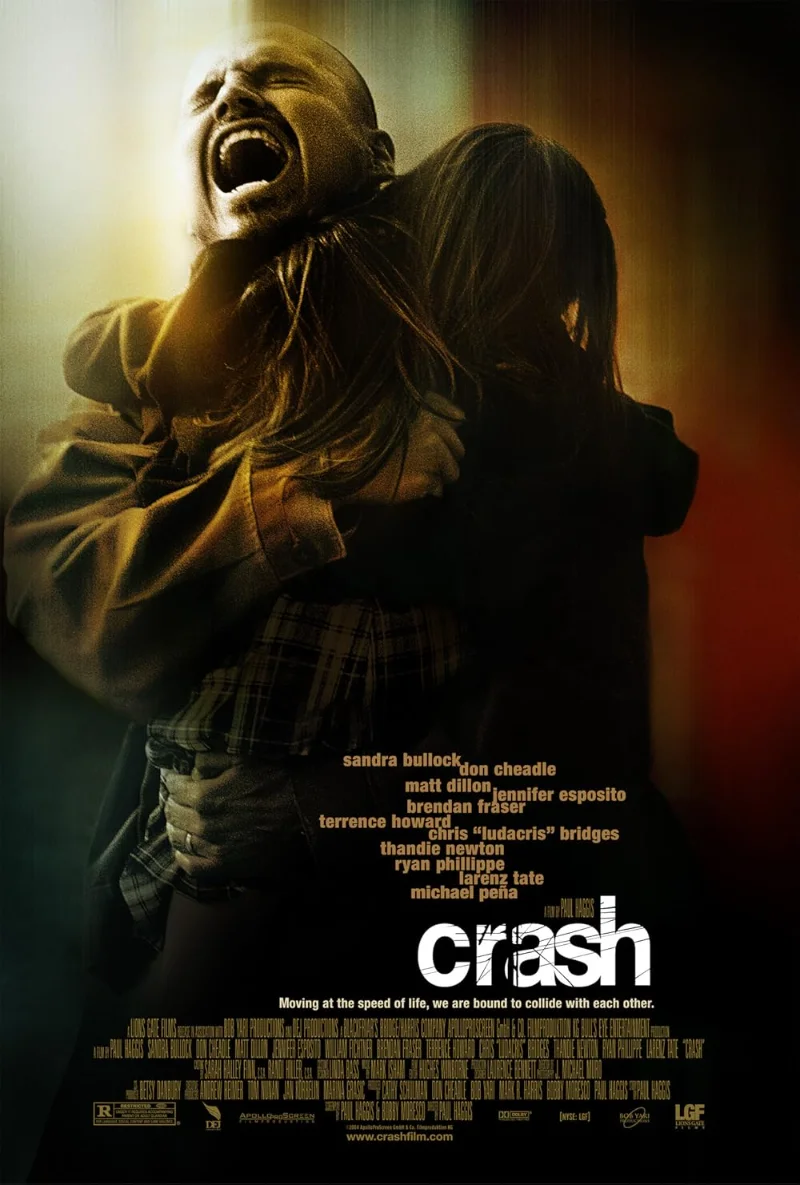
Paul Haggis occupies a distinctive and heavily debated position within contemporary cinema. Breaking into the directorial sphere with his seminal feature, Crash, in 2004, he immediately established himself as a filmmaker preoccupied with the sprawling complexities of modern American life. His cinematic identity is inextricably linked to the hyperlink cinema movement of the early 2000s, a period where intricate narrative webs became a popular tool for exploring systemic societal issues.
Haggis positioned himself as a provocateur of the urban landscape. Rather than focusing on a singular protagonist, his work utilizes a macro lens to observe a chaotic, fragmented society. This approach allowed him to transition into a director willing to tackle grand societal ailments, operating confidently at the intersection of urban thriller and social melodrama.
The chronological development of his directorial footprint reveals a creator interested in immediate, visceral impact. He constructs cinematic environments where social polite fictions are stripped away by sudden trauma. Consequently, his position in cinema history remains tethered to this specific era of bold, ambitious storytelling that sought to diagnose the cultural sicknesses of Los Angeles and, by extension, the broader Western metropolis.
Thematic Preoccupations
At the core of the Haggis filmography is a relentless investigation into themes of racial tension and sociological friction. He is deeply invested in the invisible boundaries that divide citizens within a shared geography. His narratives repeatedly ask how diverse individuals navigate a world defined by prejudice, misunderstanding, and sudden violence.
To explore these questions, Haggis relies heavily on the interconnected lives narrative. He utilizes coincidence and tragedy as gravitational forces that pull disparate characters into shared orbits. Within this framework, urban isolation motifs are highly prominent. His characters are surrounded by millions of people but remain trapped in their own subjective, often paranoid, realities. The physical proximity of the city only amplifies their emotional and social segregation.
Ultimately, his work oscillates between intense pessimism and humanist redemption. Haggis frequently pushes his characters to points of extreme moral crisis, forcing them to confront their own latent biases. Critics have noted his daringly supercharged fantasies of racial paranoia, which serve as dramatic crucibles. These thought-provoking scenarios demand that characters make impossible choices, suggesting that redemption is possible only through painful, forced empathy.
Stylistic Signatures
The most defining stylistic signature of Paul Haggis is his mastery of the sprawling ensemble cast structure. Drawing heavy comparisons to the Robert Altman influence seen in Short Cuts and Paul Thomas Anderson's Magnolia, Haggis constructs a mosaic of human experience. He directs his actors to deliver performances of intense, immediate emotion, favoring heightened dramatic peaks over quiet naturalism.
Narratively and rhythmically, his films are defined by skillfully constructed interwoven stories. The editing rhythms are designed to build a compounding sense of anxiety, cutting between seemingly unrelated characters until their paths inevitably and violently cross. This cross-cutting technique maintains a breathless pace, ensuring the thriller elements of his work remain as prominent as the dramatic elements.
Visually, Haggis emphasizes the grit and nocturnal danger of the urban environment. The cinematography often highlights the isolation of his characters, framing them within cars or behind glass to underscore their separation from the outside world. While some critics find this visual and tonal approach occasionally heavy-handed, it is a deliberate stylistic choice meant to amplify the emotional stakes and deliver a compelling, undeniable theatrical experience.
Recurring Collaborators
While specific recurring cast members are not the defining feature of his filmography across multiple projects, the very nature of his ensemble casting functions as a critical collaborative framework. Haggis relies on vast networks of actors to populate his intricate narrative puzzles. These performers must function as equal partners in a shared cinematic ecosystem.
Working with an ensemble requires a unified tonal approach from the entire cast. The actors must surrender traditional leading roles to become interconnected cogs within a larger sociopolitical machine. This collaborative dynamic demands highly intense, impactful performances that can register immediately with the audience, given the limited screen time afforded to any single character.
Furthermore, the thematic necessity of diverse casting is paramount to his collaborative process. To accurately reflect the urban isolation and racial tensions central to his work, Haggis must assemble a cast that represents a broad cross-section of society. The collective ensemble becomes the ultimate collaborator, bringing varied voices and perspectives to life in order to execute his ambitious vision of a fragmented modern city.
Critical Standing
The critical reputation of Paul Haggis is marked by a fascinating duality of high praise and intense polarization. Upon the release of Crash, reviewers widely acknowledged the project as a bold and ambitious film that tackles complex social issues head-on. Many critics found the work to be a movie of intense fascination, praising the skillfully constructed narrative mechanics that drive the interwoven stories.
However, his standing within rigorous critical discourse also includes persistent critiques regarding his subtlety. Prominent voices in film criticism, including outlets like Variety and the Los Angeles Times, have labeled his approach as a compelling, if occasionally heavy-handed, drama. The Guardian similarly pointed out that his daringly supercharged fantasies of racial paranoia and humanist redemption are sometimes pushed to the point of theatrical excess, prioritizing emotional manipulation over grounded realism.
Despite these divisive reactions, his place in cinema history is firmly established alongside masters of the hyperlink narrative. The constant critical comparisons to Magnolia and Short Cuts cement his status as a key figure in the Robert Altman lineage of ensemble filmmaking. Ultimately, Haggis remains a highly watchable, thought-provoking director whose work demands attention and continues to generate passionate debate among cinephiles and cultural critics alike.