Career Overview
Rajkumar Hirani occupies a distinct and highly influential space in contemporary cinema, operating at the intersection of populist entertainment and rigorous social critique. His career trajectory reflects a filmmaker who understands the mechanics of mainstream appeal while harboring a deep commitment to ideological subversion. Through his work, Hirani has redefined the boundaries of commercial film, proving that massive box office success does not require the sacrifice of intellectual engagement or thematic depth.
Within the landscape of global cinema, his position is often characterized by his ability to translate complex societal anxieties into accessible, character-driven narratives. By focusing on the institutional pressures faced by ordinary individuals, he has established himself as a populist auteur. Critics and audiences alike recognize his films not merely as transient entertainment but as vital cultural events that spark widespread debate and self-reflection among viewers.
The chronological development of his filmography demonstrates a consistent sharpening of his sociological lens. While many commercial filmmakers rely on established escapist tropes, Hirani utilizes these familiar frameworks to dissect rigid social structures. His approach to storytelling centers on the empowerment of the marginalized and the dismantling of oppressive traditionalism, cementing his status as a director who wields mainstream cinema as a potent instrument for social reform.
Thematic Preoccupations
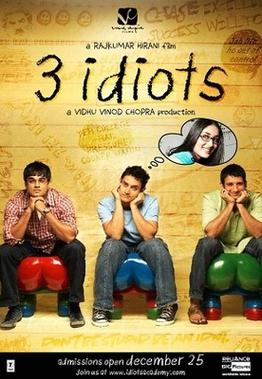
At the core of Hirani's cinematic universe is a sustained and incisive education system critique, alongside a deep interrogation of the broader cultural expectations that accompany it. As evidenced in 3 Idiots, he frequently examines how rigid academic frameworks stifle organic intellectual curiosity. His narratives often position the institutional environment not as a place of enlightenment but as an ideological battleground where traditional paradigms of success are ruthlessly enforced. This exploration serves as a microcosm for larger societal dysfunctions, highlighting the destructive nature of mindless conformity.
To counter these oppressive systems, Hirani leans heavily on the themes of youth rebellion and the celebration of individuality. His protagonists are typically outsiders or iconoclasts who refuse to capitulate to the demands of their elders or the state. This rebellion is rarely framed as malicious. Instead, it is presented as a necessary step in profound narratives of self-discovery. By championing nonconformity, the director asks the audience to reconsider the true value of passion and independent thought in a rapidly modernizing world that often prioritizes rote mechanical output.
Furthermore, the depiction of emotional growth is inextricably linked to the concept of strong friendships within his work. The collective bond between characters functions as a surrogate family, providing the emotional scaffolding necessary to survive immense institutional pressures. It is through these deeply felt interpersonal connections that Hirani's characters navigate their transitions into adulthood. The overarching exploration of youth ultimately resolves into an inspirational storytelling mode, where mutual support and empathy emerge as the ultimate antidotes to systemic apathy.
Stylistic Signatures
Hirani's stylistic approach is defined by a precise tonal balancing act, seamlessly weaving humorous elements with profoundly heartfelt moments. He favors an entertaining narrative structure that disarms the audience with comedy before delivering sharp emotional and political truths. This oscillation between levity and pathos is not merely a commercial calculation but a deliberate rhetorical strategy. By keeping the viewer engaged and amused, the director ensures that his underlying institutional critiques penetrate more deeply than they would in a purely austere drama.
Cinematographically, his films prioritize clarity, spatial coherence, and the foregrounding of performance over ostentatious visual flourishes. The mise-en-scene is typically bright, dynamic, and reflective of the chaotic energy of youth. This accessible visual language ensures that the thematic weight of the narrative is never obscured by alienating formalist techniques. Instead, the camera acts as a sympathetic observer, intimately tracking the emotional fluctuations of the protagonists as they navigate their restrictive environments.
The editing rhythms in a Hirani film further underscore his commitment to thought-provoking yet accessible storytelling. Pacing is brisk during comedic sequences, often utilizing rapid cuts to heighten the sense of youthful irreverence. However, the rhythm deliberately slows during crucial moments of emotional growth, allowing the audience time to absorb the philosophical gravity of the scene. The accompanying musical scores are similarly utilized to bridge the gap between satire and sincerity, effectively amplifying the inspirational undercurrents of his work.
Recurring Collaborators
While the specific database cross-section for this analysis highlights a self-contained cast with no recurring collaborators identified across multiple films, this isolation actually underscores a key facet of Hirani's directorial method. His approach to casting relies heavily on building an organic, singular ensemble for each distinct narrative. The actors in his films must function less as recurring muses and more as precise conduits for his specific thematic preoccupations, particularly the dynamics of deep platonic bonds and intellectual rebellion.
Because his films require a highly specific tonal dexterity, the performers must be adept at pivoting rapidly between broad physical comedy and intensely dramatic vulnerability. The lack of reliance on a fixed on-screen troupe suggests a directorial confidence in shaping performances from the ground up, molding different actors to fit the rigorous demands of his thought-provoking scripts. Each ensemble is carefully calibrated to reflect the specific institutional environment being critiqued, ensuring the social microcosm feels entirely authentic to the performers inhabiting it.
In the absence of recurring on-screen faces within this sample, the true collaborative continuity in Hirani's work is found in his meticulous behind-the-scenes partnerships, particularly in the screenwriting process. The consistency of his thematic output relies heavily on a tightly knit creative brain trust that shares his vision for inspirational storytelling. This off-screen synergy is what allows his films to maintain a remarkably uniform voice, ensuring that the celebration of individuality remains front and center regardless of the cast.
Critical Standing
The critical reputation of Rajkumar Hirani is anchored by his rare ability to synthesize populist entertainment with rigorous social commentary. Reviewers frequently highlight his work as a benchmark for how mainstream cinema can tackle heavy themes like suicide, academic pressure, and cultural expectations without alienating a mass audience. As noted by publications like The Guardian, which observed how his characters determine to live life on their own terms, his films are celebrated for transforming localized institutional anxieties into universally relatable narratives.
Within critical discourse, his films are often subjected to comparative analysis with celebrated Western dramas that explore similar themes of academic pressure and nonconformity. Critics regularly draw parallels between his work and films like Dead Poets Society and Good Will Hunting, noting a shared preoccupation with unconventional mentorship and the struggle against rigid educational paradigms. Furthermore, comparisons to The Pursuit of Happyness highlight his commitment to inspirational storytelling and the eventual triumph of the human spirit over systemic adversity.
Over time, his standing has evolved from being viewed primarily as a skilled purveyor of comedy to a highly respected cinematic sociologist. While some strict formalists have occasionally critiqued his reliance on melodramatic narrative structures, the overwhelming consensus positions him as a vital, transformative figure in modern cinema. By consistently delivering narratives that are both incredibly entertaining and deeply thought-provoking, Hirani has secured a legacy as a filmmaker who successfully challenged and changed the cultural conversations of his time.