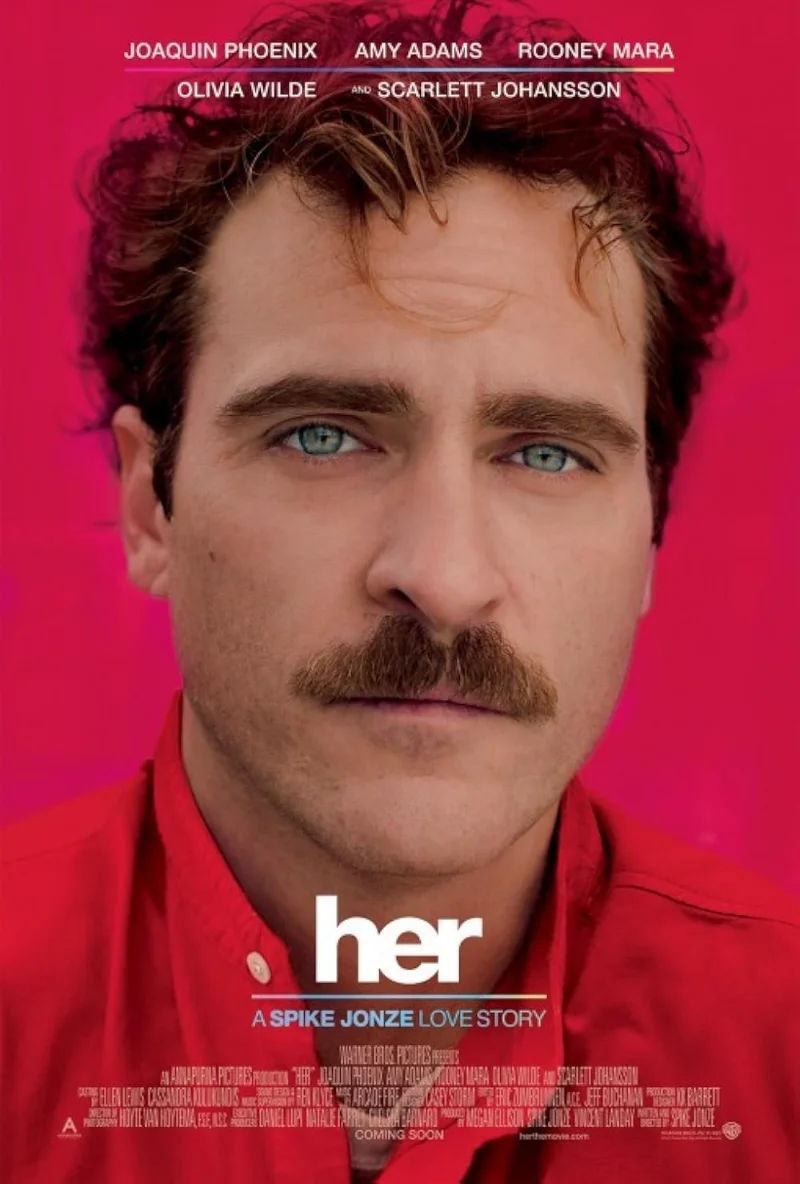
Career Overview
Spike Jonze emerged in the late twentieth century as a visionary talent whose transition from short-form visual media to feature filmmaking radically altered the landscape of American independent cinema. Initially associated with a generation of directors who brought a kinetic, postmodern energy to the screen, Jonze quickly distinguished himself through a unique blend of surrealist comedy and profound emotional sincerity. His career arc reveals a filmmaker who has steadily moved from staging elaborate, mind-bending conceptual puzzles to crafting deeply intimate portraits of isolation.
His position in cinema history is anchored by his ability to capture the specific anxieties of the digital age. By the time he released Her in 2013, Jonze had fully transitioned into an auteur capable of generating his own wholly original, deeply melancholic universes. This chronological development highlights a shift from the eccentric collaborations of his early career to a more singular, mature directorial voice that addresses the universal human condition.
Today, Jonze is recognized not merely as a stylist but as a crucial cinematic philosopher. Critics and scholars view his filmography as a vital bridge between the tactile, analog filmmaking of the past and the pixel-era aesthetic of the present. His work consistently challenges audiences, proving that he possesses a rare knack for disturbing our peace while simultaneously offering profound comfort through engaging narrative structures.
Thematic Preoccupations
The overarching thematic preoccupation of Spike Jonze involves a rigorous, often painful examination of human relationships in an increasingly alienated world. He constantly returns to the intersection of love and technology, probing how modern advancements simultaneously connect and isolate individuals. In Her, this obsession manifests as a daring exploration of identity, asking whether a simulated consciousness can fulfill the emotional demands of a lonely human being. His films operate as both a love story and a horror show, exploring the pleasures and perils of new technology.
Another recurring philosophical concern is the concept of being caught between spaces, psychic and otherwise. Jonze meticulously details the existential drift of characters who navigate a highly mediated existence, unsure of their own authenticity. The simulation of intimacy becomes a central motif, challenging the audience to define what constitutes a genuine emotional bond when physical presence is no longer a prerequisite for love. This futuristic tale acts as a subtle warning about our own trajectory.
Finally, Jonze anchors these high-concept science fiction elements with a deeply humanist perspective on the human condition. His narratives are rich in alternately wry and depressing details, utilizing smart and witty storytelling to mask a profound underlying sadness. Whether he is dissecting the breakdown of a traditional marriage or the bizarre dynamics of a human-computer romance, Jonze continually questions how we maintain our humanity within a technologically saturated environment.
Stylistic Signatures
The visual language of Spike Jonze is characterized by a remarkable ability to make the surreal feel entirely mundane and the mundane feel entirely alien. In constructing a future Los Angeles, he utilizes a distinct pixel-era aesthetic that relies on warm palettes, soft lighting, and an inescapable atmospheric haze. This deliberate visual warmth ironically underscores the disturbing atmosphere of total urban isolation, creating a world that is visually inviting yet emotionally barren.
His cinematographic approaches frequently isolate his protagonists within expansive, meticulously designed environments. The mise-en-scène is typically uncluttered, emphasizing the vast physical and psychological distances between characters. By keeping his frames clean and his camera movements fluid, Jonze highlights the sterile beauty of new technology while simultaneously emphasizing the emotional void it leaves behind. His subjects are literally and figuratively swallowed by the architecture of their own alienation.
The tonal and editing rhythms in his films masterfully balance wry humor with depressing undertones, creating a provocative storytelling style that is entirely his own. He employs subtle auditory cues and minimalist scores to elevate the emotional demand placed upon the viewer, ensuring that the technology on screen feels omnipresent but never overtly threatening. This careful calibration of sound, image, and pacing allows his films to remain remarkably engaging while functioning as sharp cultural critiques.
Recurring Collaborators
While the current database highlights Her as a singular, monumental achievement without an established troupe of recurring cast members, the collaborative ethos of Spike Jonze remains central to his artistic success. Jonze is renowned for his demanding, emotionally rigorous work with actors, capable of extracting career-defining performances from his leads. In Her, the central dynamic relies entirely on the profound on-screen chemistry generated between Joaquin Phoenix and the disembodied vocal performance of Scarlett Johansson, demonstrating Jonze's unique ability to forge intimacy out of isolation.
The director also demands a highly specific emotional resonance from his supporting ensembles. Actors like Rooney Mara are utilized to anchor the more surreal elements of the narrative in a recognizable, painful reality. Jonze requires his performers to navigate a delicate balance between earnest vulnerability and the absurd reality of their futuristic circumstances. It is through these intense, focused actor-director partnerships that his daring exploration of identity truly comes to life.
Furthermore, Jonze operates in constant conceptual dialogue with the writers and creative partners of his past. Critics frequently draw parallels between his solo writing and directing efforts and the labyrinthine narratives of his earlier triumphs, such as Being John Malkovich and Adaptation. This history of collaboration with visionary screenwriters has deeply influenced his own provocative storytelling, proving that his artistic DNA is permanently shaped by the legendary creative partnerships that launched his cinematic career.
Critical Standing
Spike Jonze occupies a highly esteemed and unique place within contemporary critical discourse. Reviewers and film scholars frequently champion his work as some of the most engaging and genuinely provocative cinema of its era. Critics at major outlets have consistently noted his uncanny knack for disturbing our peace, celebrating his films as smart entertainment that doubles as a subtle warning to society. His reputation has only grown as his thematic concerns regarding the human condition have proven increasingly prescient.
The critical apparatus often contextualizes his achievements by drawing comparisons to seminal works of cinema and literature. Reviewers have described his narratives as a pixel-era Pygmalion, while frequently comparing his melancholic romanticism to classic relationship films like Annie Hall. Furthermore, critics regularly measure his recent output against his own celebrated early works, including Being John Malkovich and Where the Wild Things Are, highlighting a consistent trajectory of critical acclaim and artistic growth.
Ultimately, Jonze has evolved in the eyes of critics from a purveyor of quirky, postmodern surrealism to a profound cinematic philosopher. His standing is that of a master filmmaker who is unafraid to tackle the depressing undertones of modern life. By continually delivering daring explorations of identity and human relationships, Jonze has cemented his legacy as one of the most vital, critically revered voices in modern American cinema.