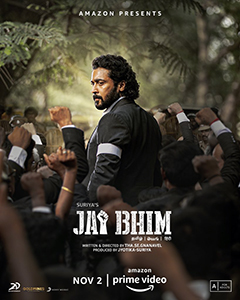
Career Overview
T. J. Gnanavel occupies a distinct space in contemporary Indian cinema as a filmmaker who seamlessly merges rigorous journalistic inquiry with the accessibility of popular cinematic forms. Emerging from a background in journalism and writing, his transition into filmmaking brought a documentarian eye for societal inequities into the realm of mainstream narrative cinema. His work serves as a crucial intervention in the film industry, shifting the focus from conventional commercial tropes to urgent socio-political realities.
The chronological development of Gnanavel as a director is intrinsically tied to his commitment to exposing systemic truths. While his early career involved writing and regional storytelling, his breakthrough on the global stage arrived with Jai Bhim. This landmark film cemented his reputation as a director capable of handling incendiary true-life material with both sensitivity and forceful conviction. The project marked a turning point, demonstrating that regional cinema could tackle highly specific historical injustices while resonating universally across international critical circles.
Today, Gnanavel stands as a vital voice in a burgeoning movement of politically conscious filmmakers who refuse to compromise on ideological clarity for the sake of entertainment. His position in modern cinema history is that of an agitator and an educator. By prioritizing the narratives of the marginalized and the oppressed, he challenges audiences and institutions alike, proving that cinema remains a potent vehicle for systemic critique and sustained social activism.
Thematic Preoccupations
The thematic architecture of the work of Gnanavel is built upon an unwavering commitment to human rights and the relentless pursuit of social justice. His cinema functions as an investigative tool, designed to unearth the deeply entrenched biases that corrupt institutional structures. By focusing on systemic oppression, particularly against indigenous and marginalized communities, he continually asks how the disenfranchised can navigate a legal apparatus inherently designed to exclude them.
Central to his philosophical inquiries is the tension between legal justice and moral justice. Gnanavel interrogates the mechanics of legal battles, presenting them not merely as courtroom theatrics but as grueling wars of attrition against institutional apathy. In Jai Bhim, the law is depicted as a double-edged sword, capable of inflicting severe trauma through police bias, yet remaining the solitary avenue for eventual restitution. This duality forms a recurring obsession in his storytelling, highlighting the fragility of tribal rights within modern judicial frameworks.
Activism is not merely a byproduct of his narratives but the very engine that drives them. He explores the burden of representation and the immense personal cost of advocacy against profound social inequality. The relentless determination required to combat institutional decay permeates his character arcs, transforming ordinary individuals into reluctant champions of human rights. Through these explorations, Gnanavel constructs a cinema of empathy, demanding that audiences confront their own complicity in the marginalization of vulnerable populations.
Stylistic Signatures
Gnanavel employs a visual and structural language defined by what critics frequently term purposeful direction. His stylistic approach eschews unnecessary stylization in favor of a stark, gripping realism that grounds the narrative in the immediate suffering of his subjects. The cinematography and mise-en-scene in his work prioritize authenticity, often utilizing natural lighting and unvarnished locations to reflect the brutal realities faced by marginalized communities. This aesthetic restraint ensures that the focus remains entirely on the human cost of systemic failure.
The pacing of his films is frequently described as relentless, engineered to maintain a sense of claustrophobia and urgent propulsion. Gnanavel utilizes tight, rhythmic editing during procedural sequences to mirror the frustrating labyrinth of the legal system, juxtaposed with lingering, empathetic takes during moments of acute personal tragedy. This dynamic rhythm creates a gripping narrative tone, ensuring that his hard-hitting commentary never stalls the momentum of the unfolding drama.
A hallmark of his technique is the extraction of assured, nuanced portrayals from his cast. Gnanavel avoids melodramatic excess, instead guiding his actors toward grounded, powerhouse performances that anchor the heavy thematic material. The emotional landscape of his work is characterized by an empathetic engagement that bridges the gap between the viewer and the on-screen suffering. The sound design and musical score work in tandem to underscore the tension of the legal battles, resulting in powerful storytelling that is both emotionally resonant and intellectually rigorous.
Recurring Collaborators
Because the cinematic database currently highlights a singular monumental work in his directorial canon, a traditional analysis of recurring on-screen collaborators remains a developing narrative. However, Gnanavel demonstrates a distinct collaborative philosophy that privileges the collective ensemble over isolated star vehicles. His approach to casting relies heavily on integrating seasoned performers with local, authentic faces to ground his socio-political dramas in absolute reality, ensuring that his assured performances always serve the broader narrative.
The creative partnerships that truly define his process extend deeply into the realms of research and legal consultation. To construct narratives with the rigorous accuracy seen in his work, Gnanavel collaborates closely with human rights activists, legal scholars, and historians. This behind-the-scenes brain trust functions as a crucial recurring element in his methodology, providing the factual bedrock necessary to mount searing critiques of institutional bias and police brutality.
Furthermore, his collaboration with technical crews reflects a shared commitment to an unvarnished aesthetic. Working with cinematographers and editors who understand the necessity of a relentless, driving pace, Gnanavel builds a cohesive creative unit dedicated to purposeful storytelling. These partnerships ensure that every technical decision serves the broader thematic goal of exposing social inequality, creating an environment where visual style never overshadows the urgent need for systemic reform.
Critical Standing
The critical reception of Gnanavel is characterized by immense respect for his unwavering commitment to exposing historical and systemic injustices. Critics frequently laud his work as both powerful and timely, highlighting his ability to translate dense legal battles into cinematic experiences of searing intensity. His standing in critical discourse is firmly rooted in the tradition of global humanist cinema, where film is evaluated not just on its artistic merits, but on its sociological impact and ability to drive real-world conversation.
Reviewers consistently contextualize his narratives by drawing comparisons to iconic films centered on civic action and human rights. His rigorous examination of legal advocacy has prompted parallels to Erin Brockovich and The Trial of the Chicago 7, while his focus on systemic civil rights struggles evokes comparisons to Selma and Gandhi. Additionally, the relentless fight for institutional reform in his work shares thematic DNA with 12 Angry Men. These comparisons underscore the universal resonance of his highly specific, localized narratives regarding indigenous rights.
As his critical reputation continues to evolve, Gnanavel is increasingly recognized as a master of the hard-hitting procedural drama. Publications praise the educational value of his storytelling, noting that his films shed light on little-known chapters of history without sacrificing narrative propulsion. By merging compelling entertainment with impassioned activism, Gnanavel has secured a formidable place among contemporary directors who are redefining the boundaries and responsibilities of modern political cinema.