Career Overview
Terry George has cemented his place in cinema history as a filmmaker deeply invested in bringing marginalized historical narratives to mainstream audiences. Operating frequently in the realm of political and historical drama, he tackles subjects that the studio system traditionally avoids. His work serves as a moral reproach to global apathy, focusing on moments when the international community failed to intervene in catastrophic human rights abuses.
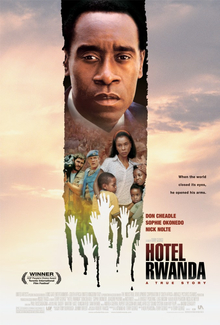
His career arc is defined by immense industry challenges. George often labors for years to secure funding and distribution for his projects. Studio executives initially balked at the prospect of financing a major motion picture centered on an African protagonist navigating a genocide, viewing such personal experience narratives as financially risky and difficult to market.
Despite these obstacles, George has maintained a resolute commitment to his vision. His perseverance in the face of Hollywood skepticism underscores his position as a director of conscience. He views the cinematic apparatus not merely as an engine for entertainment, but as a vital mechanism for checking out the past and holding the present accountable.
Thematic Preoccupations
The central philosophical preoccupation of George's filmography is the endurance of humanity during its darkest days. He relentlessly explores the emotional impact of survival, examining how ordinary individuals summon extraordinary heroism and perseverance when surrounded by systemic evil. His narratives frequently isolate a singular protagonist who must resist overwhelming forces to protect the innocent.
George filters the vast, incomprehensible scale of genocide through intimate, personal experience narratives. By framing these immense tragedies around an African man's journey or a meaningful love story, he provides the audience with a relatable emotional anchor. This juxtaposition of the intimate and the epic highlights the savage realities of conflict while ensuring the viewer remains emotionally invested in the characters' fates.
However, this approach frequently forces an interrogation of historical accuracy. In his attempt to translate complex political collapse into an accessible narrative, George often relies on the conventions of the political thriller. This thematic translation occasionally invites questions about historical inaccuracy and misguided representations, as the dense discord between factions is sometimes streamlined to serve the pacing of a suspenseful story.
Stylistic Signatures
George's visual language eschews grandiose spectacle in favor of a grounded, intimate realism. As critics have noted, his films succeed precisely because the screen is not cluttered with meaningless special effects. Instead, his mise en scene is designed to keep the focus resolutely at the human level, prioritizing the immediate, lived reality and raw emotion of his protagonists.
The editing rhythms in his work frequently mirror the structural pacing of a political thriller. This stylistic choice generates palpable suspense, maintaining a riveting storytelling momentum even when depicting inherently horrific historical events. By building tension through character interaction and escalating immediate stakes, George ensures the audience is quickly drawn into the narrative, even if they initially resisted the heavy subject matter.
A defining signature of George's directorial approach is his reliance on the single, heart crushing revelation over continuous graphic violence. Rather than overwhelming the viewer with ceaseless brutality, he utilizes precise, devastating visual moments to communicate the immense scale of tragedy. This deliberate restraint allows the emotional weight of the narrative to resonate deeply, grounding the suspenseful genre elements in genuine, sobering human tragedy.
Recurring Collaborators
While George does not rely on a fixed troupe of recurring cast members across his filmography, his directorial method depends heavily on intense, singular collaborations with his leading actors. The overarching success of his narratives hinges entirely on central performances that can carry the profound moral and emotional weight of his historical inquiries.
A prime example of this collaborative dynamic is his work with actors capable of immense restraint and quiet dignity, most notably Don Cheadle. George provides a supportive framework where the actor can hold their performance resolutely at the human level, avoiding melodrama. This partnership is crucial, as the director requires his leads to anchor the suspense and political complexities in genuine, relatable human emotion.
Beyond the camera, George's most vital collaborations involve the survivors and historical figures whose personal experience narratives form the foundation of his scripts. These off camera partnerships are essential to his process, ensuring that his attempts at historical accuracy remain respectful and tethered to the real individuals who endured the horrors of the past.
Critical Standing
George occupies a complex and frequently debated space within contemporary critical discourse. He is widely praised for his ability to craft accessible, deeply moving cinema out of the savage realities of conflict. His ambitious efforts routinely draw favorable comparisons to landmark historical dramas like Schindler's List, positioning him as a vital voice in the subgenre of historical atrocity narratives.
Despite this high praise, his critical standing is not without significant detractors. While many reviewers applaud his riveting storytelling, others argue that his reliance on established genre conventions leads to misguided representations. Critics have pointed out that his approach sometimes reduces complex geopolitical atrocities to the stuff of a rote suspense thriller, leaving the nuanced, historical discord between ethnic groups frustratingly underexplored.
Ultimately, George's reputation rests on his unwavering commitment to bringing marginalized histories to a global audience. Even when critics highlight instances of historical inaccuracy or thematic simplification, they generally concede the profound emotional impact of his work. His legacy is that of a dedicated filmmaker who navigated severe industry challenges to remind the world of its moral failures, using mainstream cinema as a powerful tool for global empathy.