Career Overview
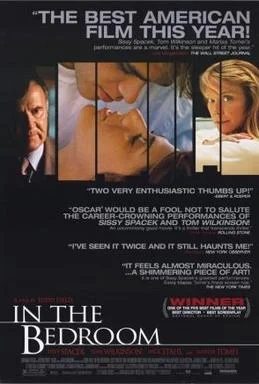
Todd Field emerged from an established acting career to become one of the most formidable directorial voices of early twenty first century American cinema. His transition from in front of the camera to behind it was marked by a stunning level of maturity and formal control. Rather than relying on the performative bombast often characteristic of actors who turn to directing, Field demonstrated an immediate mastery of quiet, devastating narrative cinema with his debut, In the Bedroom. This film positioned him not merely as a talented novice but as a fully formed auteur capable of orchestrating profound emotional depth.
Field spent years working alongside esteemed filmmakers, absorbing the meticulous craft of cinematic storytelling. His experiences on sets, notably his involvement in Stanley Kubrick's Eyes Wide Shut, clearly influenced his rigorous approach to composition and thematic exploration. He brought a patient, unadorned cinematic eye to the independent film landscape of the early 2000s. Critics frequently noted that his directorial debut felt less like a first feature and more like the work of a seasoned veteran who had spent decades honing his craft.
By launching his directorial career at the Sundance Film Festival, Field tapped into the burgeoning American independent movement, yet his work possessed a classical restraint that separated him from his contemporaries. He bypassed the quirky irony of the era in favor of a classical, emotionally resonant register. His immediate ascent, marked by widespread critical acclaim and major awards recognition, established a foundation for a career defined by meticulous selection and unwavering thematic integrity. Field solidified his place as a purveyor of prestige American drama, crafting cinema that demands profound engagement from its audience.
Thematic Preoccupations
At the core of Todd Field's cinematic inquiry is a relentless examination of ordinary people facing extraordinary, often catastrophic, challenges. His narratives are deeply rooted in the complexities of familial dynamics, exploring how domestic spaces can transform into arenas of profound psychological conflict. In the Bedroom serves as the foundational text for his thematic obsessions, dissecting the fragile architecture of the American family and the devastating ripple effects of sudden trauma. Field is fundamentally interested in the human capacity to endure the unthinkable, charting personal journeys that oscillate between profound despair and the desperate search for healing.
Grief and loss are not merely plot devices in Field's work but function as pervasive atmospheres that dictate character behavior. He maps the topography of mourning with excruciating precision, refusing the comforting resolutions typical of conventional melodrama. His characters fester in a complex mess of pent up resentment, allowing their pain to coagulate over time. This approach renders grief as a living, breathing entity that slowly dismantles the facades of polite society. The director forces audiences to confront the ugly, unspoken realities of mourning, stripping away the romanticization of trauma.
Crucially, Field couples his exploration of grief with a harrowing examination of revenge and its moral consequences. He interrogates the lengths to which individuals will go to appease a guilty conscience or rectify a perceived cosmic injustice. When a grieving family grapples with the inadequacies of the legal system, Field navigates the descent into vigilantism without missing a beat, raising deeply nuanced and thought provoking questions about justice, culpability, and moral decay. The intensely emotional nature of these themes ensures that his work resonates as both a rigorous character study and an unnerving morality play.
Stylistic Signatures
Todd Field's stylistic signature is defined by a low key but emotionally devastating formal restraint. He avoids the flamboyant camera movements and aggressive editorial pacing that often characterize contemporary thrillers, favoring instead a calmly paced, observational aesthetic. This austere visual language mirrors the repressed emotional states of his characters. By utilizing deliberate, lingering shots, Field takes his time with their pain, allowing the audience to inhabit the suffocating quiet of a grieving household. His mise en scene is saturated with a sense of refined taste, grounding his deeply unsettling narratives in recognizable, seemingly secure middle class environments.
This juxtaposition of serene domestic imagery with volatile emotional undercurrents is a hallmark of his directorial approach. Field's camera functions as a patient witness to the unraveling of ordinary lives, often isolating characters within the frame to emphasize their internal isolation. The visual austerity is perfectly calibrated to enhance the richly layered storytelling, ensuring that the visual field never distracts from the psychological complexity of the drama. Critics often compare this methodical, unadorned approach to the introspective narratives of European cinema, noting his ability to handle explosive themes with nary a hint of weepy melodrama.
As an actor himself, Field exhibits a masterful command of performance within the cinematic space. He blocks scenes to maximize the unspoken tension between characters, relying heavily on subtle shifts in body language and facial expressions rather than purely verbal exposition. This faultless control of tone allows him to seamlessly transition his narratives from intimate domestic dramas to somber thrillers. His sound design and musical choices are similarly restrained, utilizing silence as a potent auditory tool to underscore the agonizing weight of grief and the terrifying passions that brew beneath the surface of his supposedly tranquil settings.
Recurring Collaborators
Because Todd Field's filmography is marked by deliberate, distinct narratives, he has not established a vast repertory company of recurring onscreen talent across his body of work. However, his profound understanding of the acting process allows him to forge deeply impactful, albeit solitary, collaborations with his performers. He approaches casting with a keen eye for actors capable of conveying immense internal lives, demanding performances that are entirely devoid of vanity. His background in performance grants him a unique vocabulary when communicating with his cast, resulting in ensembles that operate with remarkable cohesion.
In In the Bedroom, Field cultivated extraordinary partnerships with veteran actors Sissy Spacek and Tom Wilkinson, guiding them to career defining performances. He provided them with a creative environment that encouraged them to explore the absolute depths of anger, grief, and emotional paralysis. Spacek and Wilkinson deliver masterclasses in restrained anguish, perfectly executing Field's vision of an austere couple coping with unimaginable loss. The director's trust in their abilities allowed for a minimalist approach to dialogue, where the most profound communication occurs in the spaces between words.
Field's collaborative success extends to supporting players, demonstrating his commitment to populating his worlds with fully realized characters. His work with Marisa Tomei and Nick Stahl highlights his ability to guide actors through complex, often contradictory emotional registers. Tomei perfectly balances wisdom and protectiveness, while Stahl navigates the naive optimism of youth destined for tragedy. Although these specific acting partnerships do not recur across a vast database of subsequent films, the intensity and success of these initial collaborations set a high critical benchmark. They established Field's reputation as a consummate director of actors, a filmmaker who views performance as the foundational element of his cinematic architecture.
Critical Standing
From the moment he debuted at the Sundance Film Festival, Todd Field secured a formidable standing within contemporary critical discourse. Reviewers immediately recognized his arrival not just as a promising talent but as a major cinematic voice, frequently declaring In the Bedroom one of the best directed films of its release year. His work is routinely garlanded with praise for its intelligence, precise tonal control, and devastating emotional impact. Critics respect Field for his refusal to pander to commercial expectations, celebrating his commitment to crafting unflinching dramas about fierce and terrifying passions.
Within the broader context of American cinema, critics frequently place Field in a lineage of directors who excel at the rigorous, unsentimental dissection of domestic tragedy. His work invites comparative analysis with landmarks of family dysfunction and mourning, such as Robert Redford's Ordinary People and Kenneth Lonergan's You Can Count on Me, as well as Nanni Moretti's The Son's Room. Yet, reviewers are quick to note that Field's austere execution sets him apart from even his most esteemed peers, often highlighting how he tackles grief without succumbing to melodrama. The palpable influence of his time working with Stanley Kubrick on Eyes Wide Shut is also a common touchstone in critical evaluations of his formal rigor.
Over time, Field's reputation has only grown, aided by the enduring power of his meticulously crafted narratives. He is viewed as an essential practitioner of the prestige American drama, a filmmaker who respects the intelligence of his audience. Even with a highly selective output, his standing remains impeccably high among film scholars and cinephiles alike. His debut continues to be studied as a masterclass in shifting genres seamlessly from domestic tragedy to a somber vigilante thriller. In an era often dominated by spectacle, Field is celebrated as a vital guardian of profound, character driven cinema, proving that ordinary struggles can yield the most extraordinary cinematic experiences.