Career Overview
Tony Gilroy occupies a distinctive space in modern American cinema, transitioning from a highly successful screenwriter to a director of formidable precision. Before stepping into the directorial role, Gilroy spent a decade and a half honing his craft behind the scenes. His most notable contribution during this period was his work on the espionage narratives of the Bourne series, where he served as the sole credited screenwriter across the first three highly successful pictures. This extensive background in studio screenwriting provided him with a profound understanding of narrative architecture and the mechanics of pacing.
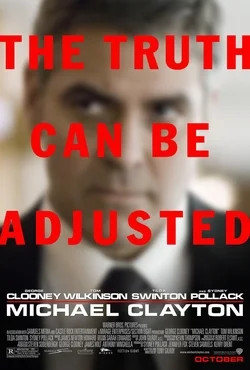
The transition from writer to director is often fraught with challenges, but Gilroy navigated it with remarkable assurance. His directorial debut, Michael Clayton, marked the arrival of a fully formed filmmaker. Critics noted that Gilroy poured the energy accumulated during his years in the Hollywood machine into a project that felt both deeply personal and rigorously structured. This debut established him not merely as a writer who directs, but as a visual storyteller capable of executing complex tonal shifts with absolute confidence.
By shifting his focus to directing, Gilroy crossed into new turf and demonstrated a quiet strength that immediately resonated with audiences and critics alike. He positioned himself as a filmmaker interested in the mechanisms of power and the compromised individuals who operate within those systems. His background in crafting high stakes thrillers seamlessly translated into the corporate sphere, allowing him to redefine the contemporary legal drama with a seasoned, mature perspective.
Thematic Preoccupations
At the core of Gilroy's directorial ethos is a pervasive fascination with corporate corruption and the intricate webs of moral ambiguity that sustain it. His work frequently investigates the intersection of legal ethics and personal conscience, particularly within the sterile, high stakes environments of powerful Manhattan law firms and massive conglomerates. In Michael Clayton, Gilroy explores the archetype of the fixer, a professional whose primary function is to sweep corporate malfeasance under the rug, thereby maintaining the pristine facade of institutional power.
Moral conflict serves as the dramatic engine for Gilroy's narratives. His protagonists are often deeply disillusioned figures, existing as withered shells of men who have long compromised their ideals for financial security or professional survival. The thematic trajectory typically involves a reluctant awakening, where characters are forced to confront the amoral corporate profiteering they have spent their careers protecting. This journey toward reclaiming a lost conscience is never presented as a simple triumph, but rather as a grueling, dangerous necessity that threatens their very existence.
Furthermore, Gilroy taps into a profound contemporary disgust with the heartless nature of big business. His narratives dissect the spectacular flameouts and quiet implosions of individuals caught in the machinery of late stage capitalism. By examining the collateral damage of corporate greed, Gilroy asks rigorous questions about moral responsibility. He is less concerned with clear cut heroes and villains than he is with the systemic pressures that drive ordinary people to commit, or become complicit in, extraordinary ethical breaches.
Stylistic Signatures
Visually, Gilroy relies on spectacular cinematography that emphasizes a pervasive sense of quiet intensity. His directorial approach is characterized by mesmerizing visuals that often begin in media res, utilizing a succession of fascinating, unexplained shots to grab the attention of the audience. This sophisticated storytelling technique demands active engagement from the viewer, trusting them to assemble the narrative puzzle alongside the protagonist. The visual language mirrors the polished, impenetrable surfaces of the corporate worlds he depicts, often utilizing cold lighting and rigid framing.
Gilroy favors a style that balances the slick, ruthless force of the corporate thriller with the deliberate pacing of a character study. He employs effective, restrained direction to build tension, allowing the pent up energy of the narrative to simmer beneath the surface before reaching a boiling point. The camera work often isolates characters within expansive, sterile corporate architectures, visually reinforcing their alienation and moral isolation. Every frame is meticulously composed to reflect the precise, calculating nature of the institutions under scrutiny.
Performance modulation is another crucial element of his stylistic signature. Gilroy extracts strong, confident performances that prioritize internal conflict over explosive melodrama. He guides his actors to deliver nuanced portrayals of backsliding professionals, focusing on the subtle gestures and guarded expressions that betray their inner turmoil. This commitment to quiet strength in both performance and visual composition elevates his work beyond standard genre fare, creating an atmosphere of pervasive, inescapable dread.
Recurring Collaborators
While Gilroy does not boast an expansive repertory company of recurring cast members across a massive directorial filmography, his directorial voice is heavily defined by his strategic partnerships with formidable leading actors. His debut relied squarely on the broad shoulders of George Clooney, whose presence as the title character in Michael Clayton provided the perfect vessel for Gilroy's exploration of compromised morality. Clooney brought a slick, ruthless force to the role, perfectly embodying the world weary professional required by the script.
The collaboration between director and star in this instance highlights Gilroy's reliance on actors who possess inherent charisma but are willing to subvert their traditional star personas. By casting an actor typically associated with suave confidence as a withered, gambling addicted shell of a man, Gilroy exploits audience expectations to deepen the thematic impact of the work. This synergy between directorial vision and lead performance is critical to the success of his character driven thrillers, anchoring the heady corporate politics in raw human emotion.
Beyond on screen talent, Gilroy's background as a highly sought after screenwriter means his primary collaboration has historically been with the narrative form itself. Having penned the defining entries of the Bourne series before stepping behind the camera, he brings a rigorous, collaborative discipline from the writer's room to the director's chair. This deep understanding of script mechanics allows him to construct tightly wound narratives where the collaboration between the written word and the final visual execution is seamless and highly refined.
Critical Standing
Tony Gilroy occupies a revered space among contemporary film critics, frequently drawing comparisons to the architects of the great paranoia thrillers of the 1970s. Critics routinely align his work with monumental films like The Conversation, The Insider, and Network. These comparisons highlight his ability to capture the anxieties of a society entirely distrustful of its dominant institutions. His transition from franchise architect to a director of sophisticated adult dramas was met with widespread critical acclaim, solidifying his reputation as a filmmaker of serious intellectual weight.
The critical consensus recognizes Gilroy as a driving force in the maturation of the legal and business thriller genres. Reviewers often praise his work for transcending the predictable destination of a typical genre exercise, focusing instead on the complex psychological journey of his protagonists. His directorial debut was lauded not just as a promising first effort, but as a masterclass in tone, earning him a place within a critical discourse that values rigorous ethical inquiry wrapped in compelling mainstream entertainment.
As his career has evolved, Gilroy's standing has only grown more secure, with critics continually citing his ability to diagnose contemporary social ills with surgical precision. He is celebrated for crafting narratives that effectively tap into modern disgust with corporate impunity while maintaining a fiercely entertaining grip on the audience. His legacy in cinema is thus defined by his successful marriage of commercial thriller mechanics with the uncompromising moral seriousness of classic American cinema.