Career Overview
Yûichirô Hayashi occupies a fascinating space in contemporary Japanese animation, operating as an architectural filmmaker tasked with managing some of the most massive properties in the medium. His career arc reflects a steady climb through the ranks of the anime industry, moving from storyboard artist and episodic director to a reliable helmer of high-stakes, action-focused adaptations. Unlike auteurs who build entirely original worlds, Hayashi has carved out his position in cinema history by stepping into established, globally beloved franchises and steering them toward their most complex iterations.
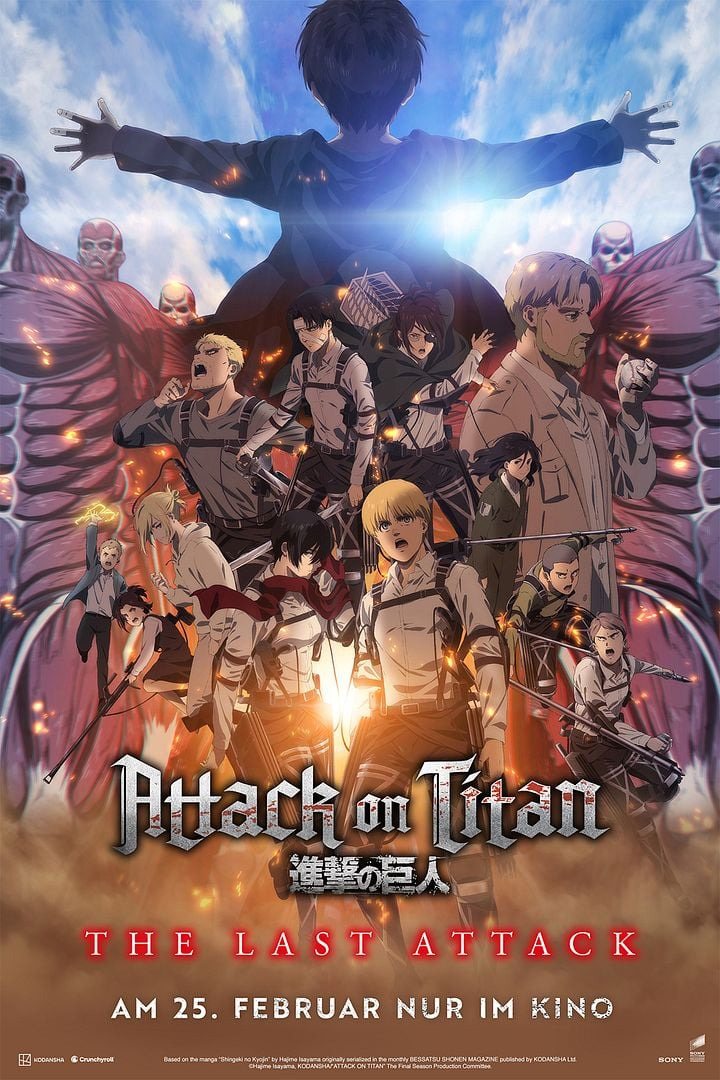
His defining monumental achievement is universally recognized as his stewardship of the ultimate conclusion to the titan-killing epic that dominated the global cultural zeitgeist for a decade. Taking over the final season of this massive property, Hayashi was handed the unenviable task of translating a sprawling, dense, and tonally grim narrative into a cohesive cinematic experience. This effort culminated in Attack on Titan: The Last Attack, a theatrical release that required balancing the intricate demands of a rabid fandom with the rigorous standards of theatrical animation.
In the broader context of cinema history, Hayashi represents the modern studio director working at the absolute pinnacle of scale. His ability to navigate the crushing pressure of a global phenomenon while maintaining a distinct directorial vision speaks to a rare kind of cinematic pragmatism. He has proven himself to be a filmmaker capable of synthesizing immense logistical challenges, complex source material, and spectacular animation into a devastating conclusion that resonates across international borders.
Thematic Preoccupations
At the core of Hayashi's work is a persistent fascination with the mechanics of apocalyptic destruction and the moral erosion required to survive it. The thematic engine of Attack on Titan: The Last Attack is driven by the concept of the Rumbling, a catastrophic event that shifts the narrative focus from righteous survival to global genocide. Hayashi interrogates the psychological toll of this shift, examining how the initial premise of killing titans evolves into a horrifying reflection of human cruelty. He is deeply invested in the devastating impact of cyclical violence, asking whether humanity can ever truly break free from its historical traumas.
A recurring preoccupation in his direction is the corruption of innocence, specifically visualized through the motif of sword-wielding youngsters thrust into impossible wars. While earlier iterations of the franchise focused on the raw adrenaline of youth in revolt, Hayashi is concerned with the traumatic aftermath. His characters are weary, burdened by the controversial legacy of their own actions, and forced to participate in an intense confrontation that offers no easy moral absolutes. This transition from youthful heroism to grim, adult consequence is a central pillar of his thematic architecture.
Furthermore, Hayashi's work frequently engages with the meta-textual challenges of adaptation itself. Operating within a massive multimedia franchise that includes game adaptations and a gruesomely inventive live-action adaptation, his animated feature functions as a definitive synthesis of the property. He navigates the divide between live-action versus animated storytelling by pushing the medium of animation to its absolute limits, ensuring that the philosophical weight of the manga ending is delivered with an intensity that other mediums cannot match.
Stylistic Signatures
The visual language of Yûichirô Hayashi is defined by its spectacular animation and a relentless, kinetic approach to action choreography. He favors dynamic, sweeping camera movements that mimic the freedom of three-dimensional space, a necessity when framing intense confrontations that take place entirely in mid-air. To achieve this, Hayashi frequently utilizes a sophisticated blend of traditional two-dimensional character animation and complex three-dimensional CGI environments. This hybrid approach allows him to maintain the expressive, hand-drawn aesthetic of Japanese animation while executing set pieces of truly staggering scale.
His cinematographic tendencies often invite comparisons to the kaiju genre, most notably Godzilla, as he emphasizes the terrifying mass and momentum of colossal creatures. Hayashi uses low-angle compositions and deep focus to dwarf his human subjects against overwhelming, apocalyptic threats. However, his work is not merely about size, as the intimate, brutal pacing of his action sequences also shares DNA with hyper-kinetic martial arts media like Street Fighter. The editing rhythms are incredibly dense, cutting rapidly during moments of visceral combat before holding uncomfortably long on the devastating aftermath.
Tone and texture play a crucial role in his stylistic signature, characterized heavily by gruesome inventiveness. Hayashi does not shy away from the horrific realities of his narratives, utilizing spectacular special effects to render bodily destruction with unflinching detail. The gruesome effects are never purely gratuitous, but rather serve an essential thematic purpose, grounding the fantasy violence in a visceral, terrifying reality. Coupled with a dense, bombastic sound design that emphasizes the crushing weight of apocalyptic events, his stylistic choices ensure that every battle feels genuinely catastrophic.
Recurring Collaborators
Within the contemporary anime studio system, traditional concepts of an auteur's recurring repertory cast are frequently dismantled by the realities of production committees and shifting studio contracts. The database correctly identifies no recurring cast members across multiple distinct film properties for Hayashi, a fact that highlights the collaborative nature of modern Japanese animation. Instead of relying on a stable of recognizable on-screen stars, a director like Hayashi collaborates with a vast, rotating machinery of voice actors who are typically attached to the intellectual property long before the director themselves signs on to the project.
Hayashi's most crucial creative partnership is therefore not with an actor, but with the original manga author, Hajime Isayama. In adapting Attack on Titan: The Last Attack, Hayashi engaged in a complex dialogue with the source material, translating Isayama's controversial manga ending to the screen. This collaboration requires a delicate balance of faithful reproduction and cinematic enhancement. Hayashi must interpret the author's static panels, expanding upon them with spectacular animation while honoring the intricate narrative architecture that the creator spent over a decade building.
The true recurring collaborators in Hayashi's filmography are the unseen armies of key animators, CGI directors, and composite artists. Operating primarily within the powerhouse studio MAPPA during this era, Hayashi relies on a dedicated team of technical artists to execute his vision of spectacular special effects and intense animation. These partnerships are the lifeblood of his work, as the sheer logistical challenge of rendering a global phenomenon on screen demands a synchronized, highly skilled technical crew working in lockstep with the director's complex storyboards.
Critical Standing
The critical reputation of Yûichirô Hayashi is inextricably linked to his execution of one of the most highly anticipated and heavily scrutinized finales in modern pop culture. Critics widely recognize Attack on Titan: The Last Attack as a monumental achievement in sheer cinematic spectacle. Publications like Rolling Stone en Español have praised the film as an intense and devastating experience that successfully seals the legacy of the franchise. His ability to deliver spectacular animation and terrific special effects under the immense pressure of a global phenomenon has secured his standing as a master of modern anime blockbusters.
However, Hayashi's critical reception is also deeply entwined with the controversial legacy of the story he was tasked with concluding. As noted by The A.V. Club, the cinematic adaptation cannot rewrite the manga ending, meaning Hayashi inherited a narrative conclusion that sharply divided audiences and critics alike. Reviewers frequently acknowledge that while the foundational plot mechanics may be polarizing, Hayashi's directorial execution elevates the material. He is praised for his unflinching commitment to the gruesome inventiveness of the source text, refusing to sanitize the devastating conclusion for broader commercial appeal.
Hayashi's standing is further elevated when his work is placed in dialogue with the broader franchise ecosystem. Critics often measure his animated feature against less successful iterations of the property, such as the widely criticized live-action adaptation or repetitive game adaptations noted by Slant Magazine. In the ongoing critical debate of live-action versus animated storytelling, Hayashi's work is frequently cited as definitive proof of animation's unique capacity to handle apocalyptic scale. Ultimately, his legacy is that of a brilliant visual tactician who successfully landed a colossal narrative plane under the most demanding critical and commercial conditions imaginable.