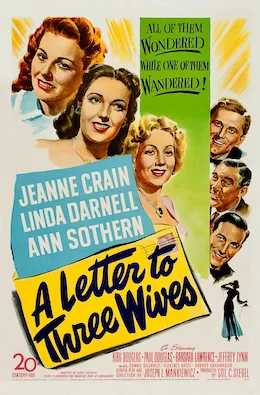
A Letter to Three Wives, directed by Joseph L. Mankiewicz in 1949, stands as a remarkable blending of sophisticated satire and comedy within the annals of classic American cinema. Mankiewicz, known for his sharp, character-driven narratives, navigates themes of social climbing, marriage, and infidelity with both humor and a keen sense of social critique. This film, situated at the cusp of modernism and the heightened stylings of Hollywood’s Golden Age, showcases Mankiewicz at his best, using melodrama to explore the complexities of human relationships in a small-town setting.
The film centers around three women who receive a letter from a mutual friend, revealing her intention to run away with one of their husbands. This plot device cleverly catalyzes a series of flashbacks that delve into the women's lives, exposing the pettiness, romantic entanglements, and social aspirations that define their existence. Critics have noted that through these narratives, Mankiewicz successfully entertains while simultaneously laying bare the societal expectations and pressures that govern marriage and fidelity. The humor infused in their interactions acts as a counterweight to the melodrama, creating a delightful balance that keeps the audience engaged.
Critically, A Letter to Three Wives has been described as both compelling and provocative, illustrating the tensions between aspiration and reality within post-war American society. The film satirizes the plight of women seeking validation from their husbands while also highlighting the absurdities of small-town life. Mankiewicz's direction maintains a high Hollywood style, yet it feels updated and relevant even for contemporary viewers, reflecting ongoing dialogues about marriage and infidelity. The characters are painted with a blend of sympathy and critique, ensuring they are as relatable as they are flawed.
The film’s comedic elements punctuate its otherwise serious themes, allowing audiences to ponder the darker implications of the narrative while enjoying its wit and humor. Mankiewicz masterfully intertwines the comedic and the dramatic, resulting in a work that is as entertaining as it is reflective. The performances of the lead actresses add depth to the exploration of jealousy, insecurity, and the intricate dynamics of friendships, underscoring Mankiewicz's ability to create multidimensional characters.
In conclusion, A Letter to Three Wives endures as a classic for its insightful examination of marriage and societal norms cloaked in humor and melodrama. The film encapsulates the essence of Mankiewicz's filmmaking prowess, marked by a sophisticated understanding of human relationships and a sharp critical eye towards the world in which he was crafting his stories. This timeless piece of cinema provides both amusement and reflection, earning its place as a notable entry in the film canon.