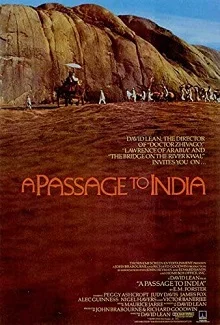
David Lean's A Passage to India (1984) stands as a monumental effort within the canon of British cinema, marking a significant entry in the director's illustrious career. Known for his visual storytelling and grand narratives, Lean adapted E.M. Forster's novel with a meticulous lens, striving to capture the complexities of colonial India during the British Raj. This film diverges from Lean's earlier spectacles like Lawrence of Arabia or Doctor Zhivago, opting for a more contemplative and socially grounded narrative. This pivot reveals not only Lean's versatility but also his commitment to exploring deeper, often unresolved tensions in human relationships across cultural divides.
At the heart of A Passage to India is a layered exploration of colonialism and the cultural misunderstandings that ensue amid racial tensions. The film chronicles the ill-fated friendship between an Indian doctor, Dr. Aziz, and an Englishwoman, Adela Quested, as they navigate the delicate and often perilous landscape of British colonial society. Critics have noted the film's lucid portrayal of these dynamics while simultaneously acknowledging its ambitious tackling of issues such as identity, opportunity, and the weight of societal expectations. Yet, while the film’s intent is well-meaning, some reviews have pointed to a lack of complexity in its execution, painting the characters as occasionally stilted or laggardly in their development.
This critical consensus underscores the film's social realism, as it reveals how deeply ingrained prejudices and misunderstandings can lead to tragic consequences. Reviews have praised Lean's ability to capture the nuance of these relations, even while some argue that the film's pacing can be at odds with the urgency of its themes. The symbolism peppered throughout A Passage to India is at times elusive, inviting viewers to question whether cultural barriers can be dismantled or merely reinforced through misguided attempts at connection. Despite this ambiguity, Lean's dedication to portraying the intricacies of these interactions remains evident, allowing for a visually and emotionally captivating experience.
Moreover, A Passage to India arrives in a context where the cinematic landscape was brimming with competitive storytelling that sought to engage with themes of race and colonialism. Lean's undertaking is marked by a thoughtful approach, presenting a contrasting perspective to other contemporaneous films interested in similar subjects. This ambition has earned the film accolades and a sense of prestige within the industry, although it grapples with the expectation of deep recognition from audiences and critics alike. As an elaborate tapestry of emotion and conflict, the film embodies not only Lean's artistic aspirations but also the broader socio-political narratives of its time.