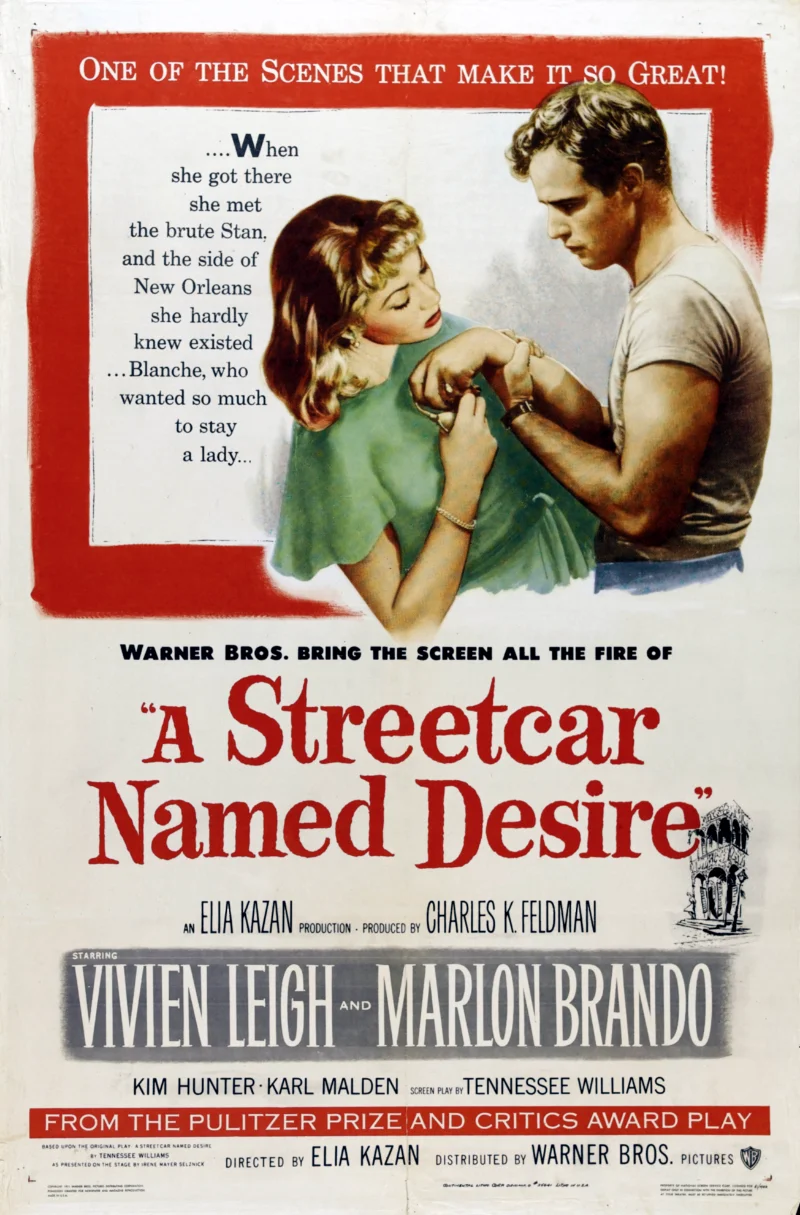
Elia Kazan's A Streetcar Named Desire, released in 1951, stands as a pivotal work in the annals of American cinema, particularly as it reflects the tensions of post-war America. Adapted from Tennessee Williams' renowned play, the film encapsulates the era's clash between illusion and reality, exploring the fragility of human desire amidst societal decay. Kazan, renowned for his intense character studies and his ability to evoke powerful performances, brings to life the haunting journey of Blanche DuBois, whose tragic descent into madness is both gripping and deeply poignant. This film marks a significant point within Kazan's oeuvre, wherein he effectively melds the psychological depth of individual characters with broader social commentaries.
The critical consensus surrounding A Streetcar Named Desire underscores its exploration of desire as a driving force that shapes human interaction and personal identity. Blanche's arrival in New Orleans symbolizes a confrontation between the genteel decaying South and the raw, unrefined vitality of New Orleans life, personified through her sister Stella and brother-in-law Stanley. The layers of illusion that Blanche constructs in her attempts to shield herself from the harsh realities of life ultimately lead to her tragic unraveling. Through Blanche, the film intricately examines the line between sanity and madness, revealing how despair can distort one’s perception of reality and contribute to a deeper mental illness.
Critics have consistently lauded the film for its gripping and intense narrative, which portrays the complexity of human emotions against a backdrop of societal expectations and personal trauma. The film's visual composition complements its thematic concerns; the use of shadows and lighting underscores the internal conflicts of the characters while enhancing the overall sense of tragedy. The performances, especially those of Vivien Leigh as Blanche and Marlon Brando as Stanley, are often cited as some of the most compelling in film history, bringing to life the raw intensity of Williams' characters with a depth that continues to resonate with audiences.
The tragic arc of Blanche's story encapsulates a universal theme of longing and loss, making A Streetcar Named Desire not only a cinematic masterpiece but also a profound exploration of human vulnerability. Critics highlight how the film addresses the dangers of living in a world of illusions, as Blanche’s refusal to confront the reality of her life leads to her inevitable downfall. The film serves as a reminder of the delicate balance between desire and reality and the mental toll that can arise when this balance is disrupted.
In conclusion, Elia Kazan's A Streetcar Named Desire remains an essential entry in the pantheon of classic American cinema. Its rich thematic explorations resonate with audiences as they navigate their own experiences of desire, illusion, and mental anguish. Kazan's direction, combined with Williams' incisive writing, creates a timeless piece that not only entertains but also challenges viewers to reflect on the interplay of aspiration and despair that defines the human experience.