Career Overview
Elia Kazan occupies a complex and monumental space in American cinema history. His trajectory is defined by a shift toward ferocious realism and deep psychological exploration. Rising through the ranks of the theater and early Hollywood system, Kazan brought an unprecedented level of raw emotional depth to the screen. His work often reflects the sociopolitical turmoil of his era, bridging the gap between classical Hollywood craftsmanship and the gritty immediacy of postwar cinema.
Kazan is widely recognized for importing a distinctive storytelling approach that melds personal moral dilemmas with broad societal critiques. Through works like On the Waterfront, he demonstrated a unique ability to elevate genre conventions into profound human tragedies. His background in theater and his eventual pivot toward brutal realism allowed him to reshape the American cinematic landscape, moving it away from polished artifice toward a cinema of wounded authenticity.
The historical position of Kazan is frequently debated in critical circles, often colored by his own real world political controversies, which critics parallel to George Orwell and his red list. However, strictly evaluating his directorial output reveals an artist who redefined the capabilities of the American film director. By channeling his own perspectives into stories of corruption and disenfranchisement, Kazan asserted a directorial voice that was characterized by a potent mix of pomposity and undeniable narrative genius.
Thematic Preoccupations
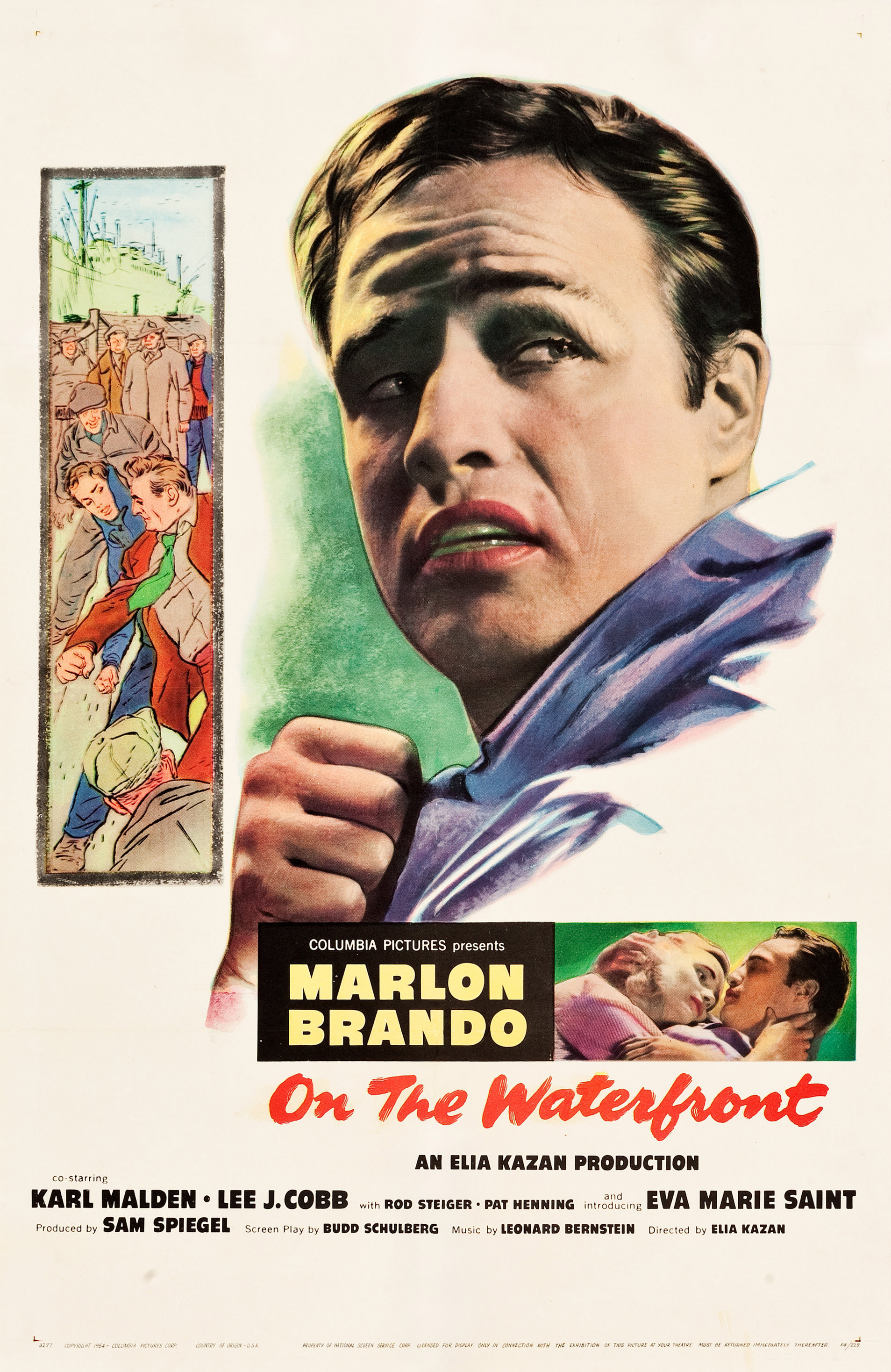
The cinema of Elia Kazan is relentlessly preoccupied with the agonizing process of moral redemption. He frequently constructs narratives around protagonists who are trapped within corrupt systems and forced to navigate brutal moral conflicts. In On the Waterfront, this obsession is manifested through the exploration of labor corruption and the systemic exploitation of the working class. Kazan zeroes in on the dock workers, utilizing their plight to stage a magnificent indictment of society at large.
A prevailing sense of moral struggle saturates his filmography. His characters are rarely traditional heroes. Instead, they are fractured individuals wrestling with their consciences. They exhibit a subtle complexity and carry the heavy burden of past mistakes. This focus on disenfranchised frustration allows Kazan to explore the raw emotional depth of individuals marginalized by both their environment and their own failings. His protagonists endure a catastrophic defeat, whether literal or spiritual, before embarking on a painful path toward self actualization.
Furthermore, Kazan continuously interrogates the intersection of personal integrity and institutional rot. The themes of contemporary issues and societal decay are not merely backdrops but active antagonists in his narratives. The ferocious nature of his storytelling demands that his wounded characters confront the ugly realities of their world. This results in a cinematic space where the quest for redemption is never guaranteed, but rather something that must be clawed back from the depths of profound corruption and despair.
Stylistic Signatures
Visually and structurally, Elia Kazan employs a style rooted in brutal realism and magnificent cinematography. He frequently eschews the glossy sheen of traditional studio pictures in favor of a distinct atmosphere that feels both documentary like and highly dramatic. His cinematic language draws heavy comparisons to Italian film realism, specifically the work of Vittorio De Sica in films such as Bicycle Thieves, as well as the gritty urban textures found in Jules Dassin and his film The Naked City. Kazan captures the bruised and wounded look of his environments with unwavering precision.
Kazan is a master of constructed narratives that maintain the force of a crime report. His pacing and editing rhythms are designed to reflect the internal chaos of his characters, raining down punches on the audience through raw passion and intensity. The visual composition often isolates protagonists within oppressive spaces, emphasizing their entrapment within corrupt systems. This subtle complexity in framing transforms ordinary locations into battlegrounds for moral conflict.
Additionally, the director utilizes sound and performance to elevate the ferocious realism of his films. He guides his actors toward delivering performances that are a subtle mess of half formed emotions, avoiding clean resolutions in favor of messy, authentic human behavior. This approach grounds the magnificent cinematography in a tangible reality, ensuring that the visual poetry never distracts from the brutal tale at the center of the frame. The resulting style is one of uncompromising intimacy and profound atmospheric tension.
Recurring Collaborators
While a definitive ensemble of recurring cast members across multiple films is not explicitly highlighted in the provided database, Kazan is renowned for establishing intense and transformative partnerships with his leading actors. The collaboration between the director and his performers is the cornerstone of his cinematic method. He possessed a unique ability to extract raw passion and wounded masculinity from his leads, fundamentally altering the standard for American screen acting.
In examining the critical reception of his work, specific performances stand out as monumental achievements of craft. Actors like Marlon Brando and Lee J. Cobb delivered career defining work under his meticulous direction. These collaborations resulted in characterizations that were praised for their bruised authenticity and subtle emotional layers. Kazan provided a space where actors could fully inhabit the disenfranchised frustration of their roles, transforming a conventional crime story into a profound psychological study.
The creative synergy between Kazan and his performers is directly responsible for the enduring power of his cinema. By fostering an environment that demanded absolute emotional commitment, he ensured that the brutal realism of his vision was matched by the internal reality of the actors. This rigorous collaborative process produced unforgettable cinematic figures, such as a failed boxer wrestling with his conscience, cementing the director as a peerless conductor of the human instrument.
Critical Standing
The critical reputation of Elia Kazan is marked by widespread reverence for his narrative precision and emotional ferocity. Contemporary and retrospective reviewers alike celebrate his work as a splendidly constructed indictment of societal ills. Publications such as Variety have praised his films for possessing the force of a crime report, while Empire Magazine highlights the manner in which he honored the craft of his performers. His cinema is frequently cited as a turning point in American film history.
Within critical discourse, Kazan is regularly situated alongside heavyweights of the medium. His distinctive storytelling and raw emotional depth draw frequent comparisons to landmark films like Mean Streets, Rocky, and Martin Scorsese and his masterpiece Raging Bull. Reviewers often note that the bruised and wounded look of his characters paved the way for the complex antiheroes of the New Hollywood era. Furthermore, his ability to merge the aesthetic of Italian film realism with American crime narratives continues to be a subject of intense academic and critical study.
Over time, his standing has evolved from a popular entertainer to a foundational auteur of psychological cinema. Critics from Slant Magazine have noted that his ultimate gift may have been a certain pomposity, a supreme confidence that allowed him to claim generic gangster stories and elevate them into universally resonant tragedies. Despite the passage of time, the disenfranchised frustration present in his work remains startlingly contemporary. Kazan retains his status as a ferocious and vital voice in world cinema, whose raw passion continues to captivate and challenge audiences today.