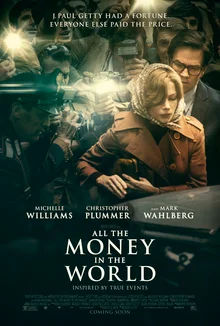
In the landscape of cinematic portrayals of crime and morality, Ridley Scott's All the Money in the World emerges as a fascinating entry. Released in 2017, this film does not merely recount the real-life kidnapping of John Paul Getty III but rather serves as an exploration of the darker aspects of wealth and familial ties. With a directorial tenacity that has defined much of Scott's work, this film presents a narrative steeped in tension while engaging with themes that resonate well beyond its historical context.
Critics have noted the film’s ability to weave together moments of dark humor and gripping drama, creating an engrossing tapestry of human experience in the face of crisis. Central to the narrative is the conflict between love and greed, a dichotomy fully realized in the relationship between Getty III's mother, Gail Harris, and his grandfather, oil tycoon J. Paul Getty. The film strikes a cautious balance between kidnapping suspense and family dynamics, painting a portrait of how wealth can simultaneously empower and entrap. Yet, amidst the thrilling sequences, some reviews highlight moments that feel calculated or manufactured, leading to accusations of manipulation that render certain emotional beats somewhat spiritless.
The film operates as a slow burn, gradually peeling back layers of character motivations and ethical dilemmas. Scott’s ability to construct visually arresting scenes is notable, yet the storytelling can sometimes feel constrained by a pace that, while methodical, risks losing momentum. This tension between the film’s visuals and its narrative drive has led to a consensus that, while All the Money in the World is a solid effort with moments of excel, it ultimately fades under the weight of expectation. Critics reflect on this by contrasting the film's thrilling sequences with stretches that lean into a more manufactured sentimentality, diluting the palpable human stakes being presented.
In the larger context of Ridley Scott's oeuvre, All the Money in the World showcases his tireless work ethic and his knack for taking on complex themes, reminiscent of previous entries in his filmography that tackle moral ambiguity and the human condition. His direction, while sometimes criticized for failing to integrate its darker themes with a more impactful emotional core, nevertheless emphasizes the crucial role of wealth as both a tether and a shackle. The film ultimately succeeds in prompting viewers to contemplate the intricate relationships formed under the shadow of economic power and the lengths individuals will go to protect, or exploit, it.
As a portrayal of the kidnapping that shook a family and a wealthy dynasty, All the Money in the World prompts reflection on a timeless question: what is the true cost of wealth? Through its raucous yet reflective examination of family dynamics, viewers are left to ponder the priorities that drive individuals apart and the chilling realization that sometimes, the most valuable things in life cannot be bought. As Scott navigates this treacherous terrain, one cannot help but admire the achievements of a filmmaker dedicated to examining the volatility of human relationships amidst the relentless pursuit of wealth.