Career Overview
Ridley Scott occupies a monolithic position in contemporary cinema, celebrated for his unparalleled capacity to construct immersive, meticulously detailed worlds. Emerging in the late 1970s, Scott quickly established himself as a visual maestro whose architectural background profoundly influenced his directorial approach. His early science fiction landmarks, Alien and Blade Runner, redefined the aesthetic parameters of their respective genres. By marrying austere minimalism with atmospheric density, he shifted the cinematic landscape toward darker, more textured visions of the future.
As his career progressed into the 21st century, Scott demonstrated a remarkable versatility that allowed him to pivot from futuristic dystopias to historical epics. The release of Gladiator in 2000 marked a significant resurgence for the sword and sandal genre, which had lain largely dormant for four decades. Through this ambitious cinematic endeavor, Scott proved capable of synthesizing grand narratives of empire with the commercial demands of modern blockbuster filmmaking. His ability to balance massive scale with conflicted character arcs solidified his reputation as a premier architect of the contemporary epic.
Today, Scott is recognized as a director of profound historical consequence. His filmography serves as a bridge between the classical Hollywood epics of yesteryear and the technologically driven blockbusters of the modern era. Critics routinely place his achievements alongside monumental works like Ben-Hur and Spartacus, acknowledging his role in enriching cinematic history. His legacy is defined by a relentless visual ambition and a chilling innovation that continues to shape the medium.
Thematic Preoccupations
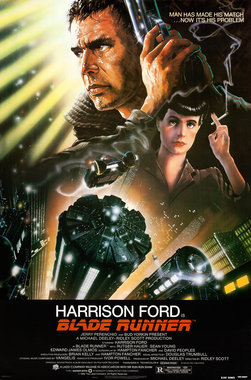
Across his filmography, Scott consistently interrogates the nature of humanity, creation, and survival within indifferent or hostile environments. In Blade Runner, this philosophical inquiry takes the form of humanity versus artificial intelligence. The narrative wrestles with man's obsession with creating a being equal to himself, exploring the tragic consequences when creations rebel against their makers. This future dystopia becomes a canvas for existential genre analysis, asking what it truly means to be human when artificial beings possess more visceral emotional depth than their human creators.
The perilous intersections of commerce and human life represent another recurring preoccupation. Corporate malfeasance operates as a silent, deadly antagonist in his early science fiction works. In Alien, the commercial spaceship Nostromo functions as an industrial trap where the crew is entirely expendable in the eyes of their corporate employers. This theme of systemic exploitation echoes the dystopian corporate overreach seen in the off-world colonies of Blade Runner, highlighting a deeply cynical view of institutional power and capitalist expansion.
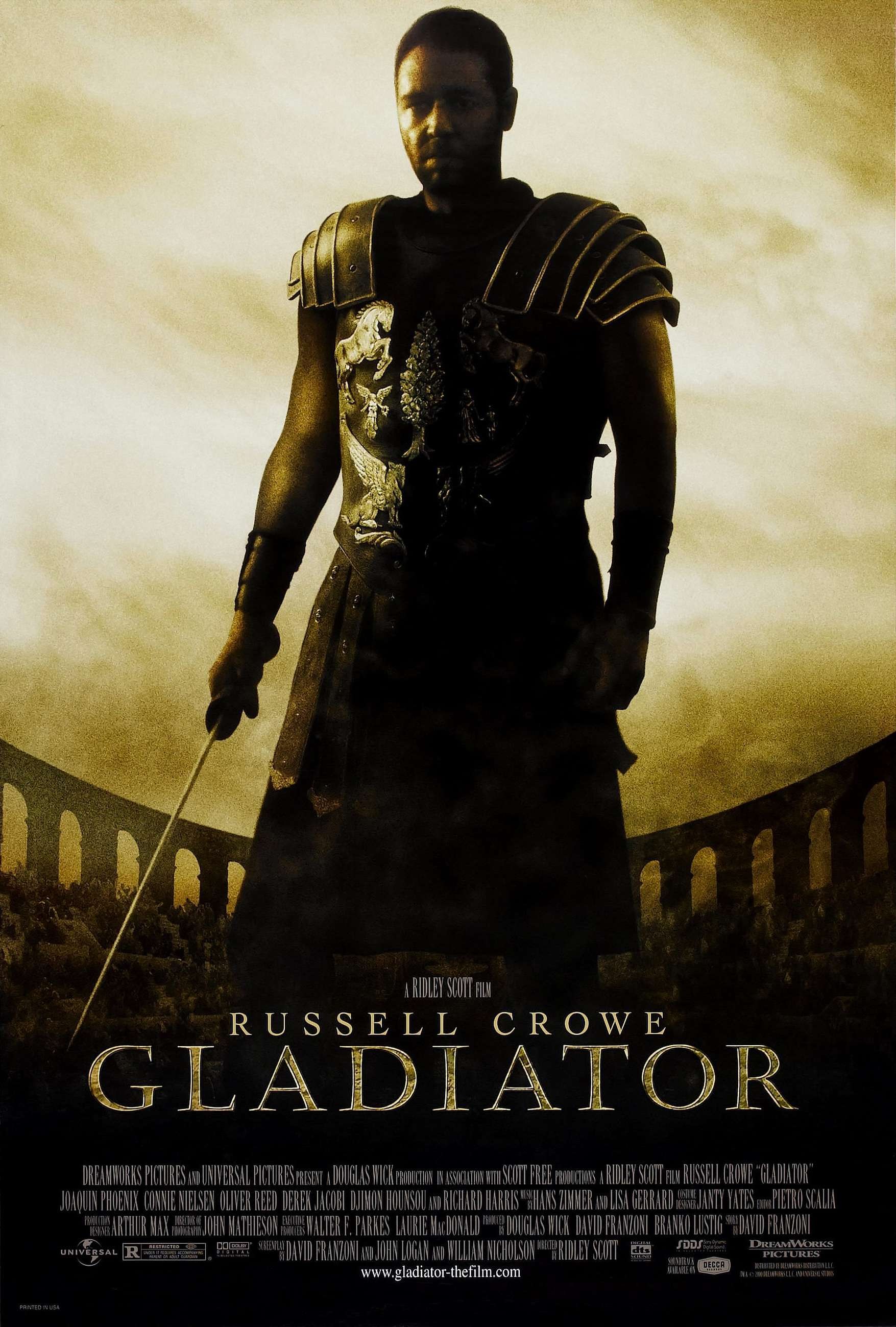
When stepping away from futuristic settings, Scott channels these systemic critiques into grand narratives of empire. Gladiator explores the corrupting influence of absolute power through intense themes of betrayal and revenge. The gladiatorial combat serves as a microcosm for the brutality of the Roman state, where concepts of honor and freedom are commodified for public entertainment. The protagonist must navigate a depressing undertone of political decay, battling both physical adversaries and the rot of the empire itself.
Ultimately, Scott frames his narratives around intense survival under extreme duress. Whether navigating the claustrophobic tension of a hunted spacecraft or enduring the gritty realism of the Colosseum, his protagonists are defined by their resilience in isolation. They are forced into visceral confrontations that test their moral fortitude, resulting in conflicted character arcs that eschew easy heroics in favor of dark and grim emotional realities.
Stylistic Signatures
The visual language of Ridley Scott is defined by a rigorous, atmospheric world-building that prioritizes immersive detail and textural grit. He frequently employs a brooding atmosphere characterized by high contrast lighting, atmospheric smoke, and a striking appropriation of noir elements. In Blade Runner, this translates into a half-cut vision of a futuristic Los Angeles, blending radiant image clarity with perpetual rain to invent the future-noir aesthetic. Similarly, the sweaty little world of the Nostromo in Alien utilizes austere minimalism to achieve a lethally contemporary sense of dread.
Mise-en-scène in a Scott film is often overwhelming in its scale and architectural complexity. He constructs environments that dwarf his characters, reinforcing their vulnerability and isolation. The magnificently staged performances and wide-screen visual impact of Gladiator exemplify this approach. Working closely with his cinematographers, Scott utilizes sweeping camera movements and a dusty, desaturated color palette to evoke the gritty and ferocious reality of antiquity. This visual spectacle never feels hollow, as the meticulous art direction grounds the epic storytelling in a tangible, lived-in reality.
In the editing room, Scott demonstrates a masterful command of pacing and tension. The impeccable pacing of Alien relies on a slow, steady build of claustrophobic tension before erupting into visceral horror experiences. Conversely, Gladiator utilizes rapid, kinetic editing during its action-packed sequences, bringing a visceral tension to the combat that redefined historical war cinema. Across all genres, his films are anchored by evocative, resonant soundscapes that enhance the dark themes and gripping emotional stakes of his narratives.
Recurring Collaborators
While Ridley Scott is often celebrated as a singular visionary, his ambitious cinematic endeavors rely heavily on recurring partnerships, particularly within his ensembles. His historical epics frequently feature a robust troupe of acclaimed character actors. The critical database highlights a dense concentration of talent in Gladiator, including Joaquin Phoenix, Connie Nielsen, Oliver Reed, Richard Harris, Derek Jacobi, and Djimon Hounsou. These actors provide the necessary gravitational weight to anchor Scott's massive sets, delivering intense performances that cut through the sweeping scale of his productions.
The most significant acting partnership detailed in this period is with Russell Crowe, who anchors the narrative with his brooding intensity. Crowe’s ability to embody conflicted character arcs perfectly aligns with Scott's penchant for gritty realism and dark themes. Together, they craft protagonists who are physically imposing yet emotionally shattered, offering audiences an impactful and enjoyable anchor amidst the visual spectacle. Their collaboration breathes life into the moral themes of revenge and honor that dominate the director's historical epics.
Behind the camera, Scott surrounds himself with technicians capable of executing his exacting visual demands. Cinematographer John Mathieson was instrumental in capturing the wide-screen beauty of Gladiator, balancing muddy, battle-scarred landscapes with the opulent gold of imperial Rome. Furthermore, Scott relies on elite special effects teams to realize his futuristic settings. In both Alien and Blade Runner, these technical collaborations were essential in rendering the chilling innovation of his practical and optical effects, resulting in science fiction horrors that refuse to become dated.
Critical Standing
The critical reception of Ridley Scott is marked by a fascinating evolution, often reflecting a tension between his undeniable visual genius and the narrative structures he employs. Upon their initial release, films like Blade Runner divided critics. Commentators like Roger Ebert recognized the film as a stunningly interesting visual achievement but argued that the special effects technology overwhelmed the story. However, critical discourse has drastically shifted over the decades. The film is now universally accepted as a classic, praised for shaping the aesthetic of future cinema and standing as one of the most ambitious, fully realized films of the 20th century.
Conversely, Alien achieved immediate recognition as a masterful blend of science fiction and horror. Critics lauded it as an artfully directed slasher movie and a sci-fi game changer. The film’s austere minimalism and perfectly calibrated tension have insulated it from the passage of time. Contemporary reviews frequently note that the film remains lethally contemporary, continuing to serve as the gold standard for visceral horror experiences and tense survival narratives.
When Scott returned to the historical epic with Gladiator, he faced a polarized but largely enthusiastic critical body. Some detractors, echoing Ebert's earlier skepticism of the director's aesthetic choices, found the art direction foolish and the story depressing. Yet, the overwhelming majority of critics and audiences hailed it as a magnificent epic that enriched the legacy of the genre. Reviewers frequently draw cinematic comparisons to Ben-Hur, Spartacus, and Quo Vadis, positioning Scott as the modern heir to the classical Hollywood tradition.
Ultimately, Scott occupies a secure and revered place within critical discourse. While occasionally critiqued for prioritizing style over narrative substance, his mastery of visual storytelling is universally acknowledged. Critics recognize his unparalleled ability to seamlessly merge genre thrills with sophisticated philosophical undertones. His willingness to tackle grand narratives of empire and complex dystopian futures ensures that his work retains immense replay value, cementing his legacy as a titan of cinematic history.