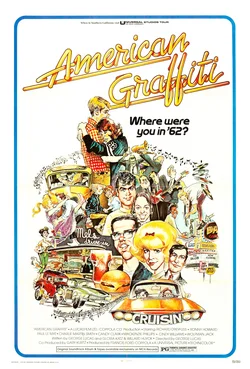
In the landscape of 1970s American cinema, American Graffiti stands out not only as a cinematic achievement but also as a cultural touchstone that poignantly captures the essence of youth and the bittersweet passage of time. Directed by George Lucas during a period marked by significant societal shifts, this film explores the lives of teenagers on the cusp of adulthood, navigating friendship and identity against the backdrop of a changing America. It is a reflective meditation on an era defined by both innocence and the encroachment of adult realities, laying the groundwork for Lucas’s later successes in blockbuster filmmaking while preserving an intimate, character-driven narrative.
Critics have embraced American Graffiti for its evocative portrayal of youth culture, lauding its ability to evoke nostalgia while simultaneously delving into themes of loss and change. The film presents a cross-section of small-town life where a single night unfolds with colorful and humorous escapades, illustrating the carefreeness of youth. However, these carefree moments are interspersed with an underlying melancholy as the characters confront the impending realities of adulthood. This duality creates a rich tapestry that resonates deeply with audiences, serving both as a celebration of youth and a poignant reminder of its fleeting nature.
The ensemble cast, featuring iconic performances from Richard Dreyfuss, Ron Howard, and Cindy Williams, embodies the spirit of the 1960s, capturing the complexity of friendships formed during critical life transitions. Each character is crafted with care, reflecting the hopes and fears that accompany coming-of-age experiences. Their interactions and the roads they travel symbolize not only a physical journey through a night of cruising but also an emotional journey towards self-discovery and acceptance in a rapidly evolving cultural landscape.
Moreover, American Graffiti resonates on multiple levels, serving as both a love letter to a bygone era and a stark reminder of the inevitable passage of time. The film’s vibrant soundtrack, rich with early rock and roll, further amplifies its nostalgic tone, inviting viewers to remember their own youth and the tumult of change. As joy and sorrow intermingle, the film captures that ineffable sense of longing for simpler times, which, despite being tinged with sadness, remains a universal experience shared across generations.
In conclusion, American Graffiti endures as a timeless exploration of youth, friendship, and the complexities of growing up. Its reflective nature invites audiences to consider the implications of change on personal and collective identity while celebrating the vibrancy of youth culture. As both a nostalgic journey and a contemplative look at lost innocence, the film holds a revered place in cinema history, marking George Lucas’s transition from an emerging filmmaker to a significant voice in Hollywood, paving the way for his later contributions to the art of storytelling.