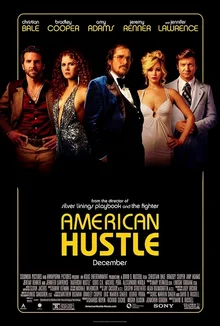
In the world of contemporary cinema, David O. Russell stands out for his ability to weave complex narratives with rich character studies, a trademark evident in American Hustle. Released in 2013, this film operates as both a thrilling caper and a pointed social commentary, capturing the spirit of the 1970s while exploring the darker corners of ambition and deception. Positioned within a genre that frequently examines the intersection of crime and morality, American Hustle perfectly encapsulates Russell's knack for blending humor with the absurdities of life, presenting a zany yet deeply resonant tale.
Critical consensus highlights the film's entertaining and infectious energy, driven by an all-star cast that delivers performances infused with charisma and nuance. The narrative unfolds through the lens of con artists and an FBI sting operation, creating a dynamic atmosphere filled with tension and humor. This neo-noir piece draws heavily from real-life events, set against the backdrop of the Carter years, an era marked by political corruption, economic malaise, and an unwavering pursuit of the American dream. As characters grapple with their identities within this morally ambiguous world, the film unravels themes of authenticity, ambition, and the lengths individuals will go to chase their desires.
More than a simple crime film, American Hustle navigates the vastly intricate concept of identity, the characters constantly reinventing themselves in a game of deception. Each twist and turn reveals the audacious nature of its players, showcasing how the allure of wealth and status can distort one's sense of self. Russell provides a brilliantly window-dressed narrative, balancing between farce and drama while leading viewers through an overdriven, coked-up landscape of liars and dreamers, each represented in a motley tapestry of greed and ambition.
The film’s cinematography, characterized by its period-perfect fashion and aesthetic, enhances its setting and narrative tone, immersing the audience in a world that feels both hyper-real and painfully overt. Critics have lauded it as an original piece that captures an anarchic spirit, and its structure offers both thrills and laughs, perhaps unsettlingly so, offering an almost historical reflection on a decade that was prone to excess and moral ambiguity. That combination of the entertaining and the thought-provoking ensures that American Hustle remains irresistibly watchable.
In terms of Russell's oeuvre, American Hustle serves as a continuation of his exploration of human relationships and flawed characters, building on the themes present in previous works while pushing the envelope further into the realm of genre-blending. As much a product of its time as it is a commentary on the phenomenon of the American hustle itself, the film invites conversation about both the allure and the dangers of ambition and identity in a rapidly changing world. Ultimately, American Hustle is not just about a crime; it reflects the many ways in which we all hustle to find our place in the world.