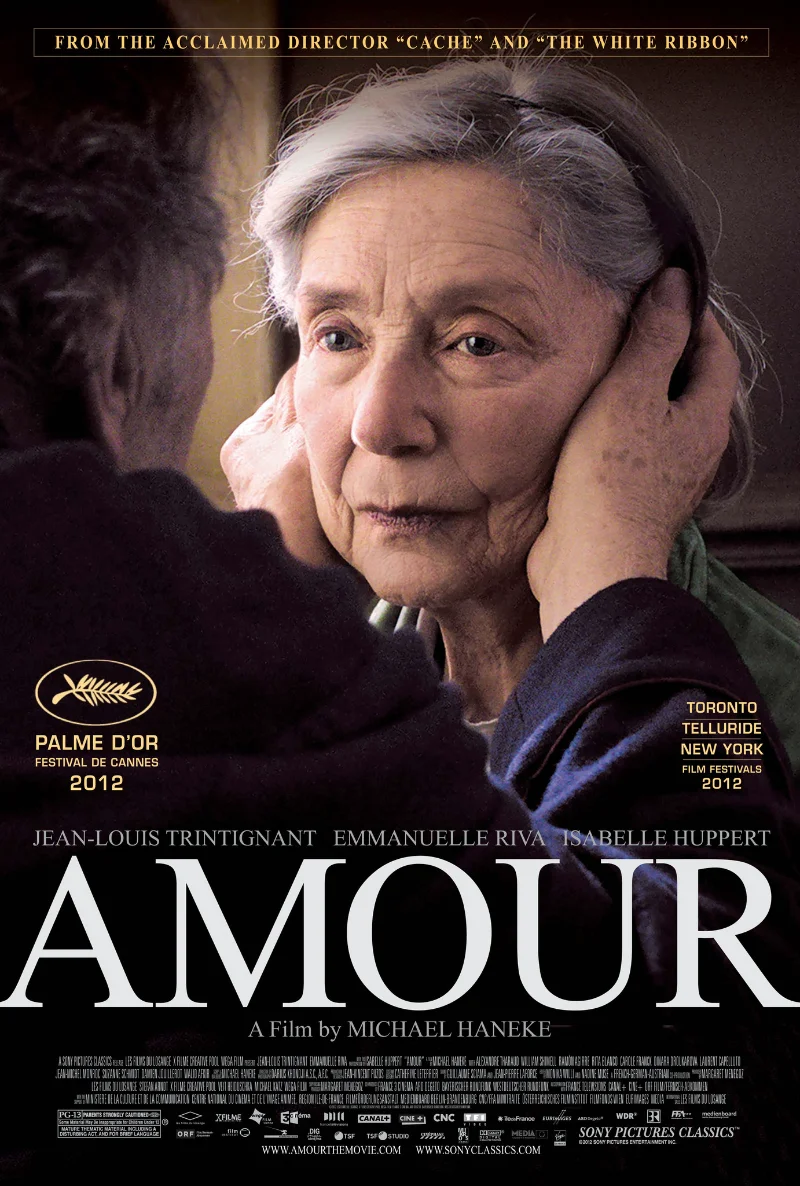
In Amour, Michael Haneke presents a poignant exploration of aging and the complexities of love, immersing viewers in the harrowing realities faced by elderly couples. Released in 2012, the film showcases Haneke's signature style, blending an uncompromising narrative approach with a rich emotional depth. Set against the backdrop of a refined Parisian existence, the story centers on Anne and Georges, a retired couple whose lives are irrevocably altered by the onset of dementia. This intimate portrayal of their struggles resonates deeply within the wider context of Haneke’s oeuvre, where themes of alienation and emotional distress frequently emerge, inviting audiences to confront uncomfortable truths about human existence.
Critics have lauded Amour as a breathtaking examination of intimacy and loss, describing it as both moving and devastating. The film’s narrative unfolds with a ruthless restraint that challenges viewers to grapple with the pain and helplessness accompanying aging. The unvarnished depiction of its characters' vulnerability evokes a raw emotional response, capturing the relentless ravages of time on the human body and spirit. Haneke's intelligent direction fosters an atmosphere that is at once unsentimental and deeply sensitive, forcing audiences to face the inherent misery and beauty of love in its twilight years.
The critical consensus surrounding Amour acknowledges its status as a cinematic triumph, often highlighting how it serves as an unsparing meditation on mortality. Many reviewers regard it as impossible to improve on, praising its authenticity and depth. The film's exploration of love's endurance in the face of debilitating illness raises important questions about relational responsibilities and the nature of true intimacy. Critics describe the viewing experience as a perfect storm of emotion that gives rise to moments of profound insight into the human condition, rendering the audience both a spectator and a participant in the unfolding tragedy.
Many have noted that while Amour is marked by the harrowing themes of loss and decline, it is also imbued with a sense of beauty that permeates the mundane. The organic performances of Jean-Louis Trintignant and Emmanuelle Riva evoke an authentic kinship that anchors the film's emotional landscapes, allowing viewers to connect with their experiences deeply. Haneke’s use of silence, juxtaposed with moments of unavoidable passion, contrasts with the despair of his characters' circumstances. This paradox not only amplifies the emotional weight but also reflects the indomitable spirit of a love that persists despite the challenges posed by dementia and aging.
Ultimately, Amour stands as a testament to Haneke’s ability to explore uncomfortable themes with grace and unwavering focus. The film invites a ruminative response to the complexities of aging and the intimacy manifested in the face of divergence. In capturing the heart-wrenching yet profound journey of its protagonists, Amour forces us to confront our own fears about aging and loss while celebrating the strength of human connection at its most poignant.