Career Overview
Michael Haneke has cemented his position as a titan of European cinema, revered for his clinical and unflinching examination of the human condition. While his earlier works often explored systemic violence and societal alienation, his later career demonstrates an unexpected but profoundly effective pivot toward deeply emotional subject matter. This evolution culminates in a perfect storm of cinematic mastery, where his icy and immaculate directorial persona merges with intimate domestic tragedies. The career arc of Haneke reveals a filmmaker who refuses to comfort his audience, opting instead to confront them with the unavoidable realities of existence.
His position in cinema history is characterized by an uncompromising storytelling ethos, distinguishing him from directors who rely on sentimentalism or melodrama. By treating the miseries of mortality as a rich subject for dramatic explication, Haneke forces viewers to confront the terrifying truths of aging and physical deterioration. His legacy is one of rigorous intellectual inquiry disguised as intimate character study, challenging audiences to witness the ravages of time without the safety net of traditional narrative catharsis.
Through a sensitive but unsentimental reflection on existence, Haneke bridges the gap between cold analytical detachment and breathtaking emotional impact. He remains an essential figure for cinephiles and scholars analyzing the intersection of psychological realism and formalist restraint. As a veteran auteur, his unwavering commitment to portraying the hardest part of advancing years solidifies his reputation as a master of both profound philosophical inquiry and devastating human observation.
Thematic Preoccupations
The cinema of Michael Haneke is defined by an intelligent examination of life, particularly focusing on the complexity of intimacy and the inevitable decay of the human form. A recurring preoccupation across his work, especially vividly realized in Amour, is the emotional exploration of aging and the devastating insights it brings. Haneke approaches the infamous truth of aging not as a medical tragedy but as a profound existential crisis, testing the deep bonds of love against the relentless ravages of physical deterioration. His films ask what happens when a lifelong partnership is forced to navigate the profound challenges of mortality and helplessness.
Haneke views the miseries of mortality as a rich subject for dramatic explication. He frequently explores how characters helplessly watch as their loved ones slowly succumb to dementia and physical decline. This narrative on love and loss draws a stark parallel to the observations of Marcel Proust regarding mortality, presenting the end of life as a profound mystery where actors must finally lay down a role they have played for an entire lifetime. The director confronts the viewer with the terrifying realization that love, no matter how enduring, cannot halt the progression of biological decay.
Furthermore, Haneke displays a fascination with the interplay of ruthless restraint and unavoidable passion. His thematic architecture often intends to dupe the audience, drawing them into a space of domestic tranquility only to feed on their pain and suffering as the reality of the situation unfolds. By stripping away romantic illusions, he crafts an unsentimental reflection on existence that insists the hardest part of life is bearing witness to the suffering of others. Ultimately, his thematic landscape is an uncompromising exploration of the human soul laid bare by the unrelenting forces of time.
Stylistic Signatures
Michael Haneke employs a visual language characterized by ruthless restraint, establishing a clinical distance that paradoxically heightens the breathtaking emotional impact of his narratives. His cinematographic approach is icy and immaculate, utilizing static long takes and deep focus to observe his characters with an almost scientific detachment. This method refuses to shrink from depicting the inevitable horrors of physical deterioration, forcing the viewer to confront the stark realities of the scene without the manipulative comfort of rapid editing or expressive camera movements.
The mise-en-scene in a Haneke film is meticulously constructed to emphasize the isolation and claustrophobia of his subjects. In films like Amour, the domestic space becomes both a sanctuary and a prison, echoing the inescapable physical confines of a body failing to dementia or a debilitating stroke. His framing is deliberately restrictive, mirroring the narrowing world of his elderly protagonists. Every prop and shadow is carefully calibrated to support a moving, terrifying, and uncompromising drama of extraordinary intimacy and intelligence.
Sonically, Haneke is famous for his asceticism, often eschewing non-diegetic music to ground his films in a stark and unrelenting reality. The absence of a traditional score removes any emotional signposts, leaving the audience vulnerable to the raw and devastating insights generated by the ambient sounds of suffering and silence. When music does appear, it is strictly diegetic, deeply tied to the characters (such as retired music teachers) and serves as a poignant reminder of the beauty that is slipping away. This sonic minimalism is a crucial element of his sensitive portrayal of complex themes, ensuring that the audience experiences the narrative with pure unmediated intensity.
Recurring Collaborators
While Michael Haneke is often viewed as a singular auteur with a highly controlled vision, his reliance on immensely talented performers is crucial to the execution of his demanding narratives. Our database notes a lack of frequently recurring cast members across multiple films, yet his method of collaboration is consistently defined by an intense and trusting relationship with veteran actors. He requires performers who can endure the rigorous demands of his unsentimental reflection on existence, actors capable of delivering breathtaking performances without resorting to melodramatic excess.
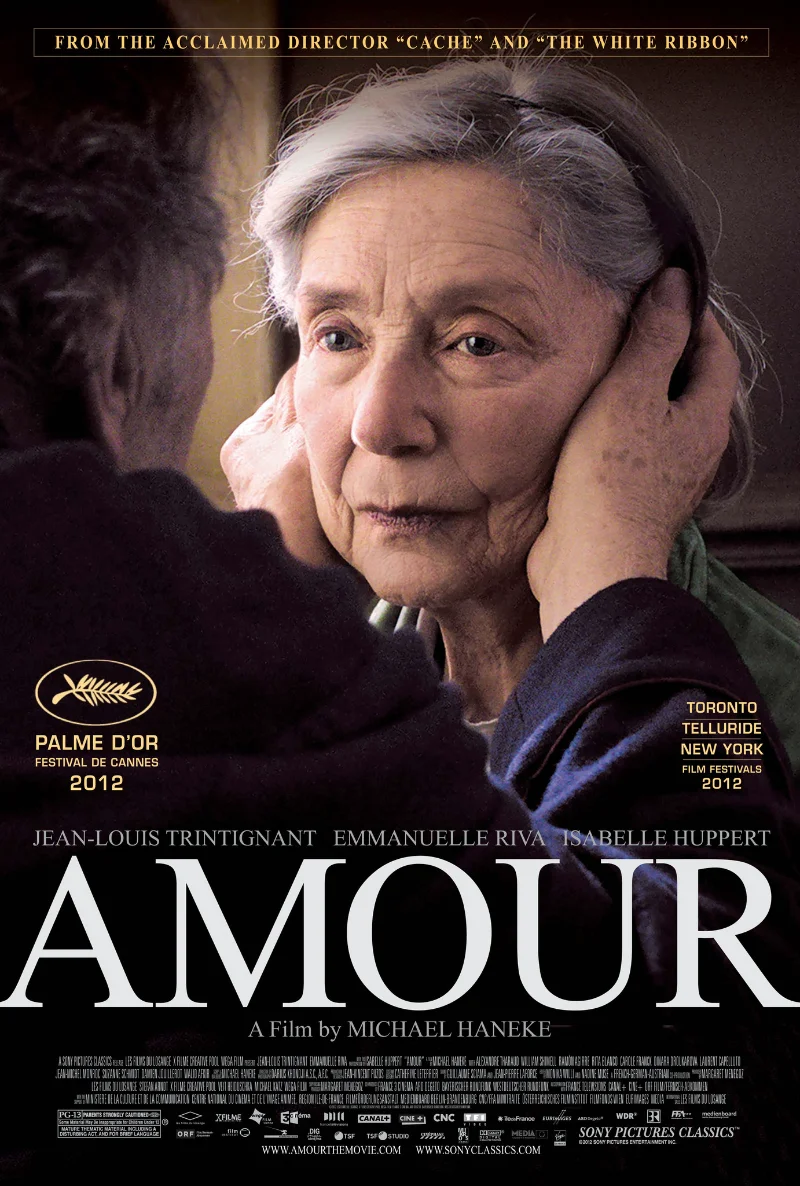
In Amour, this collaborative dynamic is perfectly exemplified by his work with iconic French actors Jean-Louis Trintignant and Emmanuelle Riva. Haneke demands a sensitive and unsentimental performance from his leads, stripping away their vanity to expose the raw vulnerability beneath. Trintignant and Riva provide extraordinary intimacy and intelligence, embodying the roles of Georges and Anne with a quiet devastation that anchors the icy directorial style. Their ability to project unavoidable passion for life while depicting extreme physical deterioration is essential to the thematic success of the work.
The synergy between Haneke and his actors highlights a crucial aspect of his creative partnerships (the willingness to dive into deeply emotional subject matter under conditions of ruthless restraint). By casting established and venerable talents, he leverages their cinematic legacy, adding a meta-textual layer to the depiction of aging and loss. The director provides an immaculate framework, but it is the courageous and unvarnished contributions of his actors that breathe life into his perfect storm of a motion picture, ultimately rendering his vision completely devastating.
Critical Standing
The critical reception of Michael Haneke has evolved from viewing him as a clinical cinematic provocateur to recognizing him as a master of the form capable of profound empathy. Early in his career, critics often debated the punishing nature of his films, but works like Amour have universally solidified his critical standing as an essential and uncompromising storyteller. Reviewers frequently describe his later output as a perfect storm of cinematic elements, praising his unexpected pivot toward deeply emotional subject matter. His ability to maintain his icy and immaculate directorial style while tackling the infamous truth of aging has garnered widespread critical acclaim.
Within critical discourse, Haneke is celebrated for his rigorous intellectual approach and his refusal to patronize his audience. Publications champion his films as moving, terrifying, and uncompromising dramas of extraordinary intimacy and intelligence. Critics consistently highlight his unique interplay of ruthless restraint and unavoidable passion, noting that his refusal to shrink from depicting the inevitable horrors of physical deterioration creates a truly devastating viewing experience. He is often compared to literary giants, with reviewers drawing parallels to the reflections of Proust on mortality and the mystery of the end of life.
Today, Haneke occupies a rare and elevated space in the pantheon of global cinema. He is revered by film students, art critics, and cinephiles alike for his unsentimental reflection on existence and his sensitive portrayal of complex themes. While some critics note that his films intend to dupe us and feed on our own pain, this is largely interpreted as a testament to his formidable command over the psychological reality of the medium. Ultimately, his reputation rests on his unparalleled ability to transform the miseries of our own mortality into breathtaking and profoundly affecting art.