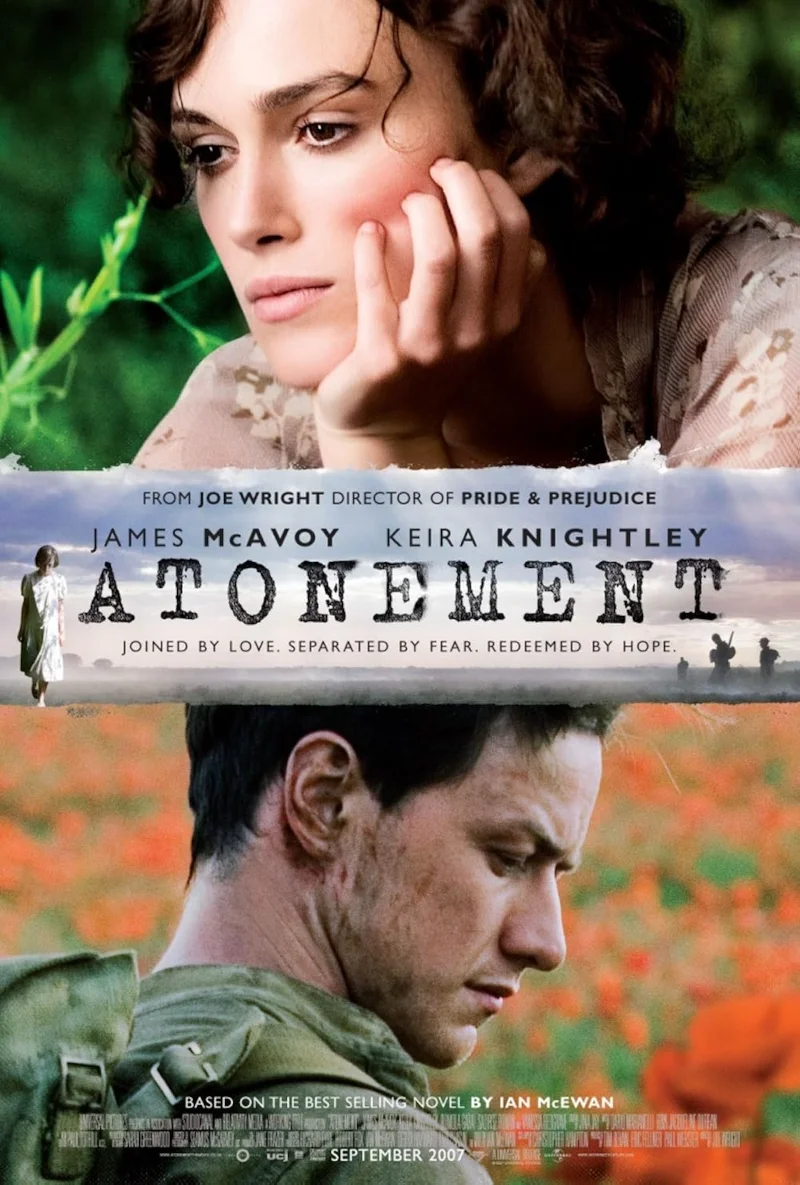
Joe Wright's Atonement (2007) stands as a defining moment in contemporary cinematic history, intricately weaving together the rich tapestry of love, betrayal, and the profound consequences of war. Adapted from Ian McEwan’s acclaimed novel, the film marks a significant entry in Wright’s oeuvre, showcasing his unique ability to marry visual storytelling with emotional depth. Atonement is not merely a tale of romantic entanglement but a nuanced exploration of class divisions, misunderstandings, and the tragic interplay between fiction and reality. This ambitious narrative unfolds against the backdrop of World War II, magnifying the stakes of personal and collective trauma as relationships fracture and histories intertwine in unexpected ways.
Critical consensus surrounding Atonement highlights its epic ambition and luxurious visual aesthetics, capturing both the romantic sensibilities and the harsh realities of its time. The film's lush cinematography and meticulous production design create a visceral world where class differences loom large, illustrating the chasm between the lives of the affluent Tallis family and their working-class counterparts. Reviewers have praised the film's confident direction and assured performances, particularly noting the tragic arc shaped by misunderstandings that lead to irreversible consequences for its characters. Such themes render the film deeply moving, leaving audiences to ponder the potency of memory and the dual nature of storytelling, where fiction can both elevate and destroy.
At its core, Atonement meditates on love and betrayal through its protagonists, whose fates are dictated by a single, grave misunderstanding. This tragic misjudgment sets off a cascade of events that reverberates throughout the narrative, underscoring the film's exploration of guilt and redemption. Critics often describe the film as “gorgeous” and “swooning,” capturing the intoxicating feel of the romance that, through the lens of conflict, becomes ever more delicate and fragile. This interplay between romantic ideals and the brutal realities of war adds a layer of complexity, inviting viewers to reflect on the transient nature of love amid chaos and upheaval.
Moreover, the adaptation challenges faced in translating McEwan’s multilayered prose to screen are a subtle yet interesting topic in critical discussions of Atonement. Wright’s film does not shy away from presenting emotional rawness alongside visual grandeur, creating an emotional landscape that feels both luxurious and stilted, reflective of the characters' inner turmoil. The deliberate pacing grants the viewer a languorous experience, allowing space for contemplation and emotional investment in the unfolding tragedy. It is within these layers that Atonement transcends a mere romantic drama, becoming a poignant commentary on the human condition, with all its frailties and complexities.
Unanimous acclaim surrounds Wright’s assured vision, positioning Atonement not just as a mere adaptation, but as a landmark work that speaks to the universal themes of love, loss, and the scars left by war. The film invites viewers on a journey through time, revealing how personal narratives intertwine with historical contexts. Ultimately, Atonement remains a worthwhile introspection on the power of fiction, to deceive, to heal, and to resonate through the ages. It is a film that lingers, provoking discussion long after the final frame, a testament to Wright's masterful storytelling and visual artistry.