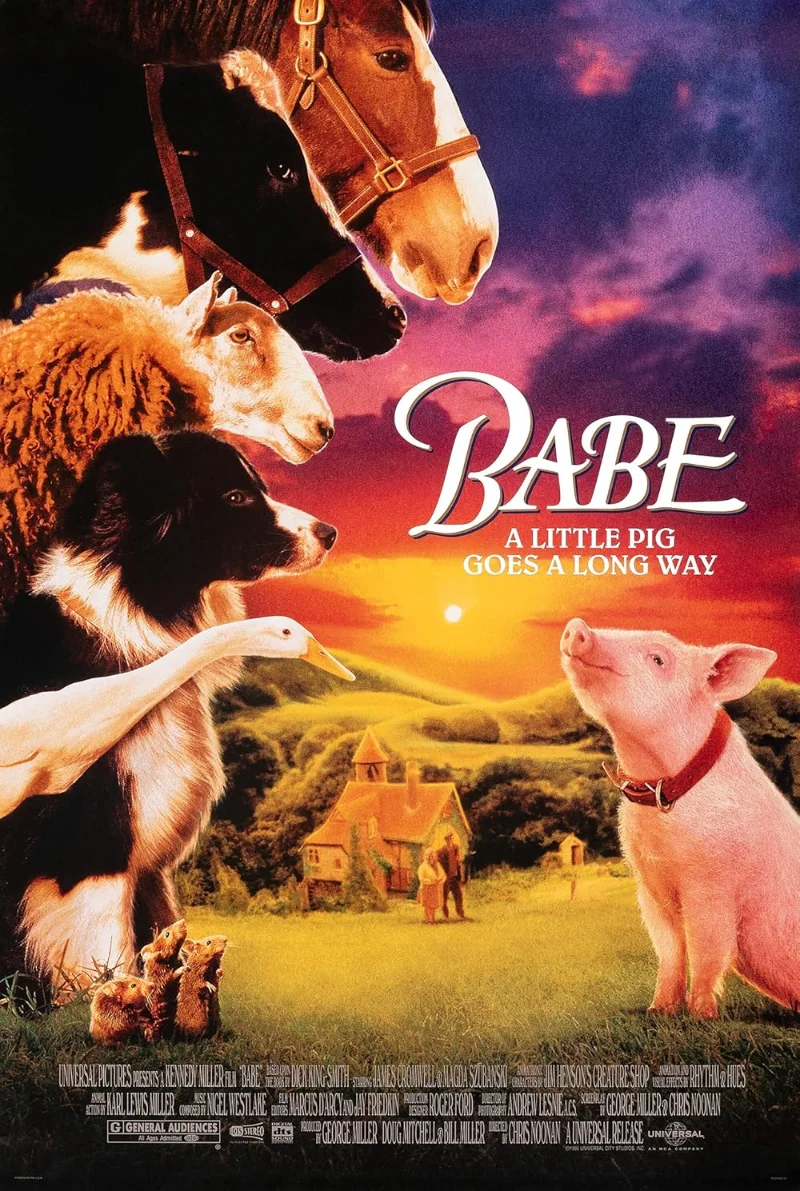
Chris Noonan's Babe, released in 1995, holds a distinctive place in cinema history as an innovative work that transcends the traditional boundaries of family films. The film stands out not only for its charming narrative and heartwarming visuals but also for its profound exploration of themes such as animal intelligence, self-discovery, and the challenge of overcoming societal expectations. Positioned within a decade that saw a surge in animated and puppetry-driven films, Babe blends live-action with innovative animatronics, creating a cinematic experience that remains impressive more than two decades later.
The plot centers around Babe, a piglet who discovers his unique abilities and aspires to be a sheepdog, despite the skepticism of those around him. Critics widely applaud the film for its intelligent portrayal of animal characters that possess their own emotional depth and intelligence. This emphasis on animal perspective not only engages the younger demographic but also resonates with adult audiences, promoting reflections on individuality and acceptance. The charming farm setting, accompanied by a memorable score, enhances the heartwarming atmosphere that defines Babe, making it an enduring classic for families.
Central to the critical consensus is the film's message of self-discovery and the power of determination. Babe’s journey from an uncertain piglet to a confident and capable pig exemplifies the theme of overcoming expectations, whether imposed by societal norms or personal insecurities. The narrative dares to challenge traditional roles within its animal cast, indicating that anyone, regardless of perceived limitations, can find their unique voice and purpose. This resonates deeply in contemporary discussions about identity and self-worth, making the film relevant across generations.
Moreover, the film's innovative use of technology and storytelling has left a lasting impact on both animation and live-action filmmaking. The seamless integration of visual effects with real-life performances invites viewers into a whimsical world where the ordinary becomes extraordinary. Critics have hailed the film's use of humor and heartfelt moments as a template for future family films, allowing for a rich, multi-dimensional viewing experience. This inventive approach places Babe at the forefront of cinema's ability to tell complex stories in an accessible manner.
In conclusion, Babe is more than just a charming tale about a pig with dreams; it serves as a profound commentary on the essence of self-identity, intelligence, and challenging expectations. Chris Noonan's innovative directorial vision, combined with a heartwarming narrative and intelligent characterizations, ensures that Babe remains an influential piece in the landscapes of both children’s cinema and broader film history.