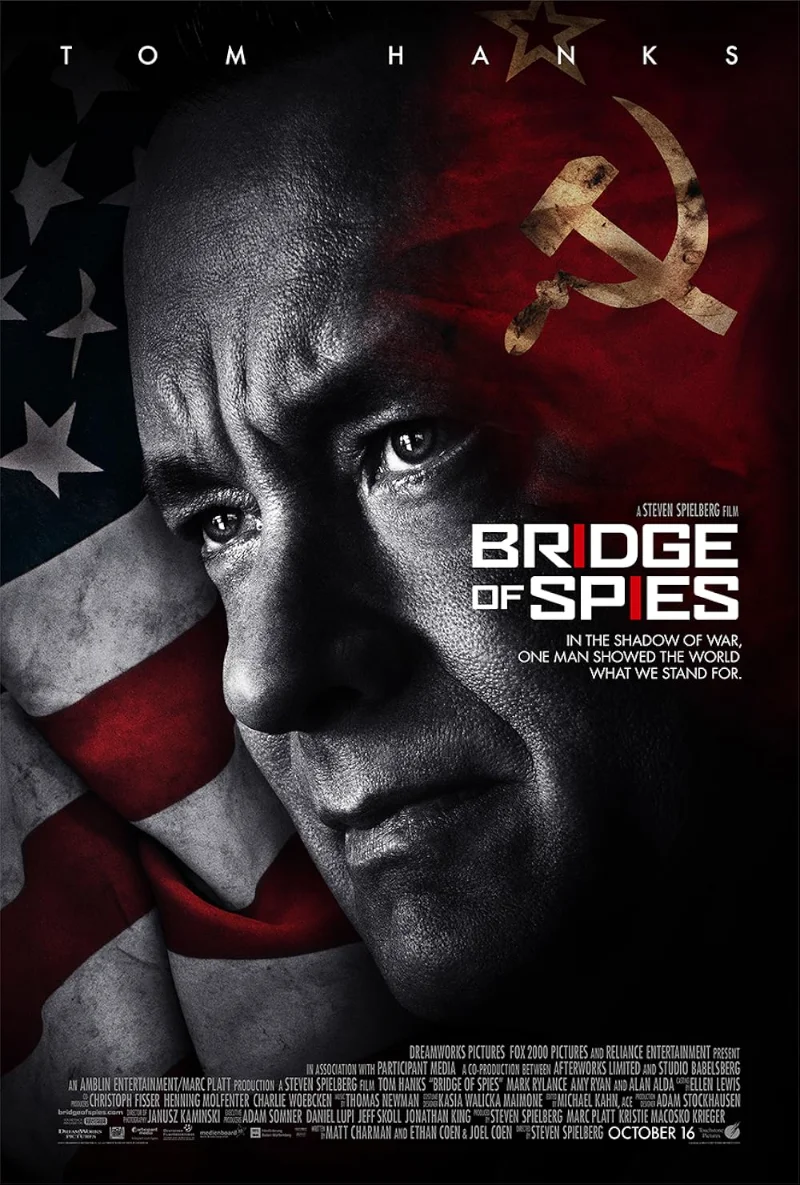
In the pantheon of great American cinema, few filmmakers stand as tall as Steven Spielberg, whose work has consistently explored the complexities of the human experience. His 2015 film Bridge of Spies becomes a poignant addition to his oeuvre, deftly intertwining historical context with personal moral dilemmas. Set against the backdrop of the Cold War, the film not only dramatizes the tense political climate of the era but also delves deep into issues of justice, integrity, and the nature of diplomacy. Spielberg's ability to craft emotionally resonant narratives makes Bridge of Spies a striking testament to the power of cinema in illuminating the human condition.
Critically acclaimed and meticulously crafted, Bridge of Spies captures the essence of a divided world marked by espionage and political intrigue. With a gripping screenplay by Matt Charman and the Coen brothers, the film follows the true story of lawyer James B. Donovan, as he navigates the morally complex waters of international diplomacy. Amid the tension and fear that defined the Cold War, Donovan's journey is portrayed as an exploration of moral courage, showcasing how one man's commitment to justice can illuminate the darkest of times. The film’s historical accuracy lends it a compelling weight, making the narrative not only engaging but also a profound examination of patriotism and ethical responsibility.
The performances in Bridge of Spies further elevate its exploration of humanity amidst conflict. Tom Hanks, portraying Donovan, embodies a steadfast resolve that resonates with audiences, creating a character deeply concerned with principles over popularity. His interactions with both American and Soviet representatives provide a microcosm of the larger geopolitical struggles, reflecting the film's thematic focus on the interplay between personal and political realms. Mark Rylance's portrayal of Soviet spy Rudolf Abel adds layers of complexity and humanity, challenging viewers to reconsider the nature of antagonism and alliance. This rich character work contributes to the film’s emotionally resonant storytelling, engaging viewers in a thoughtful discourse about the nature of justice in an unjust world.
Critics have lauded Bridge of Spies not only for its well-acted performances and thoughtful screenplay but also for its tension-filled direction that evokes the palpable fears of its historical context. Spielberg's craftsmanship is evident in every frame, blending suspense with a contemplative tone that invites the audience to reflect on the associated moral conflicts. This meticulously crafted film stands as a testament to the director’s enduring ability to comment on contemporary issues through the lens of history, highlighting the interconnectedness of past and present.
In conclusion, Bridge of Spies emerges as a timely and timeless narrative, urging audiences to grapple with the essence of humanity and moral integrity amidst political strife. It serves as a reminder that in times of uncertainty, it is the courage to stand for justice and dignity that ultimately defines us. As a significant entry in Spielberg's filmography, it encapsulates the director’s mastery of character-driven storytelling while shedding light on the challenging realities of the Cold War era, making it a compelling watch for both history buffs and general audiences alike.