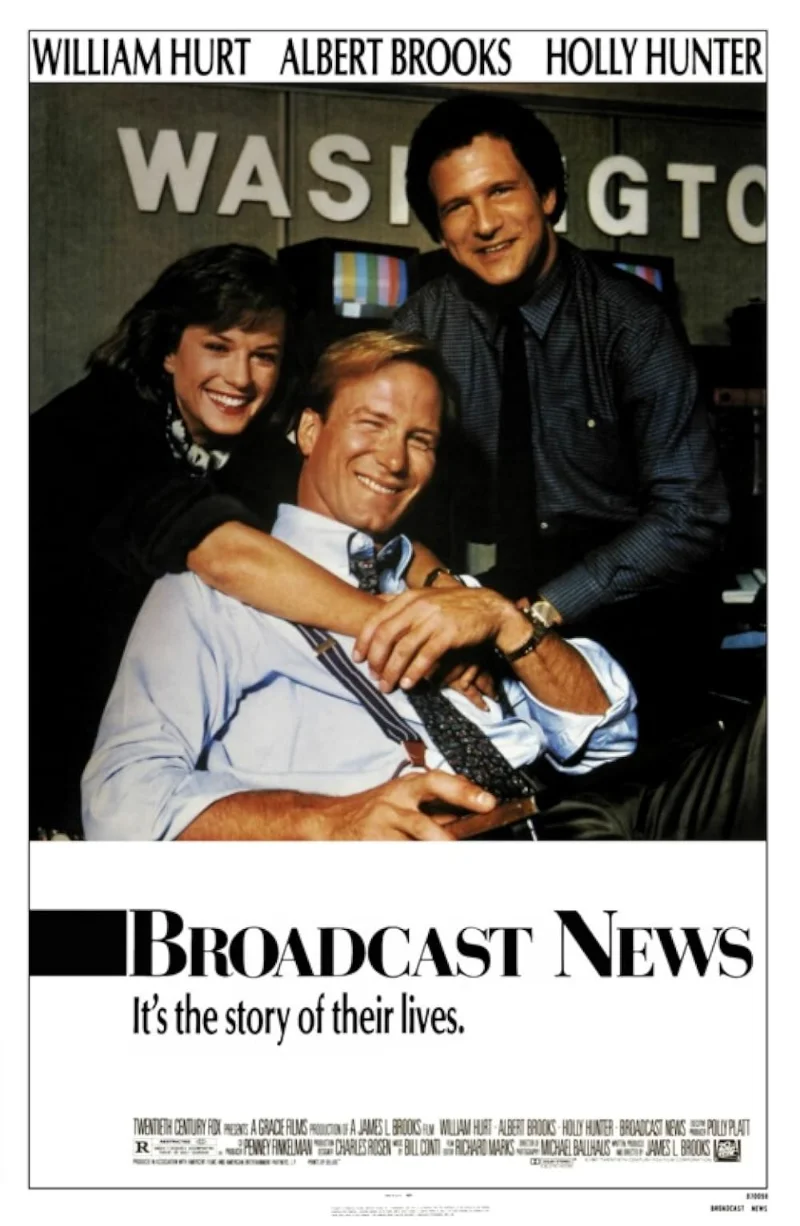
James L. Brooks' Broadcast News stands out in the landscape of late 1980s cinema, a sharp and insightful examination of the television news industry during a critical era of technological change and rampant sensationalism. Known for his adept character-driven narratives, Brooks crafts a film that blends humor and drama while probing the complexities of modern journalism. Released in 1987, Broadcast News not only reflects the anxieties surrounding media ethics and professional integrity but also prefigures the current challenges facing the industry, making it a prescient and timeless piece of filmmaking.
Critics have consistently praised Broadcast News for its intelligent and engaging script, marked by witty dialogue and keen social observations. The film navigates the intricate dynamics of workplace rivalry, particularly through the relationships developed among the three central characters: Jane, played by Holly Hunter, who wrestles with the demands of her career; Tom, portrayed by William Hurt, the charming if somewhat superficial anchor; and Aaron, played by Albert Brooks, the dedicated but insecure reporter. This triangle encapsulates the conflict between professional ambition and personal fulfillment, each character representing a different path in the often ruthless landscape of broadcast journalism.
At its core, Broadcast News is a sharp satire of the television industry, effectively critiquing the increasingly blurred lines between news and entertainment. Brooks exposes the media's manipulation of facts and emotions, where the pursuit of ratings often overshadows ethical considerations. The film cleverly underscores the absurdities of a culture increasingly obsessed with sensationalism, leaving audiences to ponder the implications of such a shift. With its thoughtful handling of media ethics, Broadcast News resonates with viewers, transcending its immediate context to speak to ongoing challenges in the news industry.
In exploring themes of gender roles, the film highlights the challenges female journalists face in a predominantly male sphere, providing a nuanced portrayal of the pressures exerted on women in high-stakes environments. Jane's character is emblematic of the struggle to assert herself in a profession rife with biases while also managing her personal life and romantic entanglements. The complex romantic relationships serve as a microcosm for the broader conflict between career and personal life, illustrating how ambition can complicate human connections and lead to difficult choices.
Ultimately, Broadcast News captures the essence of an era on the brink of transformation while delivering a timeless message about integrity in journalism. It remains a relevant and entertaining reflection on the media's role in society, marked by Brooks' signature blend of humor and insightfulness. The film deserves its place in cinematic history not only as a critique of the media but as a testament to the enduring complexities of human relationships in the face of ambition and ethical dilemmas.