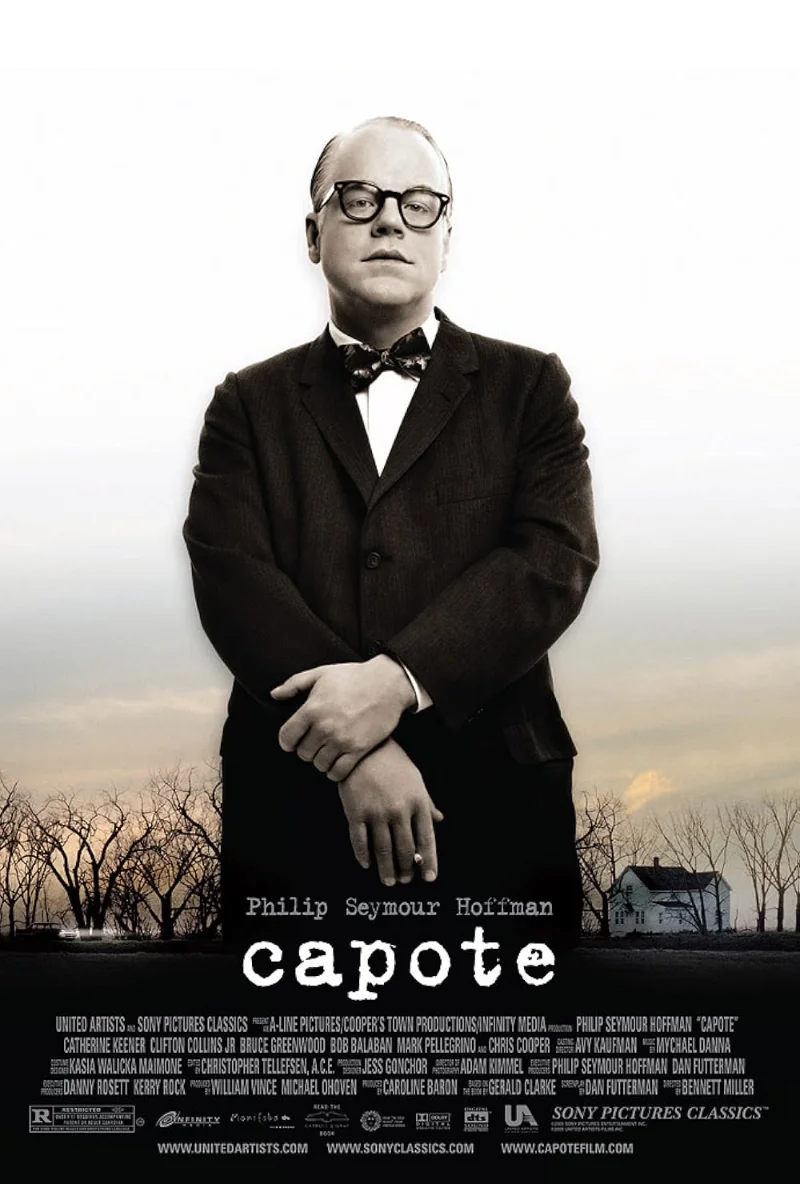
Capote (2005), directed by Bennett Miller, stands as a testament to the intricate relationship between art and morality within the landscape of biographical cinema. This film not only delves into the life of Truman Capote, focusing on his obsessive quest to write In Cold Blood, but also explores the profound moral conflicts and sacrifices that accompany such artistic pursuits. In the larger context of Miller's work, which often grapples with themes of human struggle and ethical ambiguity, Capote serves as a poignant entry that combines gripping storytelling with a psychological depth that resonates with audiences.
Critics have noted the film's capacity to emotionally devastate viewers, revealing Capote as both a sympathetic figure and an unsympathetic one. The exploration of moral ambiguity is skillfully woven into the narrative, as Capote's personal relationships and artistic integrity come into direct conflict with his creative ambitions. Through the lens of his tumultuous interactions with the murderers he befriends, the film raises questions about artistic exploitation and the emotional toll of personal sacrifice. Capote’s struggle, caught between his affection for the criminals he interviews and the grim reality they embody, highlights an artist’s internal battle when faced with the grotesque elements of human nature.
The performances, particularly that of Philip Seymour Hoffman, who garnered widespread acclaim for his portrayal of Capote, contribute significantly to the film’s exploration of its central themes. Hoffman embodies a character filled with uncommon strength yet plagued by vulnerabilities, creating a powerful and involving portrayal that resonates on both emotional and intellectual levels. Critics have characterized this depiction as magnificent and haunting, reinforcing the notion that Capote is not merely a biopic but a deeper examination of the man behind the art and the consequently devastating consequences of that art.
Despite the film's successes, some critiques point to moments where narrative pacing could feel dull or skimpy, potentially detracting from its larger narrative ambitions. These aspects could be viewed as a reflection of the challenges inherent in biopics, which often attempt to condense complex lives into a focused arc. Yet, Miller’s direction remains committed to portraying the intricate dynamics between artistic struggle and personal sacrifice, delivering a concentrated narrative rich with tension and emotional weight. Such portrayals prompt viewers to reflect on the price of artistic integrity and the ethical dilemmas faced by creators.
Ultimately, Capote weaves a love story of sorts, not solely between individuals, but between an artist and the messy, often gruesome realities of life that inspire their work. It evokes a landscape where moral conflicts loom large, forcing both Capote and the audience to confront uncomfortable truths. Miller's film stands as an insightful, devastating reflection on the nature of creativity and the moral implications of artistic endeavor, reminding us that every story, especially those steeped in darkness, carries a deeper significance that transcends its narrative confines.