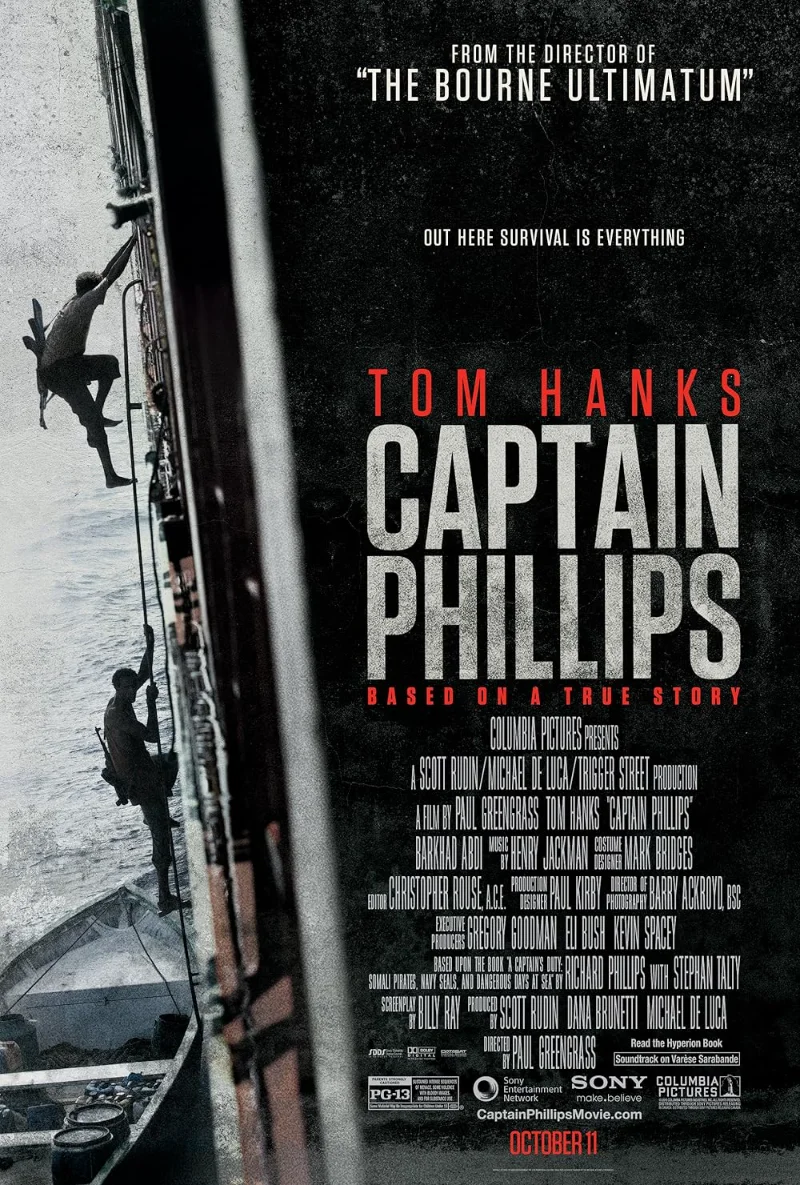
Captain Phillips, directed by Paul Greengrass in 2013, stands as a significant entry in both the realm of contemporary cinema and the filmmaker’s oeuvre. Greengrass is known for his immersive style, particularly his ability to blend tension with realism, a hallmark evident in films like United 93 and The Bourne Supremacy. In Captain Phillips, he delivers a gripping portrayal of the 2009 Maersk Alabama hijacking, inviting audiences into the precarious world of international piracy while exploring broader themes of economic disparity and human survival.
The film captures the harrowing hostage situation faced by Captain Richard Phillips, played by Tom Hanks, whose vessel is overtaken by Somali pirates. Critics widely laud the film's tense and realistic depiction of these events, noting how it transforms a simple hijacking into a compelling narrative about human resilience. The interplay between Phillips and the Somali captain, Abduwali Muse, brings depth to the conflict, emphasizing the stark economic disparities that drive individuals towards such desperate measures. This nuanced characterization challenges viewers to ponder the human stories behind media headlines.
Central to the critical consensus is the film's ability to maintain suspense while grounding itself in real-world complexities. The narrative tightens around the escalating tension of the hostage situation, invoking a visceral response from viewers. Greengrass’s trademark handheld camera work enhances the urgency, capturing the chaotic essence of piracy and survival. In this gripping tale, the stakes are not merely about survival; they reflect a broader critique of systemic failure and the global economy, painting piracy as a byproduct of dire social conditions rather than outright villainy.
Captain Phillips is not only a technical achievement but also a thought-provoking exploration of humanity in the face of desperation. Critics have noted its emotional resonance, particularly in the film's climax, which forces us to confront the fragility of safety in an increasingly interconnected and precarious world. The film invites viewers to empathize with both captors and captives, fostering a moral ambiguity that complicates traditional narratives of heroism and villainy.
Overall, Captain Phillips effectively intertwines a relentless tension with poignant social commentary, making it a compelling reflection on the human condition. In the context of Greengrass's filmography, it reinforces his dedication to highlighting the complexities of modern life, blending action and intellect in a way that is both engaging and enlightening. As audiences grapple with the film’s themes, they are left with lingering questions about resilience, survival, and the forces that drive individuals to piracy, and what it means for the broader human experience.