Career Overview
Paul Greengrass occupies a distinct position in contemporary cinema as a master of the docudrama thriller. Grounded in a background of investigative journalism, his directorial approach fuses rigorous factual research with visceral kinetic execution. His filmography reflects an enduring commitment to dissecting global pressure points through the lens of individual human experience.
The director forged his cinematic identity by turning true historical events into immersive theatrical experiences. This methodology reached a critical zenith with works that examine terrorism and state violence, establishing a paradigm that blends political immediacy with intense character dynamics. Reviewers frequently draw parallels between his various projects, noting how films like United 93 and Bloody Sunday set the template for his later Hollywood endeavors.
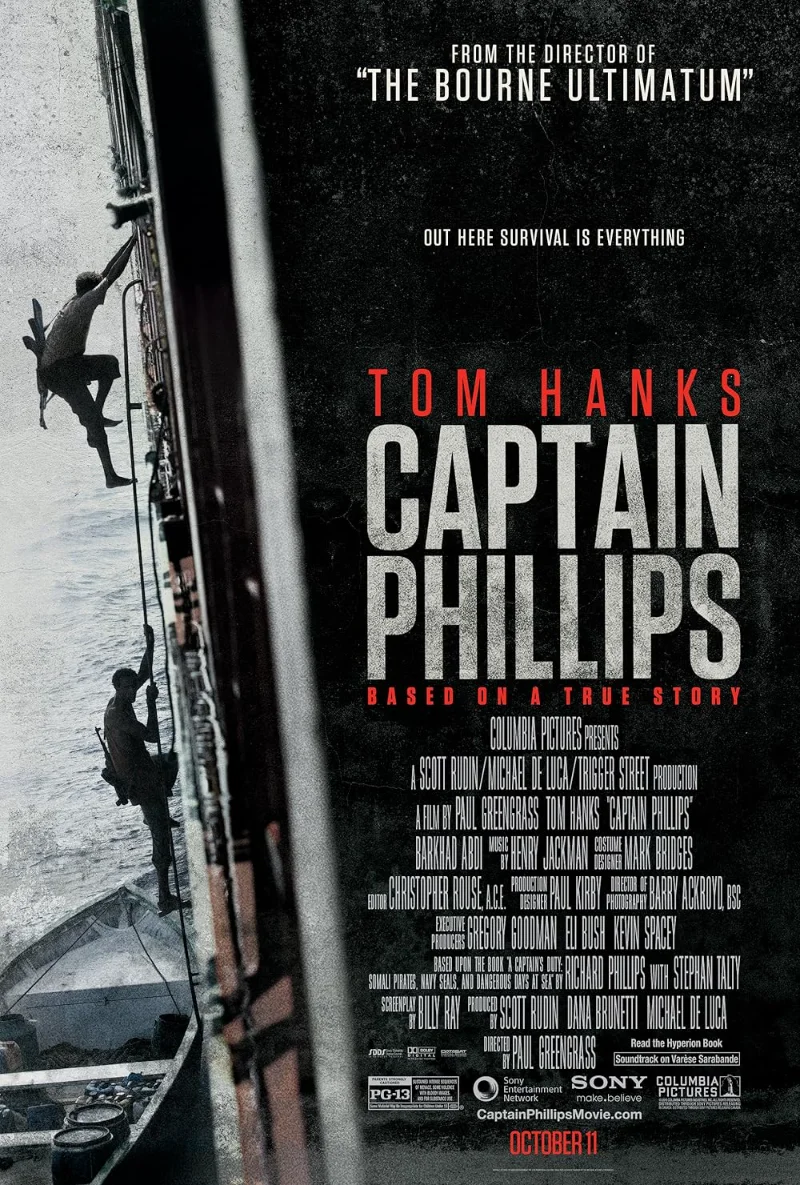
In Captain Phillips, Greengrass demonstrates the full maturation of his career arc. By dramatizing the 2009 Maersk Alabama hijacking, he seamlessly bridges the gap between independent political cinema and mainstream studio filmmaking. His evolution showcases a rare ability to orchestrate large-scale suspense without sacrificing the intricate human details that ground his narratives in harrowing reality.
Thematic Preoccupations
At the core of Paul Greengrass's cinematic project is a profound fascination with human resilience in the face of sudden, catastrophic crises. His narratives frequently orbit around hostage situations and high-stakes standoffs where ordinary individuals are thrust into extraordinary global conflicts. The director uses these localized pressure cookers to interrogate broader sociopolitical realities.
A recurring preoccupation within his work is the stark reality of economic disparity and its real-world implications. In Captain Phillips, the collision between the desperate Somali pirates and the heavily resourced American cargo ship serves as a microcosm for international inequity. Greengrass avoids simplistic morality tales, choosing instead to present a thought-provoking examination of how macroeconomic forces drive individuals toward desperate survival tactics.
Furthermore, Greengrass constantly returns to themes of institutional failure and historical reflection. His protagonists often find themselves isolated from the bureaucratic systems designed to protect them, forcing them to rely on their own human survival elements. This thematic obsession creates a dynamic tension that asks audiences to consider the moral complexities of global conflict and the human cost of international piracy.
Stylistic Signatures
The visual language of Paul Greengrass is instantly recognizable for its relentless, kinetic energy and documentary-style realism. His primary stylistic signature is the deployment of a hyperactive handheld camera, which places the viewer directly within the spatial reality of the unfolding crisis. This immersive approach rejects traditional, static shot composition in favor of a raw, immediate visual texture that mirrors the psychological instability of his characters.
Editing rhythms in a Greengrass film are meticulously calibrated to generate maximum dynamic tension. He constructs sequences using rapid-fire cuts that simulate the chaotic perception of individuals under extreme duress. This jagged, propulsive editing style has become a benchmark in the thriller genre, earning frequent comparisons to the visceral pacing of The Bourne Ultimatum and the stark urgency of Zero Dark Thirty.
Sound design and mise-en-scène further reinforce his commitment to a realistic portrayal of harrowing events. Greengrass favors diegetic soundscapes filled with overlapping dialogue, technical jargon, and the ambient noise of claustrophobic environments like the bridge of a cargo ship. By stripping away artificial cinematic gloss, he creates a gripping storytelling environment where every mechanical clank and shouted order heightens the overarching high-tension narrative.
Recurring Collaborators
While the provided database identifies no recurring cast members across multiple films, the nature of Paul Greengrass's casting process is integral to his overall artistic vision. He frequently surrounds established A-list talent with nonprofessional actors or relatively unknown performers who possess a deep, authentic connection to the subject matter. This strategy dissolves the boundary between fiction and reality, anchoring the high-stakes drama in lived experience.
In Captain Phillips, this collaborative approach yields remarkably intense character dynamics. Tom Hanks delivers a career-best performance as the titular merchant mariner, but the film's power is equally dependent on the casting of first-time actor Barkhad Abdi and his fellow Somali performers. Their presence injects the narrative with a palpable, unpolished authenticity that a traditional Hollywood ensemble could not achieve.
Beyond the cast, Greengrass relies heavily on a dedicated team of behind-the-scenes technicians who understand his need for fluidity and improvisation. His cinematographers and editors must be highly adaptable, capable of capturing and assembling fragmented moments of chaos into a coherent, gripping whole. These essential creative partnerships are what allow the director to maintain his signature docudrama aesthetic without sacrificing narrative clarity.
Critical Standing
Critical reception of Paul Greengrass is overwhelmingly defined by his mastery of the tension-fueled thriller and his rigorous journalistic ethos. Reviewers consistently praise his ability to craft narratives that are simultaneously breathless and intellectually substantive. His work is frequently characterized as gripping and unbearably tense, establishing him as a premier architect of the contemporary cinematic panic attack.
The critical discourse surrounding his filmography often situates him alongside other directors who tackle recent geopolitical history, prompting frequent comparisons to Kathryn Bigelow's Zero Dark Thirty. Critics laud Greengrass for his realistic portrayals and his refusal to exploit real-world tragedy for cheap entertainment. Instead, publications spanning major critical outlets commend his taut, edge-of-your-seat pacing that remains firmly rooted in profound human empathy.
Over time, the director's standing has evolved from a respected British independent filmmaker to a visionary force in global cinema. Works like Captain Phillips have cemented his reputation, proving that thought-provoking content and complex economic disparity themes can thrive within the framework of a studio blockbuster. This enduring critical respect ensures his place as a definitive chronicler of twenty-first century global conflict.