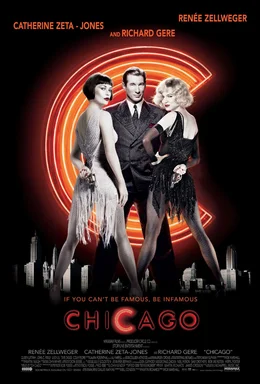
Rob Marshall's Chicago (2002) stands as a remarkable reinvention of the musical genre, skillfully blending traditional elements with contemporary sensibilities. The film emerged amid a cinematic landscape increasingly fascinated by the intersection of celebrity culture and media manipulation, positioning itself as both a commentary and celebration of the era's glitz and glamour. With Marshall's adept direction, combined with stellar performances from a high-profile cast, Chicago not only revitalized interest in musical adaptations but also cemented its place as a cultural touchstone in the early 21st century.
Critical consensus highlights Chicago's dazzling choreography and rousing musical numbers, all of which work harmoniously to underscore the film's themes of celebrity obsession and the moral ambiguity of fame. The characters, especially Roxie Hart and Velma Kelly, are depicted with a solid-gold cynicism that resonates with audiences, revealing a world where innocence is perilously naïve against the backdrop of a corrupt system. The film’s extravagant visual style, complete with glitzy costumes and high-kicking dance sequences, amalgamates seamlessly with its narrative to create a sensory experience that captivates and critiques in equal measure.
As a satire of the entertainment industry, Chicago unabashedly explores the darker side of fame, illustrating how media manipulation shapes public perception and influences personal identity. The narrative pacing is at once frenetic and plodding, mirroring the characters’ frenetic desires for success juxtaposed with the slow, grinding realities of their situations. Reviewers have drawn comparisons between Chicago and Moulin Rouge, noting how both films chart the complexities of love and ambition within the context of a gaudy, hyper-stylized presentation, yet Chicago leans into its cynicism more overtly while maintaining a more traditional narrative structure.
While some critiques highlight occasional discordant moments within the pacing, the overall rhythm propels the film forward with an infectious energy that keeps audiences engaged. The effective integration of musical numbers into the storyline enhances the portrayal of characters, illuminating their ambitions and disappointments in a manner that feels both relatable and grandiose. In the context of Marshall's body of work, Chicago serves as a defining achievement, an exemplar of a director who understands not just how to create stunning visuals, but how to harness those visuals to tell compelling stories that resonate on multiple levels.
Ultimately, Chicago thrives as a piece of entertainment that cleverly critiques the very aspects of fame and celebrity that contribute to its allure. The film invites viewers to recognize the inherent absurdity in the pursuit of notoriety, all while delivering an experience that dazzles and entertains. Its historical significance within cinema is not merely due to its Academy Awards success or its revival of the musical genre, but rather its unflinching embrace of cynicism, challenging audiences to reflect on the complexities of celebrity culture while reveling in its allure.