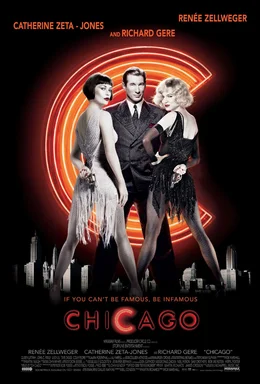
Career Overview
Rob Marshall entered the cinematic landscape at a crucial juncture for the Hollywood musical. By taking on the formidable task of adapting stage classics for the screen, he positioned himself as a central figure in the early 2000s revival of the genre. His foundational work on Chicago established his reputation as a director capable of translating Broadway theatricality into a distinct cinematic language. He successfully resurrected the classical musical format, proving that traditional song and dance mechanics still held massive commercial and critical appeal.
His background is heavily rooted in theatrical choreography and stage direction. This history informs his entire approach to filmmaking, allowing him to navigate the complex logistics of large scale musical numbers with a dancer's intuition for space and movement. By channeling the established traditions of American musical theater into mainstream cinema, Marshall bridged a gap that had widened significantly since the golden age of Hollywood.
In adapting these works, Marshall embraced the challenge of modernizing the musical form for contemporary audiences. He drew explicit inspiration from theatrical luminaries, integrating their legacy into his visual and narrative choices. Consequently, his entry into film history is permanently linked to his ability to resurrect the glitzy presentation of the stage within a dynamic, camera driven framework.
Thematic Preoccupations
The pursuit of fame and the subsequent exploitation of notoriety form the core of Marshall's thematic preoccupations. His work investigates the American obsession with celebrity, dissecting how individuals manipulate public perception to achieve their desires. The characters in his films frequently navigate a morally bankrupt world where scandal is eagerly commodified by a rabid press and an insatiable public.
This exploration is continually underpinned by a profound sense of solid-gold cynicism. Marshall portrays the entertainment industry and the legal system as interconnected, performative arenas where objective truth is far less important than a captivating narrative. His protagonists are often driven by a ruthless ambition that deliberately blurs the line between criminality and show business, framing murder and manipulation as mere stepping stones to top billing.
Furthermore, Marshall uses the musical format to interrogate the boundaries between subjective fantasy and objective reality. The musical numbers are not merely decorative interruptions but serve as psychological extensions of the characters, illustrating their inner lives and desperate cravings for the spotlight. Through this dynamic, he crafts narratives that function simultaneously as a bleak satire and a rousing celebration of media manipulation.
Stylistic Signatures
Marshall relies heavily on dazzling visuals and glamorous spectacle to define his cinematic signature. His frames are packed with highly stylized production design and dramatic lighting choices that evoke the traditional stage proscenium. This approach creates an immersive atmosphere that leans fully into the inherent artificiality of the musical genre, treating the cinematic frame as a limitless theatrical stage.
The musical choreography in his work reveals a direct stylistic lineage to theatrical legends, most notably Bob Fosse. Marshall embraces high-kicking performances, sharp physical isolations, and a specific brand of low-cal raunchiness that feels reminiscent of a grown-up version of Bugsy Malone. His visual presentation captures the sassy humor and athletic rigor of traditional Broadway routines while utilizing precise camera movement and rapid editing to heighten the kinetic energy of the dancers.
However, his editing rhythms and narrative pacing demonstrate a stark segregation between song and story. Marshall tends to treat the musical set pieces as spectacular outbursts, constructing elaborate fantasy sequences that allow audiences to catch their breath between narrative beats. This structural choice highlights the musical extravaganza but often creates a jarring rhythm, establishing a clear visual and tonal contrast between the vibrant song and dance numbers and the gray, dialogue driven dramatic scenes.
Recurring Collaborators
While Marshall does not rely on a traditional recurring ensemble of screen actors across a vast filmography, his creative identity is deeply intertwined with legendary theatrical collaborators. His most significant partnerships are largely conceptual, acting as an interpretive cinematic conduit for the foundational work of renowned stage composers and choreographers.
The ghosts of John Kander, Fred Ebb, and Bob Fosse loom exceptionally large over his directorial approach. Marshall relies on their iconic musical compositions and stylistic frameworks to build his cinematic worlds. By leaning heavily on their established tones of naughty-but-nice criminality, he successfully translates their stage bound genius into a vibrant, distinctly modern cinematic reality.
When working with on screen talent, Marshall requires actors capable of navigating the demanding dualities of his stylized worlds. Performers like Renée Zellweger are directed to balance intense physical choreography with precise character work. Under his guidance, his actors are pushed to nail the essential combination of sex appeal, cattiness, and naïveté required to anchor his profoundly cynical and satirical narratives.
Critical Standing
Marshall occupies a polarized but undeniable place in contemporary critical discourse. His champions praise him for executing rousing and hugely entertaining spectacles that breathe new life into dormant cinematic genres. Frequent comparisons to boundary pushing films like Moulin Rouge underscore his significant role in redefining the modern musical adaptation, with major outlets like Empire Magazine celebrating his ability to deliver sassy, crowd pleasing extravaganzas.
Conversely, his formal approach has drawn sharp criticism regarding narrative momentum and character depth outside of the grand musical numbers. Detractors, such as reviewers at Slant Magazine, argue that he takes little pain to create a lived in reality between the songs. This prominent critique suggests that his films occasionally plod along during dramatic sequences, relying too heavily on the dazzling musical outbursts to sustain viewer engagement and narrative pacing.
Despite these structural critiques, his reputation as a master of the song and dance extravaganza remains robust among mainstream critics. Reviewers across the spectrum, including RogerEbert.com, acknowledge his undeniable talent for mounting glitzy, high-kicking numbers that deliver pure entertainment value. Ultimately, his critical standing rests securely on his rare ability to harness the cynical, satirical elements of theatrical classics and deliver them with unashamed cinematic glamour.