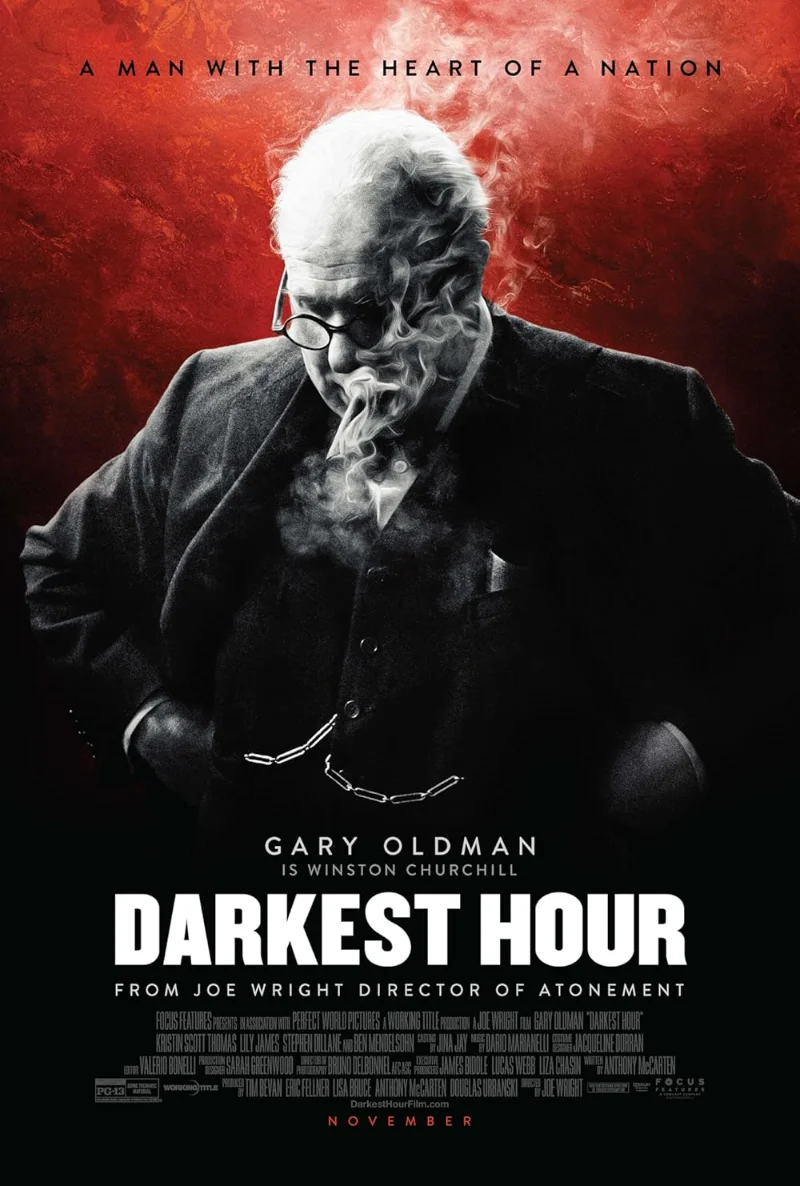
In the landscape of cinematic portrayals of historical figures, Darkest Hour (2017), directed by Joe Wright, stands as a thought-provoking exploration of Winston Churchill's leadership during one of the most turbulent times in modern history. Wright, known for his stylistic flourishes and ability to weave intimate narratives with grand historical contexts, has crafted a film that walks the fine line between dramatic representation and historical accuracy. The film opens a window into a crucial period of World War II, where Churchill's resolute spirit and political acumen emerge as pivotal to the fate of Western democracy.
Critically, Darkest Hour has garnered attention for its electrifying portrayal of Winston Churchill, brought to life with stellar performances, particularly by Gary Oldman, whose embodiment of the complex leader is nothing short of transformative. Oldman’s efforts not only showcase Churchill’s unyielding determination but also the personal struggles that accompanied his rise to power. Reviewers have noted the film’s patriotic undertones, which, while marking Churchill as a heroic figure, also raise questions about the simplistically celebratory nature of its narrative. Thus, the film straddles a nuanced line, elevating a revered historical figure while occasionally romanticizing the challenges of leadership in times of dire threat.
The directorial style of Wright is emphatically present throughout Darkest Hour, characterized by energetic pacing and aesthetic flourishes that heighten the tension and underscore the stakes involved. The film’s cinematography complements its ambitions, utilizing dramatic lighting and closely framed shots to draw the audience into Churchill's world. This approach, however, has been met with mixed responses; some critics laud the film's cinematic excellence, while others contend that its showy visual elements could overshadow the story's historical intricacies. This contrast between an engaging style and the call for a more grounded narrative reflects broader conversations about how historical dramas can depict truth while engaging audiences.
In a world saturated with historical narratives, Darkest Hour adds a unique layer to our understanding of leadership through crisis. It invites viewers to scrutinize the political decision-making processes that shape our realities today. The exhilarating performances, led by Oldman, serve both to entertain and inform, yet the film also poses pressing questions regarding the complexities of moral choice in leadership, especially during wartime. The complex portrait presented in Darkest Hour allows for rich discussion, reaffirming Wright’s position as a master storyteller who continues to challenge cinematic conventions while exploring the depths of his characters.
Ultimately, Darkest Hour succeeds as an ambitious endeavor that encapsulates an era fraught with danger and uncertainty, while simultaneously entertaining its audience. The film resonates not merely as a historical recounting but as an inquiry into the nature of bravery, leadership, and the human spirit in confronting the darkest of hours. Its artistic choices, performances, and thematic explorations ensure that Darkest Hour will be remembered as an important entry in both Wright's oeuvre and the broader narrative of World War II cinema.