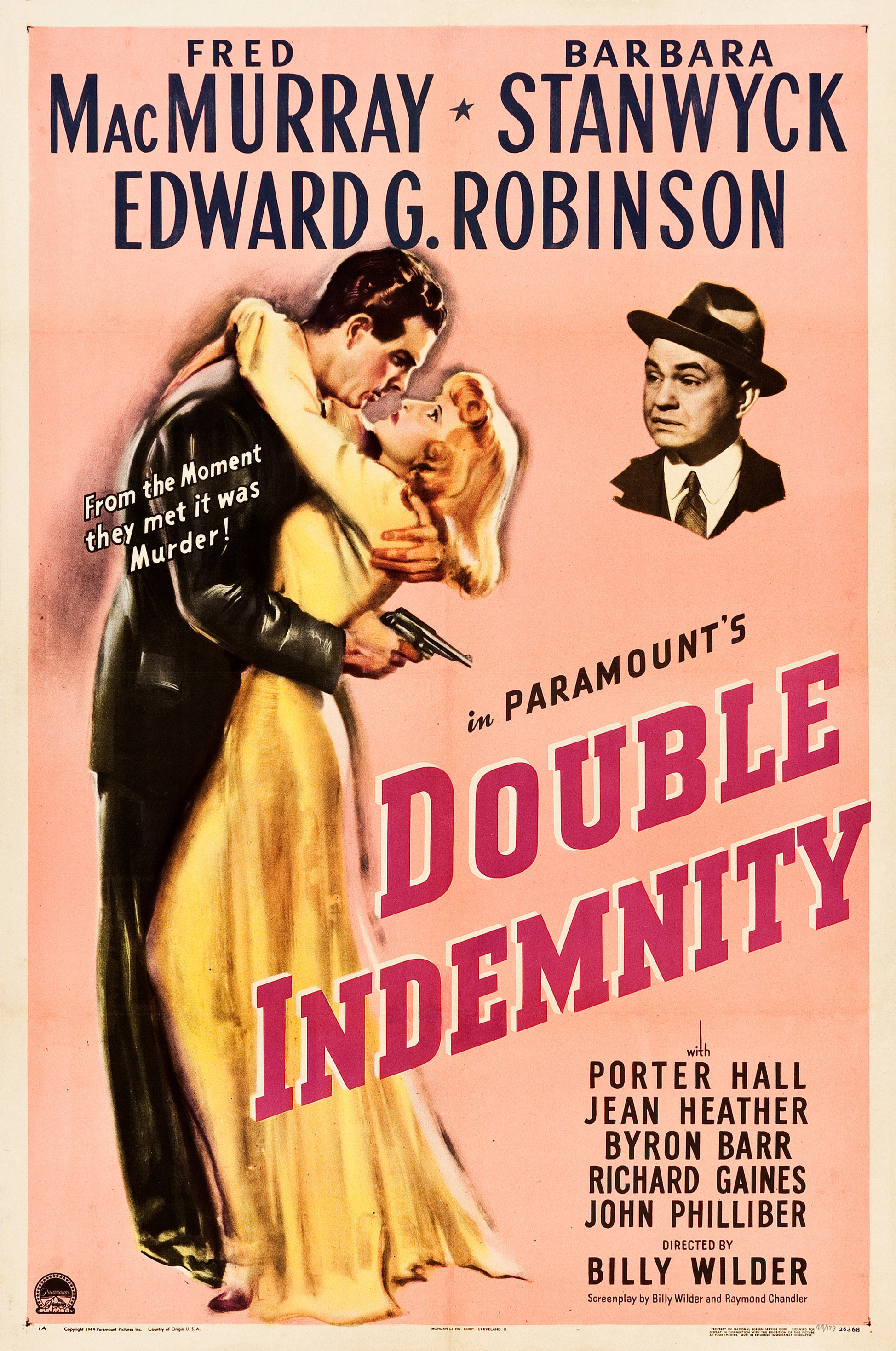
Released in 1944, Double Indemnity stands as a seminal work in film noir, illustrating the genre's distinctive trademarks while defining many of its conventions. Directed by Billy Wilder, known for his sharp wit and incisive storytelling, this film delves into the murky waters of human motives, revealing a gritty underbelly of greed and betrayal. The film emerged during the Golden Age of Hollywood when the noir aesthetic was spreading rapidly, and its cynical portrayal of morality and justice created an enduring template for the genre. With Wilder's expert direction and a screenplay co-written with Raymond Chandler, the film exudes a hard-boiled essence that captivates audiences and critics alike.
At the heart of Double Indemnity lies a murder plot that spins out of the insidious intertwining of desire and avarice. The narrative follows insurance salesman Walter Neff, played with gritty allure by Fred MacMurray, who becomes entangled with the alluring but duplicitous Phyllis Dietrichson, brought to life with mesmerizing complexity by Barbara Stanwyck. Their affair, fueled by lust and a mutual desire for financial gain, spirals into a dark and deadly scheme that sets the stage for a classic noir tale. Critics commend Wilder's ability to evoke tension and unease, maintaining a sense of foreboding that engages viewers throughout this gripping story of conspiracy and moral decay.
Greed serves as the most potent driving force in the film, illuminating how easily it can corrupt and distort human relationships. Neff and Dietrichson's bond is forged in selfish ambition, a reflection of broader societal issues that the film subtly critiques. Wilder's narrative is steeped in cynicism, presenting a world where betrayal is commonplace, trust is a rare commodity, and integrity is often sacrificed on the altar of ambition. This thematic depth resonates throughout the film, making it not just a compelling murder mystery but also a broader commentary on the darker facets of human nature.
Critically, Double Indemnity is celebrated for its sardonic tone and hard-boiled dialogue, showcasing Wilder's mastery of crafting sharp, memorable lines that illuminate character motivations. The interplay of light and shadow in cinematography by John F. Seitz further complements the storytelling, accentuating the moral ambiguities faced by the characters. The film’s visual style has become a hallmark of noir, establishing a framework that filmmakers continue to reference and emulate.
Ultimately, Double Indemnity stands as a pivotal entry in the film noir canon, not only elevating the genre but also solidifying Billy Wilder’s reputation as a cinematic visionary. Its themes of greed and betrayal are timeless, reflecting a fear of moral compromise that still echoes in contemporary storytelling. This film remains an essential viewing experience for anyone wishing to understand the complexities of human desire and the dark repercussions that often follow when ambition reigns unchallenged.