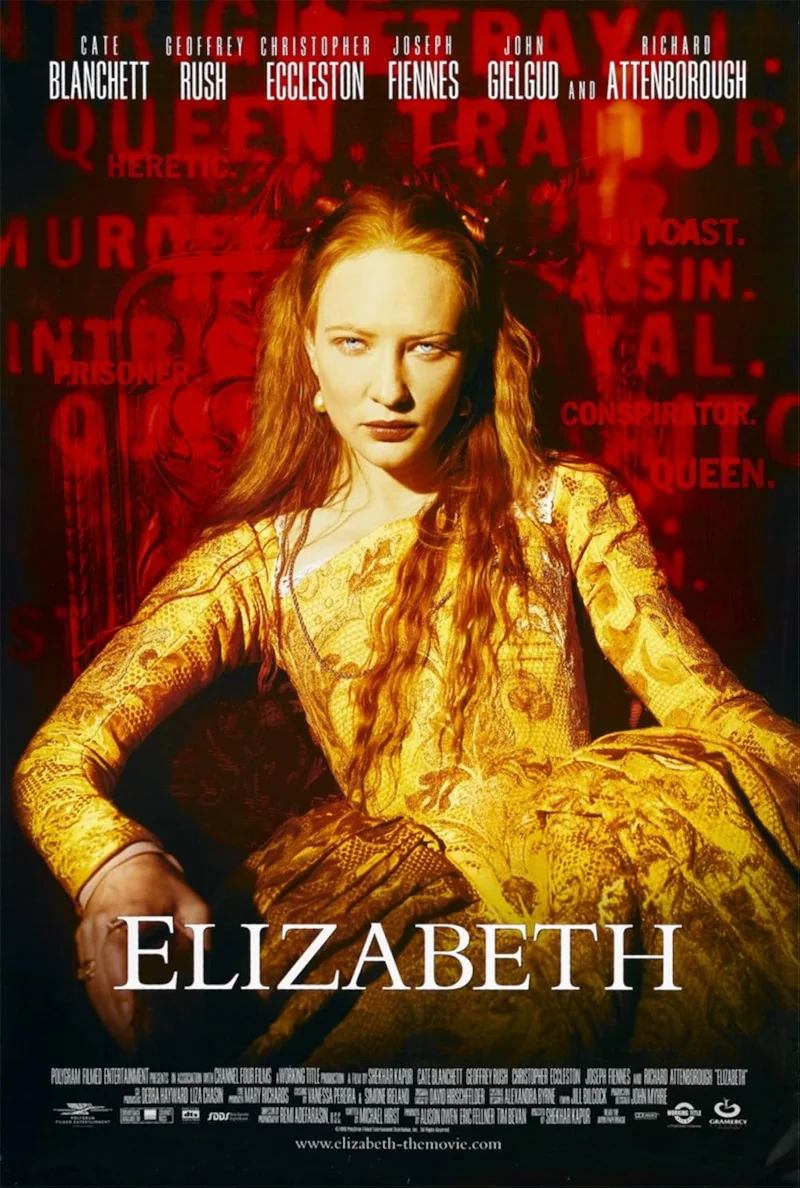
In the realm of historical dramas, Elizabeth (1998), directed by Shekhar Kapur, stands as a striking depiction of one of England's most enigmatic monarchs. Released at a time when the genre was beginning to explore deeper psychological and political undercurrents, Kapur's film offers an atmospheric and intense portrayal that goes beyond mere events to probe the human psyche. Capturing the complex tapestry of 16th century England, the film intertwines notions of political intrigue, religious conflict, and personal transformation. By focusing on Elizabeth I’s early reign, Kapur makes a case for the inherent struggles of a woman who must navigate a male-dominated world while shaping her legacy.
Critics have embraced Elizabeth for its visually arresting imagery and deeply resonant thematic exploration. The film deftly encapsulates the tension between faith and power, reflecting the religious turmoil of the period. Kapur does not shy away from the brutal realities of Elizabeth's life, hierarchies of courtly politics, or the extreme pressures exerted by both allies and adversaries. As Elizabeth transforms from a hesitant young queen to a formidable ruler, the film captures her political cunning and the vulnerabilities that come with leadership in an age rife with sectarian conflict. This evolution forms the backbone of the narrative, depicting how personal transformation is often a response to the surrounding chaos.
The visual elements in Elizabeth are particularly noteworthy, with its lush cinematography and meticulous production design crafting an immersive experience. The film's atmosphere serves to heighten the intensity of the narrative, drawing viewers into the court's intrigue and Elizabeth's internal battles. Critics have lauded the film's ability to encapsulate the historical period not just through dialogue and plot, but through visual storytelling. Each frame is saturated with symbolism and mood, amplifying the stakes of Elizabeth's choices as she wrestles with her faith and her role as sovereign.
Kapur’s direction, coupled with a powerful performance from Cate Blanchett in the titular role, has led Elizabeth to be considered a landmark film within both the director's oeuvre and the genre. Blanchett's portrayal of the titular queen resonates with authenticity and complexity, embodying the conflicting emotions rooted in her ascent to power. The film navigates the delicate balance of portraying a historical figure who is both a revered icon and a deeply human individual. This duality allows Elizabeth to transcend mere biographical recounting, transforming into a thoughtful commentary on the intersections of identity, duty, and faith.
In conclusion, Elizabeth stands as an evocative exploration of the life of a woman who not only inherited a throne but also carved out a distinct identity amid turmoil. The film's thematic depth and atmospheric intensity ensure its place as a significant entry in both the historical drama genre and in Shekhar Kapur's remarkable body of work. It invites viewers to reflect on the complexities of leadership, faith, and personal growth, all set against a backdrop of political intrigue and religious conflict that feels strikingly relevant even today.