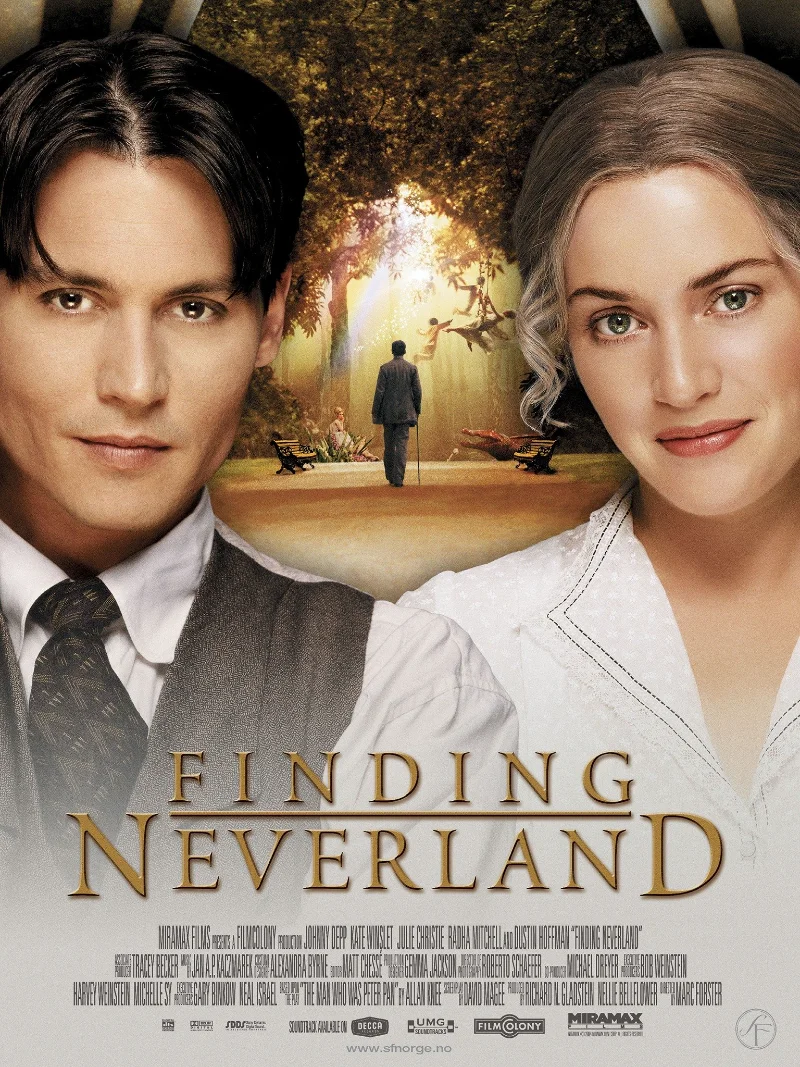
As a key entry in the oeuvre of Marc Forster, Finding Neverland provides a touching exploration of creativity and imagination against the backdrop of early 20th-century London. Forster, known for his ability to blend realistic narratives with elements of magic and wistfulness, captures the enchanting journey of playwright J.M. Barrie, played convincingly by Johnny Depp. The film serves as an ode not only to Barrie's creation of Peter Pan but also to the importance of retaining childlike wonder and the interplay of love as an emotional foundation for artistic expression.
The critical consensus around Finding Neverland highlights the film's warm and glowing ambiance that shifts between heartfelt moments and gentle humor. Reviewers have noted its remarkable ability to evoke nostalgia and a sense of wonder, rooted in the themes of childhood and the power of imagination. Depp's portrayal of Barrie resonates on multiple levels, embodying the struggles of a man tethered between reality and his own creations while navigating profound relationships with the Llewelyn Davies family. In these connections, the film emphasizes that love, be it familial or romantic, fuels the spirit of artistic creation.
The cinematography and art direction further elevate Finding Neverland, providing a lush, almost magical quality that transports audiences into the whimsical world Barrie seeks to create. The use of vivid colors and fantastical elements enhances the film’s exploration of imagination and its contrasts with the harshness of adult responsibilities. This visual storytelling, combined with the stirring score, lends an emotional depth that makes each moment feel both believable and elevated, allowing viewers to be swept away into Barrie’s boyish dreams.
Reviewers have also approached the film with a critical lens regarding the balance between sentimentality and storytelling. While some found moments occasionally cloying, the prevailing sentiment is that the emotional sincerity ultimately prevails. The film succeeds in intertwining the threads of artistic creation with the innocence of childhood, drawing a portrait of a man whose life and work are irrevocably shaped by love and loss. In doing so, Finding Neverland honors its subjects with a nuanced touch that is at once surprising and deeply moving.
In the broader context of cinema history, Finding Neverland stands as a testament to the enduring relevance of storytelling. It serves as both a biographical exploration and a meta-commentary on the creative process itself. As viewers, we are encouraged to reflect on our own journeys of creativity and the love that inspires them, making this film not just a biopic but a timeless reminder of the magic inherent in both art and life.