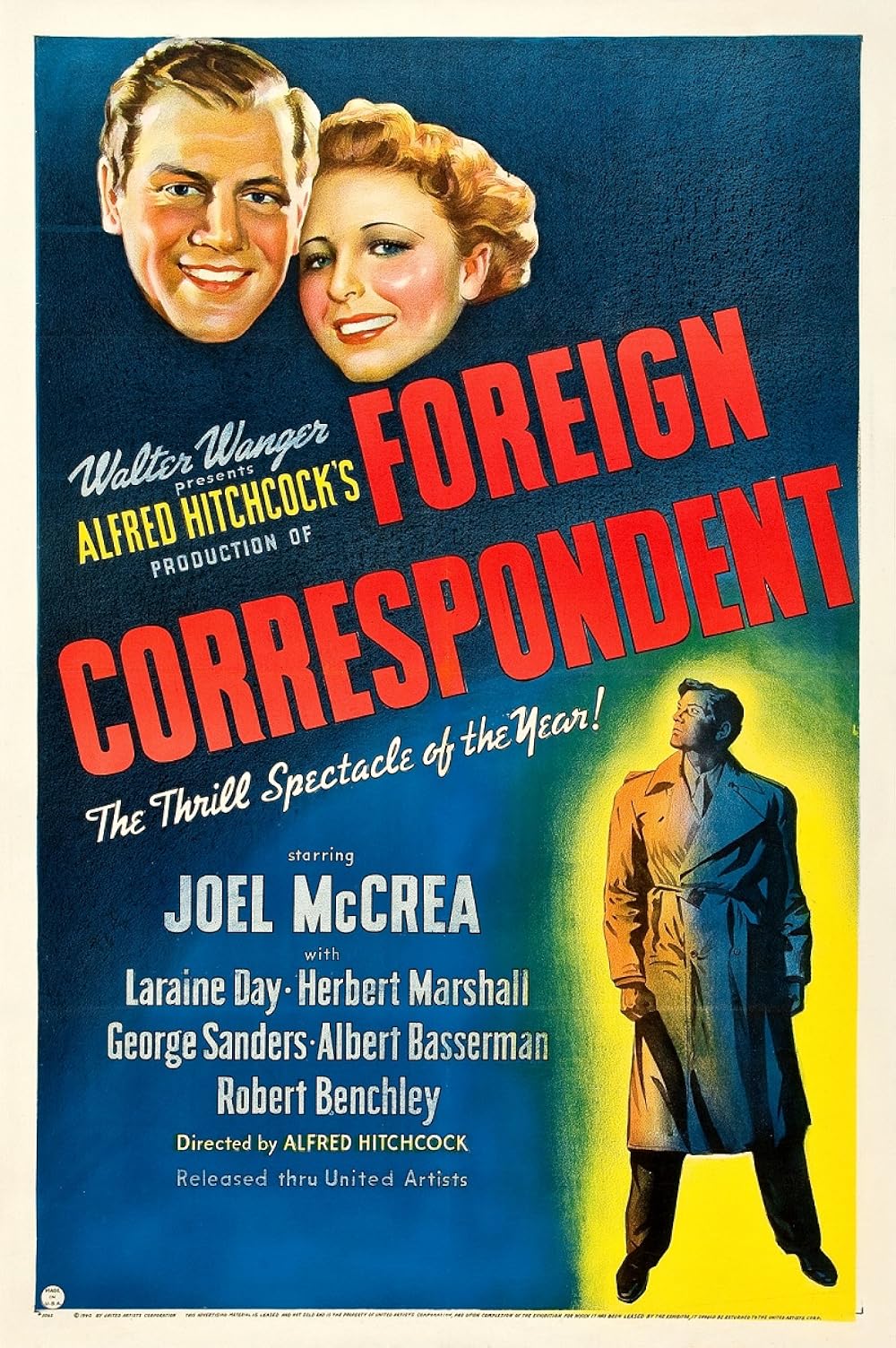
Alfred Hitchcock's Foreign Correspondent, released in 1940, stands as a significant piece in the pantheon of cinematic history, particularly within the context of its director's oeuvre. As Hitchcock transitioned from Britain to Hollywood, his craft matured, further refining his mastery of suspense and narrative complexity. This film not only showcases his ability to weave thrilling tales but also reflects the wartime anxieties prevalent at the time, providing a compelling lens through which to explore themes of espionage, patriotism, and romantic intrigue. This was a moment when American cinema was beginning to grapple with the realities of global conflict, and Foreign Correspondent serves as an early entry in that dialogue, blending entertainment with urgent messages about freedom and the threats posed by fascism.
Critics widely agree that Foreign Correspondent excels in its suspenseful narrative structure and imbues viewers with a strong sense of patriotic duty. The film takes viewers on a journey alongside its protagonist, Johnny Jones, a reporter who traverses Europe to uncover a conspiracy that could sway the fate of nations. This intrigue is punctuated by thrilling moments and the ever-present danger of espionage, which not only serve to entertain but also to inspire vigilance in the face of tyranny. Hitchcock's portrayal of these themes resonates with the audience, emphasizing the importance of truth, courage, and commitment during uncertain times.
The interplay of romance and danger in Foreign Correspondent adds depth to its espionage-driven plot, allowing for a blend of personal stakes and broader geopolitical concerns. The romantic subplot involving Jones and the daughter of an assassination target introduces a layer of emotional investment that enriches the narrative. Critics have noted that this fusion of romantic intrigue with the broader themes of war adds a compelling dimension to the film, giving audiences a multifaceted viewing experience that is both thrilling and thought-provoking. Here, Hitchcock not only entertains but also delves into the personal sacrifices made in the pursuit of noble causes.
While Foreign Correspondent stands as a product of its time, the critical consensus highlights its timeless relevancy and the craftsmanship of Hitchcock in storytelling. The director's deft use of suspenseful sequences, such as the dramatic plane crash and the daring rooftop chase, demonstrates his innovative techniques that would come to define his signature style. Combined with a powerful narrative that underscores themes of sacrifice and valor, Foreign Correspondent not only reflects the wartime climate of 1940 but also serves as a precursor to many films addressing similar themes in subsequent decades. It is an enduring exploration of the human spirit's resilience against overwhelming odds.